
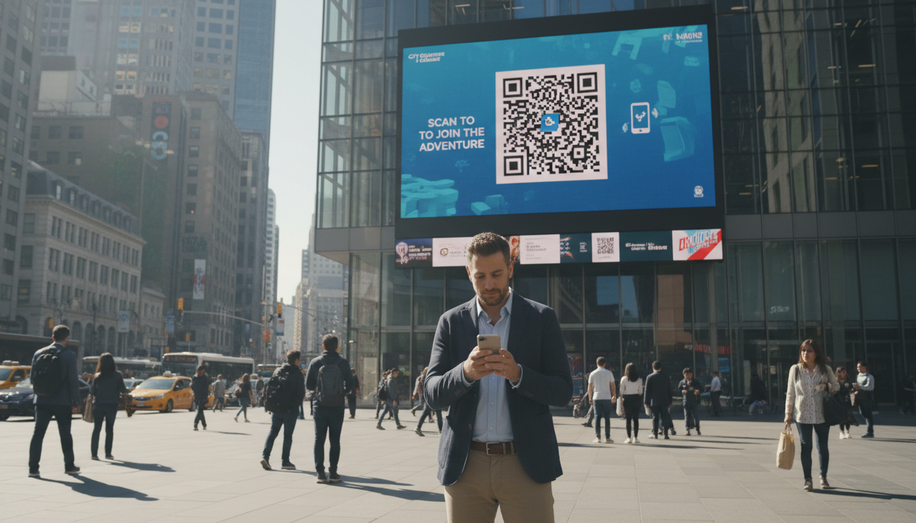

Out-of-home advertising has long relied on its ability to capture consumer attention in physical spaces, but the integration of mobile technologies is fundamentally reshaping how effective these campaigns can be. By connecting traditional and digital billboards with smartphones through QR codes, geofencing, and location-based targeting, advertisers are transforming passive viewing experiences into active engagement opportunities that drive measurable results.
The synergy between outdoor and mobile channels creates what industry experts call a multi-channel experience that guides consumers from initial billboard exposure to digital interaction on their devices. A retail brand might display a billboard featuring a QR code that, when scanned, directs consumers to a mobile app offering special discounts or store locators. Similarly, advertisers can deploy geofencing technology to establish virtual perimeters around billboard locations, triggering personalized mobile notifications to users’ smartphones as they approach the advertisement. This seamless bridge between physical and digital touchpoints ensures that the brand message reaches consumers at multiple points in their journey, dramatically increasing the likelihood of engagement and conversion.
The engagement metrics speak clearly to the effectiveness of this integrated approach. According to the Out of Home Advertising Association of America, 74 percent of mobile users take action on their devices after seeing a digital out-of-home advertisement. When digital OOH is combined with mobile advertising, campaign reach can extend by up to 303 percent while engagement increases by 46 percent, representing a significant return on investment for brands willing to adopt this hybrid strategy. Major brands like Coca-Cola have already demonstrated the potential, running campaigns that encouraged consumers to scan billboards for interactive experiences, driving substantial mobile interaction and brand recall.
One of the most compelling advantages of mobile-integrated billboards is the ability to move beyond traditional measurement limitations. Unlike static billboards, which historically offered little insight into their actual impact, mobile integration enables real-time tracking of consumer interactions. Brands can measure precisely how many people scanned a QR code, downloaded an app, or clicked through to a mobile experience. A restaurant chain, for instance, can track exactly how many users scanned a billboard’s QR code to view menus or place online orders, providing direct visibility into campaign ROI. This data-driven approach transforms outdoor advertising from a medium that requires leap-of-faith investment into a channel with quantifiable performance metrics.
The precision targeting capabilities enabled by mobile integration represent another critical advantage. Geofencing technology allows advertisers to define virtual boundaries around billboard locations and deliver personalized advertisements to nearby consumers based on their demographics, interests, and location. A sports retailer positioned near a stadium can target mobile ads promoting game-day sales specifically to fans approaching the venue, ensuring that the right message reaches the right audience at precisely the right moment. This level of targeting efficiency was previously impossible with traditional OOH advertising and represents a fundamental shift in how outdoor campaigns can be optimized.
Mobile billboards themselves have evolved into sophisticated tools, incorporating GPS tracking and dynamic content capabilities that adjust in real time based on location, time of day, and local events. As these billboards move through high-traffic areas, content can be optimized to remain relevant to audiences in specific geographic contexts, creating a responsive advertising ecosystem that feels personalized rather than generic. Digital screens with adaptive technology automatically adjust brightness and contrast for optimal visibility regardless of lighting conditions, ensuring impact whether the billboard travels through bright urban centers or dimly lit evening routes.
The integration of mobile technology into OOH advertising ultimately addresses the medium’s historical challenges while amplifying its inherent strengths. Out-of-home’s massive reach combines with mobile advertising’s precision targeting and interactivity, creating campaigns that capture attention and drive action. As consumer behavior increasingly reflects an expectation of seamless experiences across physical and digital touchpoints, the brands that successfully integrate these channels will establish stronger connections with their audiences and achieve superior campaign performance. For advertisers seeking maximum impact from their outdoor investments, mobile integration is no longer an optional enhancement—it has become essential to competitive effectiveness in the OOH landscape.