
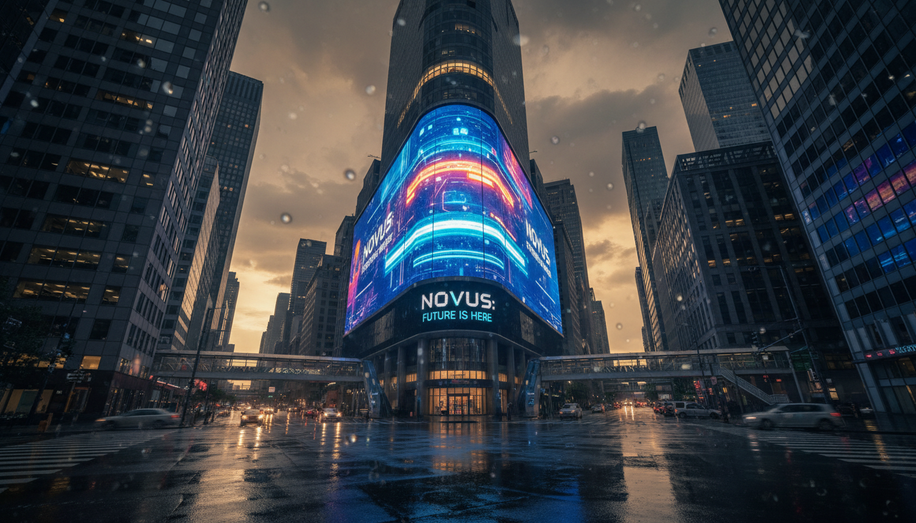

The foundation of any successful out-of-home advertising campaign rests on a single critical decision: where to place your ads. Strategic location selection determines not merely whether your message reaches an audience, but whether it reaches the *right* audience at the *right* moment, transforming casual exposure into meaningful engagement and measurable results.
Location functions as the invisible architect of advertising effectiveness. When a billboard occupies a high-traffic intersection or an advertisement appears on a transit vehicle, it enters spaces where potential customers already congregate. This proximity to audience movement patterns creates what advertising professionals recognize as a fundamental advantage: the opportunity to capture attention during moments when consumers are most receptive. A coffee shop advertisement strategically placed near morning commuter routes, for instance, reaches people actively thinking about their caffeine needs rather than interrupting them with irrelevant messaging.
The relationship between location choice and audience targeting cannot be overstated. Different geographic areas attract fundamentally different demographics, and successful campaigns recognize this reality by tailoring placements accordingly. An upscale neighborhood may respond to luxury goods advertising, while a student-dense area demands messaging around value and affordability. By understanding local demographics—including age, income, interests, and lifestyle factors—advertisers can craft messages that resonate deeply with the specific population inhabiting each location. This demographic alignment transforms outdoor advertising from a blunt instrument into a precision tool.
High-traffic areas represent natural goldmines for outdoor advertising investment. Shopping malls, busy intersections, transportation hubs, and entertainment venues concentrate foot and vehicular traffic in ways that guarantee expanded exposure. Yet raw traffic volume alone does not ensure campaign success. The traffic must consist of individuals whose interests align with the advertised offering. Placing fitness equipment advertisements near gymnasiums or sporting complexes exemplifies this principle—the location itself pre-filters the audience, ensuring message delivery to consumers already engaged with relevant product categories.
Modern location intelligence has transformed how advertisers approach placement strategy. Data analytics now allow campaigns to track consumer behavior patterns, identify peak traffic times, and measure dwell time near advertisements with precision previously impossible for out-of-home media. Advertisers can determine exactly when and where their target audience congregates, then synchronize ad placement and timing accordingly. This data-driven approach directly improves return on investment by eliminating wasted impressions on uninterested demographics while concentrating resources where conversion potential runs highest.
Context amplifies location selection’s strategic importance. When brand messaging aligns logically with location context, credibility increases and consumer response intensifies. A restaurant advertisement positioned near entertainment venues captures audiences during decision-making moments, while retail advertisements near transportation hubs reach consumers actively shopping or commuting home. These contextual alignments create what marketers term “logical associations”—the advertisement feels organically connected to the location, rather than arbitrarily placed.
Seasonal considerations demand equal attention from strategically minded advertisers. Optimal locations fluctuate throughout the year as consumer movement patterns shift with weather and events. Beachside advertisements peak during summer months when foot traffic concentrates at coastal destinations, while indoor shopping centers experience maximum traffic during winter seasons. Understanding these temporal patterns enables advertisers to adjust placement strategies, ensuring consistent visibility regardless of seasonal variations.
The visibility mechanics of physical placement cannot be overlooked. Advertisements positioned at busy intersections, traffic lights, and roundabouts benefit from extended exposure periods as vehicles slow or stop. Direction of foot and vehicular traffic influences effectiveness—advertisements must face incoming audiences to maximize impact. Lighting conditions, visual obstructions, and advertisement size all factor into the strategic equation.
Strategic location selection ultimately bridges the gap between advertising spend and tangible results. By concentrating resources in geographically targeted areas where target audiences naturally congregate, advertisers reduce wasted impressions while dramatically increasing engagement potential and conversion likelihood. In an industry where every advertising dollar must justify its investment, location strategy transforms from a secondary consideration into the central pillar upon which campaign success is built.