
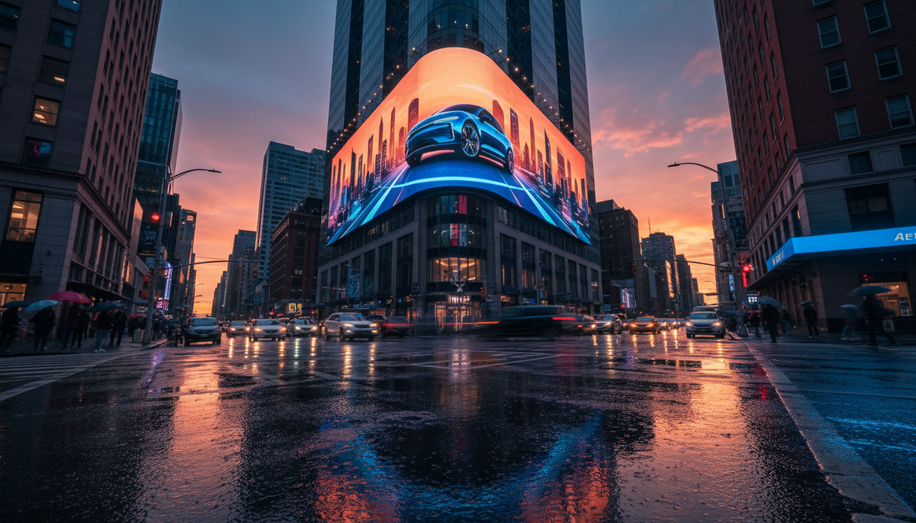

In the evolving landscape of out-of-home (OOH) advertising, geofencing technology stands out as a game-changer, enabling brands to bridge the gap between static billboards and dynamic digital engagement. By creating virtual boundaries around physical ad locations, marketers can track consumer proximity and deliver hyper-targeted follow-up messages, transforming broad-reach OOH campaigns into precise, measurable experiences that drive real results.
Geofencing works by leveraging location-based signals from mobile devices to monitor when users enter or exit predefined zones. Advertisers first map these virtual perimeters using mapping software, drawing circles or polygons around key sites like billboards, transit hubs, or shopping districts. GPS provides broad outdoor coverage ideal for highways and large areas, while Wi-Fi and Bluetooth offer pinpoint accuracy in denser indoor or urban environments, such as malls or stations. RFID adds even greater precision but requires specialized hardware, making it suitable for controlled settings. Once a device crosses the fence—often via anonymous mobile ad IDs—the system captures data without compromising privacy, allowing brands to segment audiences based on actual behavior rather than demographics alone.
This technology optimizes OOH reach by ensuring ads connect with those who have physically encountered them. Traditional OOH excels at building awareness through massive impressions, but its impact has historically been hard to quantify. Geofencing changes that by identifying viewers in real time: a driver passing a roadside billboard or a pedestrian near a bus shelter triggers digital retargeting, such as personalized mobile ads reinforcing the same creative. For instance, an e-commerce brand might geofence a high-traffic billboard promoting a sale, then serve tailored online coupons to those devices hours later, creating a seamless omnichannel journey from awareness to purchase.
The effectiveness gains are substantial. Geofencing reduces ad waste by focusing budgets on proven prospects, boosting engagement rates and conversions compared to scattershot digital campaigns. Studies and platform data show higher click-through rates and ROI when OOH exposure leads directly to measurable actions like store visits or app downloads. Brands can track foot traffic spikes post-exposure, monitor in-store revenue lifts, and even gauge brand lift through social mentions or website surges—all tied back to the geofenced OOH touchpoint. Adaptive features further enhance performance: campaigns adjust for time of day, weather, or events, ensuring relevance.
Integration with programmatic platforms amplifies these benefits, enabling real-time optimization. Advertisers sync geofence data with ad servers for sequential messaging—first the bold OOH visual grabs attention during a commute, then a customized digital push nudges action at home. This synergy turns passive OOH impressions into active funnels. For recruitment firms, geofencing around job fair billboards targets passersby with role-specific mobile alerts; retailers near event venues retarget attendees with post-event deals.
Privacy and accuracy remain critical considerations. Platforms prioritize anonymized data to comply with regulations, distinguishing genuine exposures from incidental pass-bys by fine-tuning fence sizes based on traffic patterns and ad visibility. Optimal boundaries balance capture volume with quality—too wide risks irrelevant signals, too narrow misses opportunities. Advanced systems differentiate pedestrian from vehicular traffic, refining segments for precision.
Real-world applications underscore the potential. Automotive brands geofence dealership billboards to retarget showroom visitors with financing offers; quick-service restaurants fence drive-thru displays for loyalty app prompts. In one practical guide, marketers combined billboard visuals with geofenced mobile retargeting, reporting measurable lifts in engagement and sales. E-commerce leaders use it to unify offline discovery with online conversion, proving OOH’s value in data-driven terms.
Challenges exist, including signal reliability in dense urban areas or device opt-outs, but evolving tech like hybrid GPS-Wi-Fi systems mitigates these. Costs vary by scale and platform, yet the ROI from targeted efficiency often outweighs them, especially as mobile penetration nears universality.
Looking ahead, geofencing will deepen OOH’s role in connected ecosystems. As 5G and edge computing sharpen location data, expect even tighter integrations with AR overlays or voice assistants, making physical ads launchpads for immersive experiences. For OOH professionals, mastering geofencing isn’t optional—it’s the key to proving relevance in a digital-first world, where location unlocks unprecedented targeting and accountability.
To truly unlock OOH’s potential in a geofenced world, advanced analytical tools are paramount. Platforms like Blindspot provide the sophisticated ROI measurement and attribution capabilities necessary to track consumers from initial OOH exposure through digital retargeting, delivering real-time performance insights that quantify engagement, drive conversions, and prove the tangible value of every impression in data-driven terms. Explore how to achieve this precision at https://seeblindspot.com/