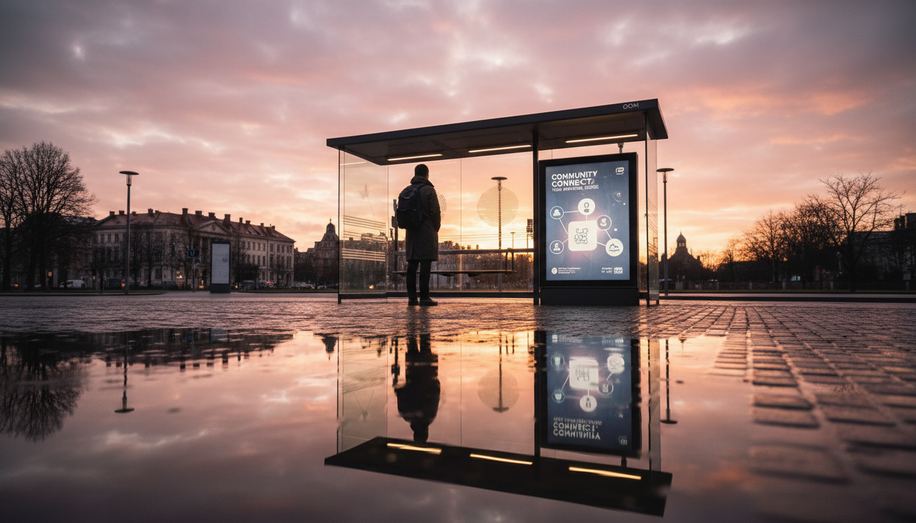
In the wake of the global pandemic, out-of-home (OOH) advertising has not only survived but thrived, posting record-breaking growth and evolving into a more agile, data-driven powerhouse. Spending on billboards, posters, and digital displays reached $2.04 billion in the third quarter alone, a 4.3% increase over the previous year and an all-time high for that period, according to the Out of Home Advertising Association of America (OAAA). This resurgence underscores OOH’s adaptability, as brands shifted strategies to meet changed consumer behaviors, embracing technology and flexibility to reclaim public spaces.\n\nThe pandemic initially battered the industry, with foot traffic plummeting and prices for ad space dropping sharply as lockdowns kept people indoors. Advertisers pivoted to placements near homes, such as grocery stores and banks, rather than highways or airports, prioritizing proximity over high-volume exposure. Yet as restrictions lifted and mobility returned—fueled by a travel boom—prices rebounded vigorously. Premium spots in airports, transit hubs, and downtown areas saw rates climb 10-15% in 2024-2025, reflecting surging demand for locations that deliver massive, immediate reach. This recovery mirrors broader market trends: OOH grew 10% overall in 2023, with digital out-of-home (DOOH) spending surging 19.2% to $17.6 billion.\n\nAt the heart of this transformation is the explosive rise of digital OOH, which now dominates spending and offers unprecedented versatility. Unlike static billboards, DOOH screens enable real-time content swaps—ads can change in minutes based on weather, events, or audience data—allowing brands to respond swiftly to market shifts. By 2021, digital formats already accounted for over a quarter of OOH budgets, a share that continues to expand in urban centers, airports, and malls. Programmatic DOOH takes this further, using automated buying for precise targeting via geofencing and mobile data, turning fixed locations into dynamic campaigns. Anna Bager, OAAA president and CEO, highlighted this momentum, noting OOH’s “enduring relevance and effectiveness” amid record quarters.\n\nCreative innovation has amplified DOOH’s impact, injecting a “wow factor” that captures attention in a fragmented media world. Post-pandemic campaigns embraced 3D anamorphic designs, computer-generated imagery (CGI), and projection mapping, particularly during high-profile events like the IPL and ICC World Cup. QR codes, NFC tags, and scannable posters drive interactivity, bridging physical ads to digital engagement and boosting recall—56% of consumers now discuss memorable OOH encounters. Pop-up activations and experiential installations further enhance loyalty, creating shareable moments that generate social buzz. These tactics mark a departure from pre-pandemic norms, where OOH relied more on sheer visibility; today, it’s about immersive storytelling that stands out as people spend more time outdoors.\n\nData analytics have revolutionized measurement, addressing long-standing critiques of OOH’s accountability. Advanced tools now track impressions, engagement, and ROI through traffic patterns, AI-powered viewership, and NFC interactions, shifting pricing from location alone to performance metrics. This transparency has restored advertiser confidence: 43% of adults report noticing OOH more post-pandemic, amid fatigue with online targeting. Modeling studies confirm OOH’s sales and brand lift, with spend levels fully recovered and positioned for sustained growth among traditional media.\n\nThese adaptations have proven OOH’s post-pandemic resilience. Flexible short-term contracts and dynamic pricing allow quick pauses or pivots, a lesson learned from COVID volatility. Categories from tech giants like Apple to luxury brands have led the charge, valuing OOH’s experiential edge over declining TV or cluttered digital feeds. As urban life normalizes, high-traffic premiums signal a premium on reach, while tech integrations ensure relevance.\n\nLooking ahead to 2025 and beyond, OOH’s evolution positions it for modest but steady expansion. The industry’s smarter, digitally enhanced framework—blending creativity, data, and agility—delivers cost-effective results in a hybrid world. Brands that harness these changes aren’t just advertising; they’re redefining connection in public spaces, proving OOH stronger than ever.
Analyzing the Effectiveness of OOH Advertising in a Post-Pandemic World