
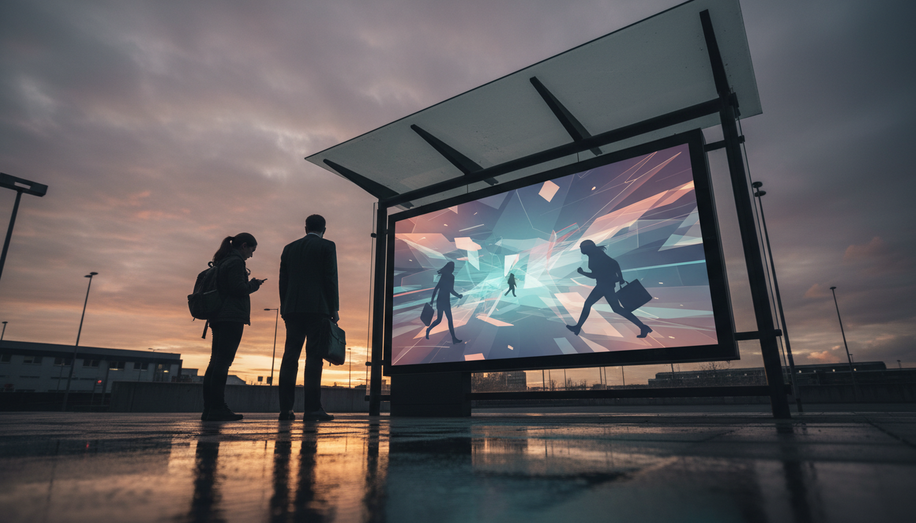

Artificial intelligence is revolutionizing out-of-home (OOH) advertising, transforming it from a static medium into a dynamic, data-driven powerhouse where predictive analytics forecasts consumer behavior with remarkable precision. By analyzing vast datasets on mobility, weather, foot traffic, and demographics, AI enables advertisers to anticipate audience movements and tailor campaigns in real time, ensuring messages land exactly when and where they matter most. This shift is not merely incremental; it’s redefining strategy, targeting, and content creation, propelling OOH into a future of unparalleled efficiency and impact.
At the heart of this evolution lies predictive analytics, powered by machine learning algorithms that sift through historical and real-time data to predict campaign outcomes. In outdoor advertising, where visibility hinges on location and timing, these tools identify optimal billboard placements by factoring in pedestrian patterns, peak hours, and contextual events. For instance, AI can forecast high-traffic surges near gyms during workout peaks or along urban highways during rush hour, dynamically adjusting ad rotations to maximize exposure. A fitness brand might see its promotions amplified on digital screens near running trails precisely when enthusiasts are most receptive, turning passive impressions into active engagements.
This predictive prowess extends to audience segmentation, moving beyond broad demographics to granular behavioral and psychographic profiles. Platforms leverage GPS, mobile data, and even weather forecasts to segment viewers, predicting responses based on past interactions. In Mexico City, for example, AI models analyze geolocation and rush-hour flows on major arteries like Periférico, switching messaging from brand awareness to promotions at peak receptivity windows. Retailers during the Christmas season use similar modeling to pinpoint high-traffic zones near shopping districts, simulating scenarios that optimize budgets and creative themes for maximum sales lift. Such capabilities eliminate guesswork, allowing advertisers to forecast conversions and allocate spend across static and digital OOH with surgical accuracy.
Programmatic digital out-of-home (DOOH) advertising amplifies these advantages through automation. Here, AI handles buying, scheduling, and optimization from unified dashboards, dynamically shifting budgets to top-performing screens based on live performance metrics. If social media data reveals stronger engagement for a segment, funds flow seamlessly to DOOH channels mirroring that behavior, all without manual intervention. Weather-based targeting adds another layer: HVAC companies trigger heating ads ahead of cold fronts, while plumbing services ramp up flood prevention spots during storm forecasts, blending environmental data with consumer intent for hyper-relevant delivery.
Beyond targeting, AI is reshaping content creation, automating design and personalization to keep OOH fresh and resonant. Tools generate ad variants tailored to viewer preferences, adjusting visuals, copy, and calls-to-action in real time. A sportswear campaign near stadiums might evolve from event hype to post-game purchase prompts, capitalizing on emotional highs. Predictive analytics further measures lift by linking exposures to foot traffic, sales, and conversions, providing ROI insights that static metrics once obscured. Brands gain actionable intelligence on impressions, dwell time, and downstream behaviors, enabling continuous refinement.
Looking ahead, the integration of AI promises even bolder innovations. Multimodal data fusion—combining OOH with mobile, social, and IoT signals—will yield holistic consumer views, forecasting not just exposure but full-funnel journeys. Competitors’ strategies become predictable too, as AI dissects rival placements and effectiveness, informing counter-moves. Inventory management for media owners will optimize yields by anticipating demand peaks, while ethical AI frameworks address privacy concerns in public spaces.
Yet challenges persist. Data silos across platforms demand unified ecosystems, and regulatory scrutiny on location tracking calls for transparent practices. Still, pioneers like programmatic DOOH networks are proving AI’s worth, with early adopters reporting sharper targeting and 20-30% efficiency gains in some cases, though comprehensive benchmarks are emerging.
As AI matures, OOH advertising will transcend billboards to become proactive ecosystems, anticipating desires before they surface. Predictive analytics is just the foundation; generative AI for immersive creatives and augmented reality overlays beckon next, blending physical spaces with virtual persuasion. For advertisers, the message is clear: embrace this intelligence or risk fading into the urban backdrop. The future isn’t coming—it’s already measuring your next move.