
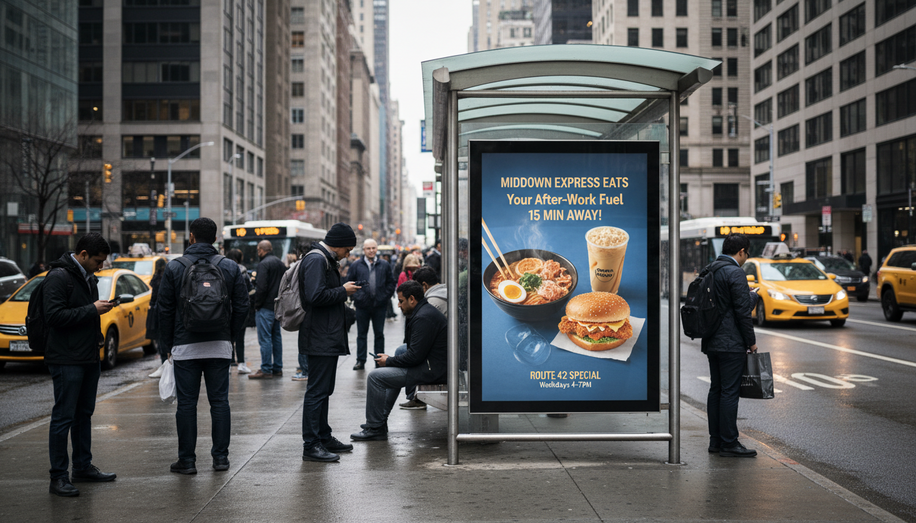

In the bustling corridors of daily commutes, where highways pulse with rush-hour traffic and urban arterials carry streams of potential customers, out-of-home (OOH) advertising has long relied on prime real estate to capture fleeting glances. Yet, traditional route-based campaigns—those strategically placed along commuter paths, delivery routes, or pedestrian flows—often hinged on estimates of traffic volume and gut-feel demographics, leaving advertisers with impressions but little proof of impact. Enter data analytics, a transformative force now reshaping these campaigns into precision instruments that track, target, and optimize every mile.
Data-driven insights begin with mobility and foot traffic analytics, which map consumer movement in unprecedented detail. By harnessing real-time mobile signal density, GPS data, and points-of-interest (POI) information, advertisers can visualize audience flows along specific routes, pinpointing peak hours when commuters from targeted income brackets or age groups are most prevalent. For instance, tools analyze daily commutes and daytime population shifts to reveal that a billboard on a suburban highway garners higher engagement from families during evening returns, while downtown arterials peak with young professionals at lunch. This granular understanding allows planners to select OOH placements not just for visibility, but for alignment with behavioral patterns, ensuring ads reach audiences at moments of high receptivity.
Consider commuter traffic analytics, a cornerstone for route-based optimization. Real-world mobility data overlays historical and live feeds of vehicle and pedestrian volumes, exposing hotspots where dwell time— the seconds eyes linger on a sign—maximizes recall. A campaign for an automotive dealer, for example, used this data to geofence billboards within three miles of dealerships along major commuter corridors. The result: 180,000 unique mobile devices reached, 12,000 attributed store visits, and a 21% spike in web traffic from nearby zip codes, proving direct ROI from route exposure. Such attribution moves beyond vague impressions, linking OOH sightings to downstream actions like app downloads or purchases via smartphone tracking.
Real-time adaptability elevates this further, particularly for digital OOH (DOOH) along dynamic routes. JavaScript-powered billboards integrate weather APIs, traffic cams, and social trends to swap creatives on the fly. If a sudden rainstorm slows a highway to a crawl, ads can pivot to promote cozy indoor promotions; during events clogging commuter paths, they highlight nearby alternatives. This environmental awareness, combined with dynamic audience segmentation, boosts engagement by up to 50% through hyper-relevant content, slashing wasted impressions by 20-40%. Predictive analytics takes it proactive: by mining historical foot traffic, demographics, and psychographics, it forecasts optimal timing and locations, identifying high-value segments likely to convert along a delivery truck’s circuit or a bus route.
Measurement has evolved from crude counts to comprehensive funnels. Pre-campaign, data identifies route hotspots; during flight, it monitors exposure via GPS verification and dwell metrics; post-campaign, geofencing attributes lifts in store traffic or online searches back to specific signs. Tools like mobile geofencing create virtual polygons around competitors’ sites along routes, poaching audiences with tailored messaging, while integrated dashboards track brand recall and conversion rates. This closed-loop approach turns routes into performance channels, where underperforming segments prompt reallocations—more budget to high-traffic morning stretches, less to quiet off-peaks.
Challenges persist, of course. Privacy regulations demand anonymized data handling, and integrating disparate sources like sensors, APIs, and demographic overlays requires robust platforms. Yet, successes abound. European advertisers, leveraging location-based behavioral insights, have refined commuter route campaigns to mirror digital precision, adjusting for seasonal migrations or events in real time. In the U.S., OOH networks use AI for automated content rotation, synchronizing billboards with mobile and social channels for unified journeys.
The payoff is clear: data analytics doesn’t just enhance route-based OOH; it redefines it as a measurable powerhouse. Campaigns once static now evolve with audiences, delivering 15-25% higher conversions through context-aware relevance. Advertisers who embrace this—mapping routes with mobility data, optimizing via predictive models, and attributing via geofencing—gain a competitive edge in crowded commutes. As urban mobility grows more predictable through big data, route-based OOH stands poised to drive not just visibility, but verifiable growth, proving its place in the modern marketing mix.