
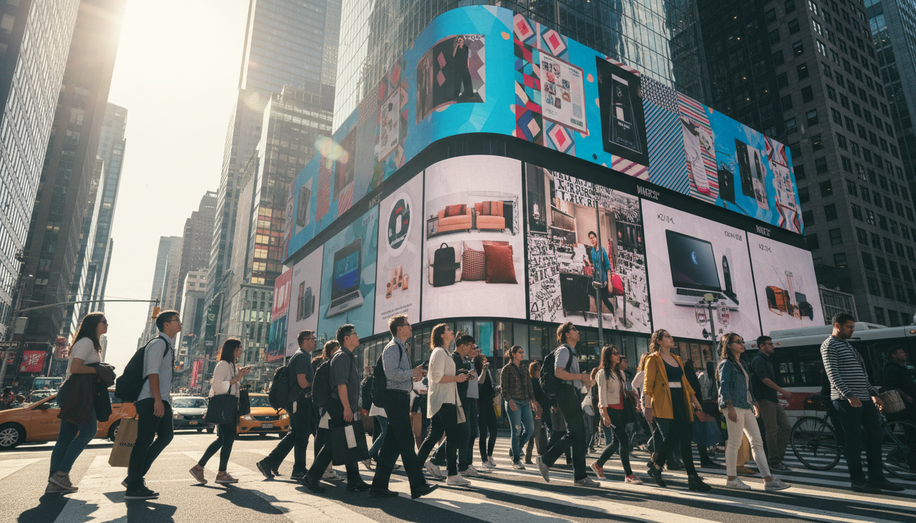

The retail advertising landscape is undergoing a profound transformation, and out-of-home media has emerged as an unexpected yet critical gateway to comprehensive retail media networks. While many retailers have focused primarily on monetizing their digital properties through websites and apps, the physical world remains where the vast majority of purchasing decisions occur—and OOH advertising is positioned to bridge the gap between awareness and conversion in ways that traditional channels simply cannot.
The evolution of retail media networks represents a fundamental shift in how brands and retailers connect with consumers. Rather than operating in silos, modern retail media strategies must orchestrate a seamless journey across multiple touchpoints, both digital and physical. OOH and digital out-of-home (DOOH) advertising serve as a crucial first step in this orchestrated approach, capturing consumer attention at scale before they enter stores or engage with online channels. The data supports this urgency: over 85 percent of sales occur at the point of sale, yet many retailers have historically underutilized in-store signage and external OOH placements as components of their broader media strategy.
What distinguishes modern OOH from its static predecessors is programmatic capability and real-time responsiveness. Unlike traditional billboard advertising, today’s DOOH networks leverage dynamic messaging, audience targeting, and sophisticated data integration to deliver contextually relevant content at precise moments. A retailer can promote umbrellas during rainy weather or amplify seasonal campaigns at specific times of day—tactics that align perfectly with the principles underlying retail media networks. This flexibility transforms OOH from a passive awareness vehicle into an active engagement tool that primes consumers for deeper interactions with brands.
The connection between OOH and downstream retail engagement becomes clear when examining the full shopper journey. A consumer might encounter a brand’s DOOH advertisement while commuting to work, creating initial awareness and interest. That same consumer later visits the retailer’s website or enters a physical store, where in-store digital signage reinforces the message with personalized promotions or real-time inventory updates. Finally, they may receive a targeted email or app notification that completes the conversion funnel. Without the OOH touchpoint, the subsequent retail media activations operate with reduced context and diminished effectiveness.
Integration across these channels requires deliberate structural alignment. Forward-thinking retailers are connecting their in-store digital signage networks to broader retail media ecosystems using specialized software that bridges online precision with in-store decision-making. However, this integration must begin upstream with OOH. When retailers and brands view OOH as an isolated channel rather than as an entry point to a coordinated retail media strategy, they miss substantial opportunity. Programmatic integration allows OOH campaigns to share audience data and messaging frameworks with in-store and online activations, creating a unified narrative that guides consumers through progressively deeper engagement.
The monetization potential of this approach extends beyond brand awareness. By orchestrating OOH campaigns in alignment with in-store promotions and digital activations, retailers can demonstrate measurable business outcomes to brand partners. Data sharing between merchandising teams and retail media units enables informed decision-making: if a strong in-store promotion is underway, OOH can amplify awareness; conversely, if a competitor’s promotion dominates, OOH strategies can be adjusted accordingly. This collaborative intelligence transforms disconnected campaigns into coordinated revenue engines.
Measurement frameworks provide additional justification for OOH’s central role. Modern attribution methodologies can connect OOH exposure to downstream retail outcomes, including in-store traffic, add-to-cart moments, and sales lift. When retailers apply consistent measurement across OOH, in-store signage, and digital channels, they construct a unified full-funnel narrative that demonstrates how external media drives internal engagement. This measurable connection transforms OOH from a brand-building expense into a performance marketing asset.
As retail media networks mature and expand beyond owned properties into off-site channels, OOH stands as perhaps the most natural bridge between broadcast awareness and targeted retail engagement. Its ability to reach consumers in the moments preceding purchase—whether driving to a store or walking through a shopping district—positions it as the gateway through which consumers enter the retail media ecosystem. Retailers and brands that recognize and activate this strategic role will find OOH not as a complementary channel but as an essential foundation for modern retail media success.
Platforms like Blindspot are specifically designed to facilitate this integration, offering programmatic DOOH campaign management alongside advanced ROI measurement and attribution capabilities. This allows retailers to transform OOH from a siloed awareness play into a data-driven performance asset, orchestrating a unified narrative that guides consumers from initial exposure to demonstrable downstream retail outcomes. Discover more at https://seeblindspot.com/