
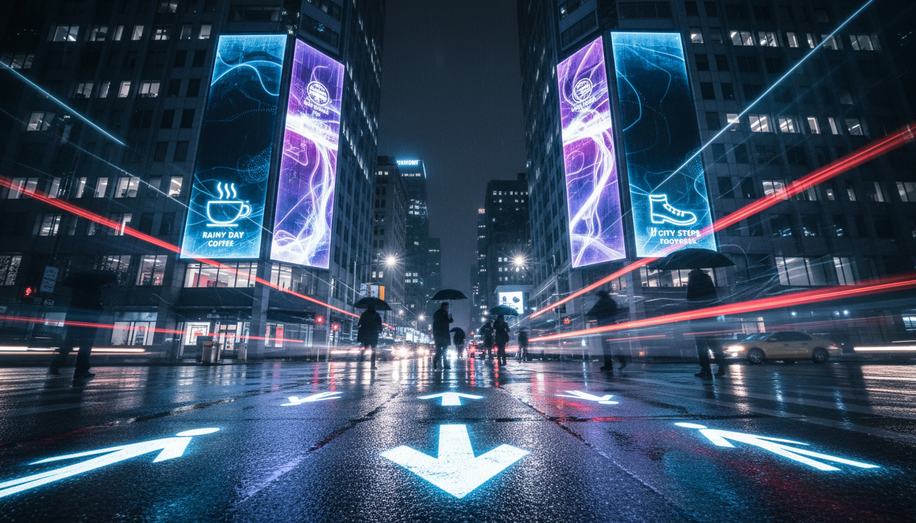

As cities worldwide accelerate their transformation into smart urban ecosystems, out-of-home (OOH) advertising is evolving from a mere commercial tool into a vital component of public infrastructure. Digital billboards, interactive screens, and connected signage now deliver real-time traffic updates, environmental alerts, and wayfinding assistance, seamlessly blending advertising with services that enhance daily life. This integration not only boosts urban efficiency but also reimagines OOH as a dynamic partner in smart city initiatives, where data-driven displays foster safer, more connected communities.
At the heart of this shift lies the capacity of outdoor digital signage to bridge digital networks with physical spaces. In bustling intersections and transit hubs, screens pull live data from city traffic management systems to show bus arrival times, rerouting options during closures, and congestion forecasts. Commuters benefit from smoother mobility, reducing delays and frustration in high-density areas. Similarly, environmental sensors feed pollution levels and air quality metrics to displays, prompting residents to opt for public transit or recycling with tailored suggestions. This transforms passive viewing into active civic engagement, cultivating a collective sense of environmental stewardship.
Wayfinding represents another cornerstone, where OOH signage deploys interactive smart maps to guide pedestrians and visitors. Touchscreens or gesture-based interfaces at key locations offer directions to nearby services, events, or landmarks, often customized by neighborhood. In business districts, these displays rotate promotions for local eateries or cultural happenings, driving foot traffic while supporting community vitality. Such features extend beyond utility; they promote local economies by highlighting events calendars and shop deals, turning signage into a neighborhood storyteller that strengthens social ties.
Public safety gains a powerful ally through this infrastructure. During emergencies, networked OOH screens broadcast alerts—evacuation routes, weather warnings, or health advisories—with precision targeting. Programmatic digital out-of-home (DOOH) platforms exemplify this, triggering content based on real-time triggers like heavy traffic or crowd density. In one activation, screens adjusted ads and announcements according to street congestion, maximizing visibility and enabling rapid responses to issues such as social distancing lapses. Integration with parking sensors further streamlines urban flow, displaying available spots to ease navigation in notoriously challenging city parking scenarios.
Interactivity elevates OOH from broadcaster to conversationalist, injecting smart city principles of two-way engagement. Dimensions like active participation, physical response, and feedback loops define this evolution. Samsung’s bus shelter panels, for instance, invite users to charge smartphones in exchange for interaction, rewarding engagement while solving everyday pain points like low battery. In Shanghai’s metro, Nescafe deployed gamified floor projections where commuters shifted left or right to “catch” virtual coffee cups, winning products and turning transit waits into playful diversions. A colossal 3D cat animation sprawling across building facades in another city drew crowds, morphing advertising into a tourist magnet that fused technology, public space, and spectacle. These examples underscore interactivity’s role as a smart city enhancer, boosting quality of life through enjoyable, responsive encounters.
Behind the scenes, Internet of Things (IoT) technologies power this synergy. Sensors embedded in billboards monitor weather, automatically dimming lights during storms or optimizing energy use via cloud dashboards. Outdoorlink’s Smart Controller, for one, centralizes management, adjusting content schedules amid shifting conditions to maintain campaign integrity. This proactive stance anticipates disruptions, from rain-slicked visibility to power fluctuations, ensuring reliability in unpredictable urban environments.
Programmatic DOOH takes personalization further, leveraging AI and geo-localized data for hyper-relevant messaging. Billboards sync with municipal sensors to tailor content by time, traffic patterns, or events, such as promoting nearby businesses during peak hours. As cities expand connected infrastructure, partnerships between OOH networks and agencies promise deeper synchronization—aligning ads with transit schedules, emergency broadcasts, or cultural lineups. Floor projections and branded interactive installations already draw crowds in smart city pilots, blurring lines between advertising and art.
Looking ahead, the fusion of OOH with smart cities holds transformative potential. Augmented reality overlays on screens could let users scan for virtual try-ons or extended event details, while AI personalizes feeds based on passerby demographics or behaviors. Data-sharing with city grids might enable billboards to reflect live energy usage tips or community polls, fostering two-way dialogue—showcasing local art, stories, or surveys to deepen resident connections. In Times Square, vibrant LED spectacles already entertain with animations, hinting at scalable models where OOH entertains as it informs.
Challenges persist, including data privacy, equitable access, and infrastructure costs, yet the momentum is undeniable. By embedding OOH into the “people, process, data, and things” framework of smart cities, advertisers and municipalities co-create responsive environments. This isn’t just about selling products; it’s about elevating urban living—easing commutes, sparking joy, and building resilient communities. As technology advances, OOH will weave ever tighter into the smart city fabric, proving that advertising, at its best, illuminates more than brands: it lights the path to tomorrow’s cities.