
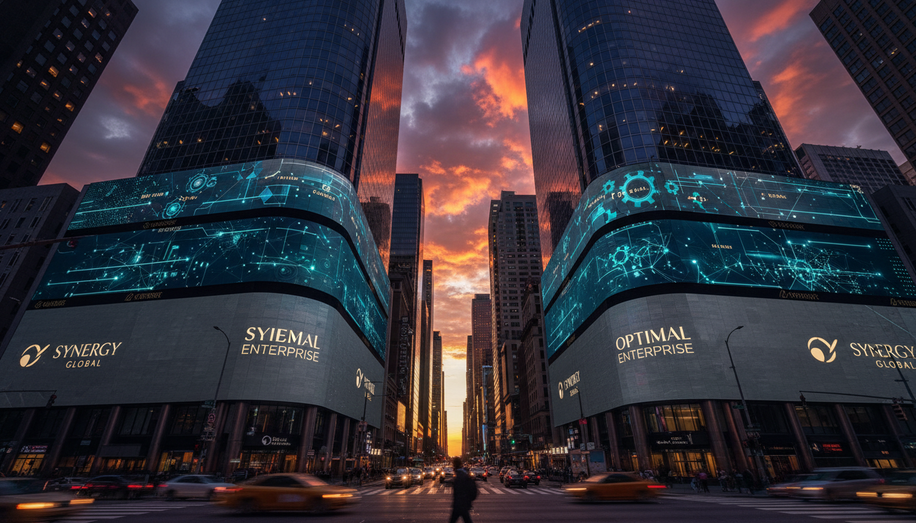

In the high-stakes world of B2B marketing, where decision-makers are bombarded with digital noise, out-of-home (OOH) advertising is emerging as a surprisingly potent weapon for capturing attention, building brand authority, and sparking inquiries. Far from the flashy consumer billboards of Times Square, savvy B2B brands are deploying OOH in targeted, creative ways to infiltrate the daily lives of executives and procurement leads, turning passive exposure into active engagement. This resurgence comes at a time when remote work has reshaped commutes, yet OOH’s adaptability—through hyper-local placements, event tie-ins, and digital integrations—positions it as an untapped channel in a $50 billion industry that 46% of B2B firms are already embracing, particularly mid-market players.
Consider Brex, the fintech darling that pivoted OOH strategy amid post-pandemic office hesitancy. Instead of relying solely on workplace proximity, Brex blanketed key markets with a “canvassing” campaign as shelter-in-place rules lifted, plastering ads across residential areas, shopping districts, and everyday pathways where target audiences lived and spent. The result? Unmissable visibility that reinforced account-based marketing (ABM) efforts, filling the top of the sales funnel with top-of-mind awareness. This approach underscores OOH’s strength in amplifying ABM: while personalized digital tactics handle one-to-one nurturing, OOH blasts broad yet precise exposure, making subsequent outreach more effective. AdQuick, the platform behind such campaigns, notes OOH’s cost-effectiveness and high offline-to-online attribution, proving it’s not just awareness—it’s a lead magnet.
OOH’s power lies in its real-world immediacy, which fosters trust and authority in ways screens cannot match. A Talon UK benchmark study reveals transport-based OOH boosts brand trust by an average 8%, ideal for B2B where long sales cycles demand credibility. Kantar research echoes this, positioning OOH and digital out-of-home (DOOH) as preferred channels for driving bottom-funnel actions like inquiries, not just fame. For corporate branding, this translates to executives associating a logo with reliability during their commute or airport lounge wait. OAAA data shows nearly 80% of consumers—including business travelers—engage with OOH in the past 60 days, amplifying journeys from billboards to stadium screens. In B2B, that engagement lifts recall by 2.5 times over online ads, per OAAA studies, providing “pipeline insurance” in multi-quarter deals.
Unexpected tactics are where OOH truly shines for lead generation. Brands are hijacking commutes by mapping executive routes in hubs like Austin, Denver, and San Francisco, placing succinct, eye-catching ads along dense traffic corridors. A legal tech firm exemplified this at a tradeshow, deploying transit billboards circling event hotspots and nearby offices, yielding 2.2 times the targeted social shares and a 329% ROI on conference-generated business. Trade shows amplify this further: as professionals fly in, OOH dominates airports, shuttles, and arenas, blending traditional buys with guerrilla elements like street teams for market saturation. Betsy McLarney of Agency Management Institute highlights how this enhances B2B strategies, with low CPMs and massive impressions complementing radio, TV, or digital—studies show 40% higher click-throughs on ads after OOH exposure.
Digital evolution supercharges these efforts. DOOH enables retargeting: platforms like AdQuick track exposures to serve personalized follow-ups across channels, extending OOH’s reach from street to screen. A “Survival Billboard” campaign once held gazes for eight minutes versus eight seconds on static boards, garnering 3.5 million views and 30,000 social comments, proving experiential OOH drives shares and searches. For 2025, Revsure.ai forecasts OOH as a revenue driver, with integrated campaigns yielding $5.97 in sales per dollar spent—outpacing TV or print. Media planners agree: digital OOH inclusion jumped from 50% in 2015 to 61% recently, recognizing its lift on other channels.
Yet challenges persist, like hybrid work reducing office footfall, but innovators counter with residential and lifestyle targeting. B2B adoption lags consumer use, but as measurement improves—tying impressions to inquiries—it’s gaining traction. Unlocking this potential requires precision: geo-fencing decision-maker zones, succinct messaging, and multi-touch integration. The payoff? Enhanced authority where it counts—in the physical world where deals are discussed over coffee or cabs. As B2B marketers chase elusive leads, OOH offers a bold, measurable path to stand out, proving billboards aren’t relics; they’re revenue accelerators in disguise.