

In the fleeting rush of highway traffic, a single static billboard wields extraordinary power, distilling complex narratives into an instant spark of recognition and emotion. Drivers hurtling by at 65 miles per hour grant it mere seconds—often three to seven—to seize attention, convey a story, and prompt action. Mastering this demands creative storytelling stripped to its essence: visual hierarchy that guides the eye like a spotlight, minimalist design that eliminates distraction, and punchy copy that lands like a gut punch. Unlike digital screens with loops or animations, the static billboard relies on one frozen moment to endure in memory, turning constraints into its greatest strength.
Visual hierarchy forms the backbone of this concise art form. The eye processes billboards in a predictable path, starting with the largest, boldest element and flowing logically to supporting details. Professionals prioritize a single primary message—massive, unmissable text or imagery that dominates the space—followed by secondary reinforcement and a crisp call-to-action at the base. This structure mimics how the brain scans under duress: primary hooks first, details second, action last. Clutter disrupts this flow; overloading with multiple images, logos, or facts scatters focus, rendering the board invisible amid the blur of motion. Instead, limit elements to three: one compelling graphic, one directive phrase, and one identifier like a logo or phone number. High-contrast colors amplify hierarchy—white text blazing against a dark sky or vice versa—ensuring readability from 300 feet away, even in glare or dusk.
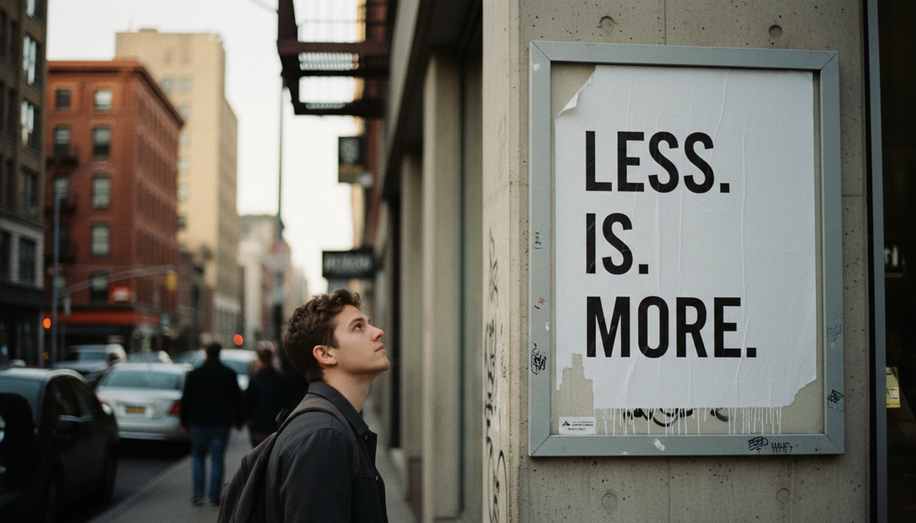
Minimalist design elevates simplicity to storytelling genius. White space, far from wasted real estate, acts as a deliberate frame, directing gaze and lending sophistication. New designers cram every inch with promotions, but veterans know less ignites more: one high-impact image, if any, replaces verbose explanations. A close-up of a weathered hand clutching a coffee mug can evoke morning ritual and urgency better than paragraphs. Text-only boards prove equally potent in high-speed zones, where pure typography cuts through visual noise. Sans-serif fonts, bold and uncluttered, scale massively—at least 24 inches tall for smallest elements—to defy distance and speed. Colors strategize rather than decorate: bright accents on neutral grounds boost recall by up to 38 percent, while clashing hues or subtle shades fade into oblivion.
Punchy copy transforms hierarchy and minimalism into narrative propulsion. Adhere to the ironclad rule: seven words or fewer, forging a single, digestible idea. “Exit Now for 20% Off Gas” outperforms vague pleas like “Visit Our Website,” specifying action with immediacy. Strong calls-to-action command response—”Call 555-1234 Today” or “Scan Here”—without ambiguity, limiting contact options to one for laser focus. This brevity crafts stories through implication: a luxury watch on a bare wrist whispers aspiration; “Tired? Red Bull Wakes You Up” implies revival without exposition. Test rigorously: the five-second drill—expose the design briefly, then quiz comprehension—exposes flaws mercilessly. Grayscale checks verify contrast; distance simulations from across a room mimic highway scrutiny.
Real-world triumphs illustrate these principles in action. Consider highway boards in high-traffic corridors, optimized for velocity: a solitary flame graphic atop “Ignite Your Drive—Shell Ahead” leverages hierarchy to promise fuel and thrill in one glance. Location refines the craft—slow urban flows tolerate subtle nuance, while interstates demand barbaric simplicity, sans curves or obstructions that steal eyes. Production safeguards endure: UV-resistant inks and laminated finishes battle weather, while safe zones keep essentials from edges.
Yet pitfalls abound for the unwary. Information overload buries messages; complex fonts or tiny type vanish at speed. Multiple graphics compete like rivals in a ring, diluting impact. Weak calls-to-action leave viewers adrift, squandering the $6 return per dollar that sharp designs deliver.
Ultimately, creative storytelling on a static billboard alchemizes limitation into legend. By wielding visual hierarchy as a narrative arrow, minimalist design as breathing room, and punchy copy as the sharpened tip, advertisers craft instants that linger. In an era of endless scrolls, this lone sentinel roadside commands pause, proving that true impact thrives in restraint. Agencies embracing these tenets report campaigns that not only captivate but convert, etching brands into the collective subconscious with elegant economy.