
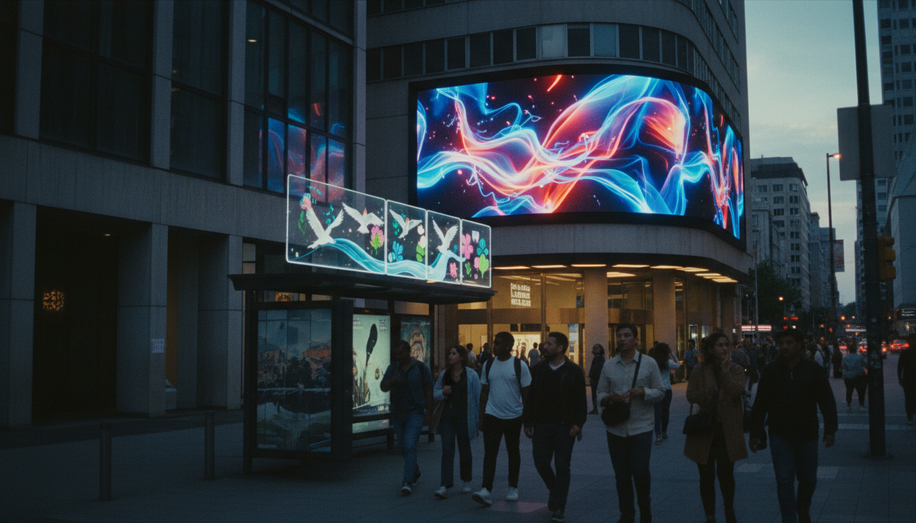

In the bustling ski resorts of the Austrian Alps, Kiehl’s skincare brand transformed a winter getaway into a multi-sensory marketing triumph, blending towering billboards with pop-up skin analysis stations and influencer takeovers that reached skiers mid-lift line. This campaign exemplifies a global surge in integrated OOH strategies, where traditional outdoor advertising fuses with experiential elements to create lasting impressions. As 2026 unfolds, advertisers worldwide are drawing lessons from such innovations, proving that out-of-home (OOH) remains a powerhouse for capturing attention in an increasingly fragmented media landscape.
Across continents, OOH is evolving from static displays into dynamic, data-fueled ecosystems. In North America, the spotlight falls on major events like the FIFA World Cup and Winter Olympics, fueling DOOH growth through programmatic buying projected to hit $1.35 billion globally. Here, advertisers prioritize accountability, linking OOH exposure to mobile and connected TV attribution for measurable ROI—addressing digital fatigue where social feeds saturate and cookies crumble. Billboards, unskippable and ad-blocker-proof, deliver scale without privacy pitfalls, influencing 26% of viewers to visit brand websites directly and prompting 56% to share funny creatives.
Europe, particularly EMEA, leads in sustainability as a core metric, not mere rhetoric. Tightening regulations push media owners toward “energy scoring” and solar-powered screens, rewarding brands that select low-carbon infrastructure. Kiehl’s Alpine activation hints at this ethos, harmonizing with nature while extending reach via influencers, a tactic echoing UK trends where OOH amplifies emotional impact—95% of purchases stem from feeling, after all, and bold formats excel at instant humor and joy. Lessons for globals: integrate eco-conscious designs to build trust, as sustainability edges toward competitive advantage in omnichannel mixes.
Asia-Pacific sets the pace for high-speed tech fusion. India’s Britannia rolled out “Nature Shapes Britannia,” crafting eco-friendly installations from recycled materials that doubled as art, merging FMCG promotion with environmental messaging. In transit hubs, Sunsilk’s interactive ads—pull a lever for a hair demo—stop commuters cold, blending fun storytelling with product proof to lodge brands in memory. APAC leverages government APIs for real-time transit data, enabling “liquid audiences” over fixed spots: target high-income flows or tourism surges dynamically. Programmatic DOOH, expected to claim over 40% of global OOH spend, thrives here, with AI agents autonomously optimizing 25% of campaigns by flighting creatives to weather, traffic, or events.
This shift to “agentic AI” marks OOH’s maturation into a global operating system, woven into digital stacks via retail media integration. In-store screens, powering 56% of DOOH growth through 2029, trigger ads on live inventory using retailer data—hyper-relevant at point-of-purchase. Contextual mastery follows: ads auto-adjust for rain (promoting umbrellas) or game scores, baseline now for dynamic creative. Transit wraps, street furniture on bike racks, and AR guerrilla stunts bridge physical to digital via QR codes, boosting foot traffic without cookies.
Global advertisers glean pivotal takeaways. First, integration trumps isolation: Kiehl’s blended OOH with experiential and social for amplified engagement, a model outperforming siloed digital. Second, data sophistication unlocks precision—OOH’s audience fluidity demands tools like sales automation and AR platforms for personalization. Third, creativity rules: 71% of consumers scan roadside messages, so humor and interactivity convert views to buzz. Amid digital distrust, OOH’s physicality fosters authenticity, with markets like the UK eyeing cultural relevance amid AI content floods.
Yet challenges persist. Standardization lags, but 2026 promises acceleration, with DOOH spend topping $33 billion as urbanisation swells audiences. Retail and transit dominate for locals, while experiential AR lodges memories globally. For brands, the directive is clear: embrace AI-driven relevance, sustainable scale, and bold storytelling. OOH isn’t just hitting hard—it’s redefining advertising’s real-world pulse, from Alpine peaks to Mumbai streets, urging advertisers to think beyond screens toward unmissable presence. To truly harness this evolution and drive “AI-driven relevance” with unmissable presence, platforms like Blindspot are indispensable. Its comprehensive suite, from programmatic DOOH campaign management and real-time performance tracking to precise ROI measurement and audience attribution, empowers advertisers to dynamically optimize campaigns and link OOH exposure directly to business outcomes, navigating the complex integrated media landscape with unparalleled clarity. https://seeblindspot.com/