
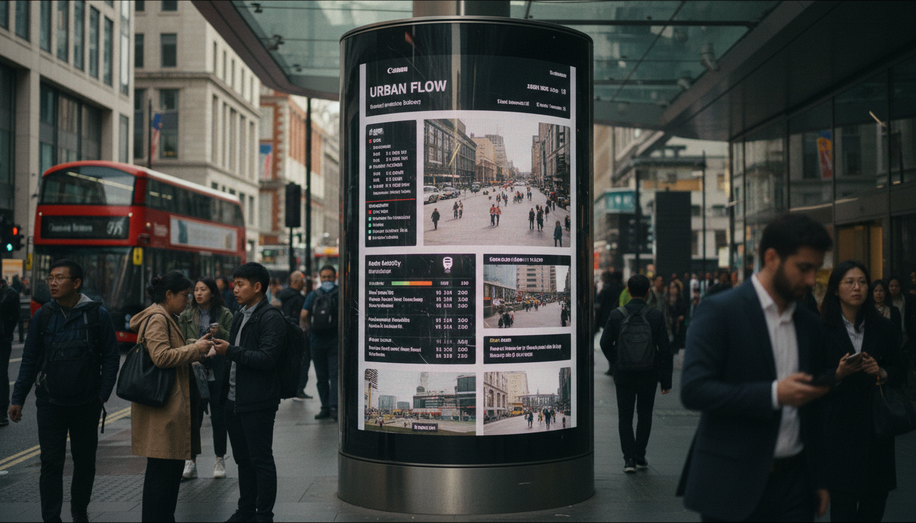

In the bustling arteries of modern metropolises, digital out-of-home (OOH) displays are emerging as vital nodes in the smart city ecosystem, blending advertising with urban functionality to deliver real-time information and context-aware messaging. These dynamic screens, powered by Internet of Things (IoT) sensors, artificial intelligence (AI), and vast data streams, transcend traditional billboards, transforming static advertising into interactive hubs that enhance public services while captivating audiences. As cities worldwide invest in intelligent infrastructure—from energy-efficient streetlights to adaptive traffic systems—OOH providers are positioning digital displays as seamless extensions of this connected fabric, promising a future where urban environments respond intuitively to residents’ needs.
The integration begins with real-time adaptability, a hallmark of smart city synergy. IoT-enabled billboards, like those managed through cloud-based dashboards, automatically adjust content based on environmental cues such as weather, time of day, or traffic density. In rainy conditions, screens dim or switch to weather alerts, ensuring visibility and relevance without wasting energy. This mirrors broader smart city goals of efficiency: displays optimize power usage via sensors, aligning with sustainable urban planning that reduces congestion and emissions. Beyond ads, these billboards serve public interests by relaying transit updates, emergency notifications, or air quality data, integrating directly with city systems for instant dissemination. For instance, during crises, screens can pivot from commercial spots to safety messages, bolstering public resilience while maintaining advertiser value through hybrid functionality.
Context-aware advertising elevates this fusion, leveraging AI to personalize content for passing audiences. Facial recognition and demographic analysis—deployed ethically with privacy safeguards—enable hyper-targeted campaigns, displaying family-oriented promotions during peak school hours or luxury offers to inferred high-income demographics. Data from nearby IoT devices, including pedestrian flow and vehicle patterns, refines this further, ensuring ads resonate in the moment. Programmatic digital OOH (DOOH) platforms amplify this by enabling real-time bidding and scheduling, syncing with omnichannel strategies for cohesive brand experiences across digital and physical realms. Advertisers gain unprecedented insights, tracking engagement metrics like dwell time and interaction rates, which inform iterative improvements and measurable ROI.
Interactivity pushes boundaries even further, turning passive viewers into participants. Touch-enabled hybrid displays combine ad space with utility features like interactive maps, event directories, or transport schedules, fostering dwell time that boosts ad exposure. Augmented reality (AR) overlays invite smartphone users to scan screens for immersive extensions, such as virtual try-ons or gamified promotions, blending OOH with mobile ecosystems. Solar-powered variants, like those from innovators in hyperlocal networks, minimize environmental impact while delivering data-rich campaigns in high-traffic zones. This not only enhances urban aesthetics—replacing cluttered static signs with vibrant, adaptive visuals—but also reduces visual pollution by cycling only pertinent content.
Challenges persist, particularly around data privacy and equitable access. As cities scale these technologies, robust regulations must balance personalization with consent, preventing overreach in surveillance-like features. Energy demands, though mitigated by efficient LEDs and AI optimization, require ongoing innovation to align with net-zero ambitions. Yet, the potential outweighs hurdles: business analysts link DOOH growth directly to smart city expansion, forecasting deeper integrations with public transport and emergency services. Partnerships between OOH firms, city planners, and tech providers are key, as seen in deployments where billboards synchronize with broader infrastructures for unified urban intelligence.
Looking ahead, the trajectory points to even smarter evolutions. AI advancements promise predictive content—anticipating audience behavior via machine learning—while 5G and edge computing enable seamless scalability. Emerging trends like energy-harvesting floors paired with signage could generate power from footsteps, funding community-focused displays. In this connected paradigm, digital OOH doesn’t just advertise; it informs, engages, and sustains, weaving commerce into the urban tapestry. Cities like those piloting these systems stand at the vanguard, proving that intelligent displays can make streets not only smarter, but more human-centered. As adoption accelerates, OOH emerges as an indispensable thread in the fabric of tomorrow’s metropolises, driving both economic vitality and civic harmony.