
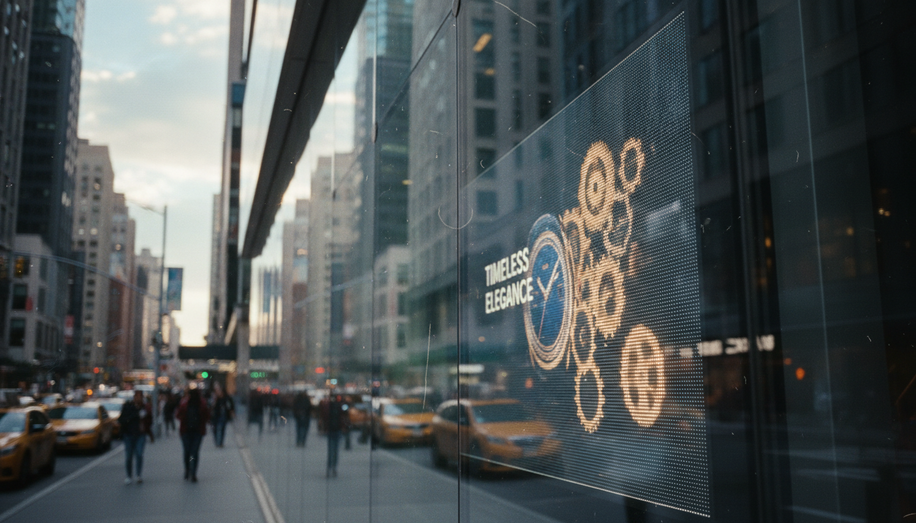

In the bustling urban environments where out-of-home advertising competes for fleeting glances, traditional opaque screens are giving way to a new generation of displays that blend seamlessly into their surroundings. Transparent LED screens and flexible OLED panels are redefining the medium, offering unprecedented versatility without sacrificing visibility or impact. These innovations allow advertisers to transform glass facades, curved building surfaces, and even retail windows into dynamic canvases that maintain architectural transparency while delivering vivid messages.
Transparent LED technology, pioneered by companies like Luxmage and Holoscape LED, achieves transparency rates up to 90 percent, ensuring natural light flows uninterrupted through glass walls or storefronts. Luxmage’s LOD series outdoor screens, for instance, boast a lightweight design at just 16kg per square meter and a slim 82mm thickness, making them ideal for high-rise installations where wind resistance and ease of assembly are paramount. With IP65 ratings, these displays withstand rain, dust, and direct sunlight, passing rigorous water immersion tests to deliver sharp visuals even in harsh weather. Pixel pitches ranging from P3.91 to P10.42 cater to various distances, from close-up retail views to expansive billboard scales.
What sets these screens apart is their ability to coexist with the environment rather than dominate it. Holoscape’s surface-mounted modules adhere discreetly to transparent surfaces, turning windows into interactive displays that capture attention in bright daylight without obstructing views. In retail settings, this fusion of physical and digital realms elevates customer engagement—imagine a luxury boutique where product visuals float ethereally over visible merchandise inside, drawing passersby into an immersive brand story. Kensence’s flexible transparent LED film screens, available in P5 to P10 models, employ metal mesh technology and yellow light subtractive processes for low fog and high permeability, resisting high and low temperatures while flexing to conform to irregular shapes.
Flexible displays take this evolution further, enabling curved and conformal installations that integrate directly into architecture. American LED Wall highlights how buildings are evolving into living canvases with these adaptable screens, wrapping around facades or undulating forms to create spectacle without rigid frames. Nexnovo’s LED photoelectric glass, introduced in 2019, exemplifies this by embedding vivid media into transparent panels for lobbies, landmark buildings, and even sightseeing elevators. Modular panels can be angled slightly for curved effects, as noted by R&C Lighting, allowing seamless adaptation to non-planar structures like jewelry counters or arched retail displays.
Programmability amplifies their power. Unlike static billboards, these displays support dynamic content scheduling via motion or ambient light sensors—activating a promotional loop only when pedestrians approach or as dusk falls. This interactivity boosts ROI by maximizing relevance and minimizing energy waste; transparent LEDs spread diodes over larger areas, avoiding the overheating issues of conventional outdoor screens and eliminating bulky air conditioning units. They’re thinner, more energy-efficient, and lighter, slashing shipping and maintenance costs compared to traditional IP65-rated behemoths.
Applications span beyond retail. Airports, malls, exhibition halls, and office towers leverage these technologies for wayfinding, brand activations, and events. Kensence’s films shine in creative advertising and trade shows, commanding attention in crowded spaces with stunning visuals that enhance product exposure. Holoscape’s portable posters, with their case-packable design, suit pop-up installations or art exhibits, blending 90 percent transparency with brilliant imagery. Even hospitality venues like hotels and restaurants use them for welcome displays that feel integrated rather than intrusive.
Yet, adoption hinges on smart selection. Pitch density and panel size drive costs, with finer pitches like P5 ideal for near-view applications but pricier. Transparent screens remain more affordable than fully opaque outdoor alternatives, trading some robustness for elegance—no need for heavy structural supports when weight is so low. Challenges persist: ensuring optimal viewing angles (up to 140 degrees) and brightness for sunlight readability demands quality components.
As cities densify and consumers crave novel experiences, these beyond-standard displays signal a paradigm shift. They’re not just tools for visibility; they create emotional connections by harmonizing technology with space. Brands ignoring this evolution risk fading into the background, while early adopters craft unforgettable urban narratives. The line between display and environment blur further with each advance, promising thinner, smarter screens that pulse with real-time data and interactivity. In OOH’s next chapter, transparency isn’t a feature—it’s the foundation.