
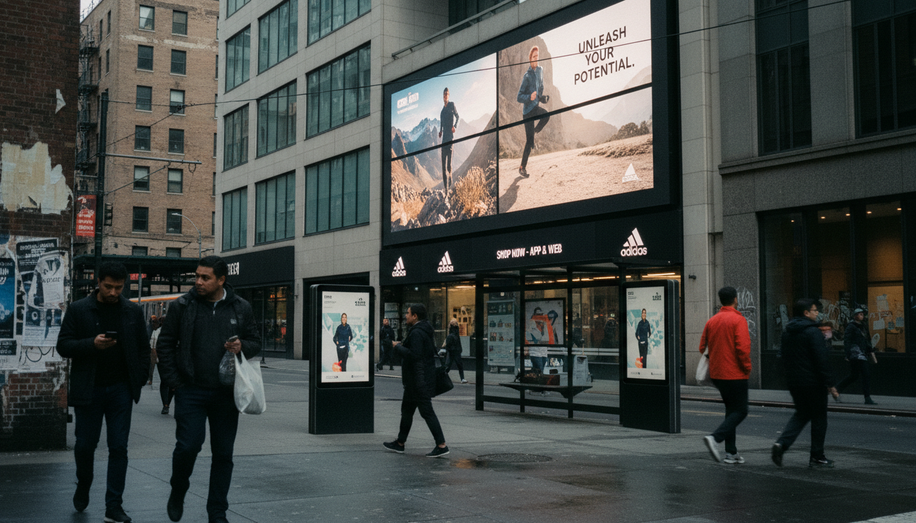

In the evolving landscape of advertising, programmatic digital out-of-home (DOOH) has emerged as a pivotal force in bridging physical and digital realms, enabling brands to amplify their reach and return on investment through seamless cross-channel integration. Once viewed as a standalone medium, programmatic DOOH now leverages automation, real-time bidding, and advanced data capabilities to weave into broader marketing mixes, enhancing campaigns across social media, connected TV (CTV), mobile, and retail channels for a truly unified customer journey.
This integration addresses a core challenge in modern marketing: silos that fragment consumer experiences. Traditional out-of-home advertising offered massive reach but lacked the precision of digital tactics. Programmatic DOOH changes that equation by harnessing demand-side platforms (DSPs) to buy inventory across thousands of screens in real time, using first-party data for targeting based on location, weather, or behavior. For instance, DSPs allow marketers to manage DOOH alongside display, video, CTV, and audio within a single interface, eliminating the need for disparate systems and enabling unified planning and optimization. Clear Channel Outdoor reports that 90% of its premium airport digital inventory and 80% of roadside screens are available programmatically, letting omnichannel buyers access it from the same marketplaces used for mobile and video ads.
The power lies in creating cohesive narratives that span touchpoints. Brands can deploy personalized, contextually relevant creatives on DOOH screens—tailored by demographics or real-world triggers—then retarget the same audiences digitally. Adsmurai’s campaigns exemplify this: pairing mobile retargeting with DOOH placements reinforced brand presence throughout the day, from smartphone screens to urban billboards, fostering familiarity and deeper engagement. Similarly, Sea-Doo targeted outdoor enthusiasts near beaches and lakes using Foursquare data and proximity triggers, adapting messaging to local weather conditions before retargeting via device ID passback on mobile and CTV. This layered approach not only boosts awareness but drives measurable actions; research from the Out of Home Advertising Association of America (OAAA) indicates 76% of recent DOOH viewers took steps like website visits or purchases post-exposure.
Cross-channel synergy extends to specific pairings that supercharge performance. Integrating programmatic DOOH with social media amplifies influencer partnerships, building trust while mitigating over-reliance on platforms prone to algorithm shifts. With CTV, it elevates brand fame for emerging players, combining narrative depth with massive physical visibility. Retail media benefits immensely too: DOOH in supermarket environments heightens awareness and yields cross-channel data on shopper behavior, informing digital retargeting. Travel Texas harnessed this in a multi-channel push across TV, audio, digital, social, and print, using programmatic DOOH in high-traffic spots like airports and malls. Retargeting DOOH-exposed audiences on mobile yielded a 176% surge in travel to Texas, 94% website traffic growth, and 78% lift in trip-planning intent. DoorDash mirrored the tactic for recruitment, targeting prospects on DOOH then following up on mobile, achieving 22% higher consideration and 6% intent uplift for sign-ups.
Data integration is the linchpin, moving beyond crude “data dumps” to strategic activation aligned with objectives. First-party data now fuels precise audience matching across channels, with tools like device ID passback enabling attribution from DOOH impressions to downstream conversions. This provides clearer visibility into reach, frequency, and impact, empowering real-time adjustments—such as swapping creatives based on performance or external factors. StackAdapt’s platform, for example, lets marketers retarget DOOH audiences across display, native, video, CTV, and audio, crafting journeys that convert exposure into engagement.
The ROI implications are profound. Programmatic DOOH scales effortlessly, accessing diverse publishers without protracted negotiations, while its physical scale delivers the unmissable impact digital alone can’t match. When embedded in omnichannel strategies, it doesn’t compete for budget but elevates it: supporting online efforts with offline amplification, gathering holistic behavioral insights, and proving uplift through advanced measurement. Challenges persist—DOOH can’t capture direct clicks like digital—but forward-thinking brands counter this by measuring halo effects, where billboards prime social shares or CTV views.
Looking ahead, 2024 trends underscore this momentum, with predictions of tighter ties to social, CTV, and retail media via refined first-party data use. Broader adoption of automation and cross-channel attribution frameworks will further ignite customer journeys, reigniting prospects precisely when and where they matter. For agencies and brands, the directive is clear: treat programmatic DOOH not as an add-on but as the connective tissue of media mixes. Cohesive, data-driven execution ensures every screen works harder, enhancing other channels and delivering outsized results in an increasingly fragmented world.
This fusion of worlds—digital agility with OOH’s commanding presence—positions programmatic DOOH as indispensable for marketers chasing unified impact and superior ROI.