
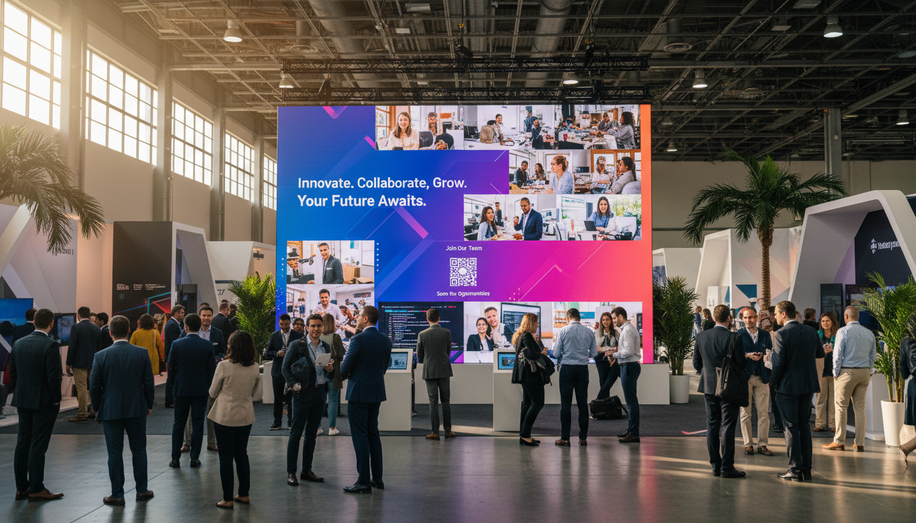

In the fiercely competitive talent wars of 2026, companies are turning to an unexpected ally: out-of-home (OOH) advertising. Billboards, digital screens, and transit wraps are no longer just for consumer products; they have emerged as powerful tools for recruitment and employer branding, cutting through digital noise to reach passive candidates and showcase vibrant company cultures. With job markets strained by skills shortages and remote work fatigue, OOH delivers massive visibility in high-traffic areas, where potential hires encounter bold messages during their daily commutes or errands.
Consider Watco, a full-service supply chain firm, which deployed billboards through Meadow Outdoor Advertising to fill critical positions. The campaign blanketed high-traffic corridors, broadcasting job openings to a broad audience that included commuters not actively job-hunting. Similarly, Tillamook tapped outdoor displays to recruit for its dairy operations, proving that even traditional industries can leverage OOH’s broad reach to attract specialized talent. These examples highlight OOH’s analog strength in a digital-saturated world: placements in busy urban zones ensure repeated exposure, fostering familiarity and trust without relying on algorithm-driven feeds.
The Laramie County Sheriff’s Office in Wyoming provides a striking case study. Facing officer shortages, the department targeted Denver law enforcement professionals with billboards emphasizing the allure of rural Wyoming—less congestion, stronger community ties—over urban chaos. As reported by the New York Post, the ads sparked interest from recruits weary of city life, demonstrating how OOH can sell not just jobs, but lifestyles. This approach aligns with strategic OOH principles: anchor campaigns to clear objectives like talent acquisition, then match placements to audience movement patterns, such as transit hubs or residential-to-CBD routes.
Employer branding takes center stage in these efforts, with OOH transforming static job ads into cultural showcases. Digital out-of-home (DOOH) screens enable dynamic content—think real-time updates on company perks, employee testimonials, or weather-triggered messages like “Escape the rain: Join our sunny team culture.” Brands prioritize eye-catching creatives: bold visuals, concise messaging, and strong calls-to-action (CTAs) such as QR codes linking to career pages or application portals. Nielsen data underscores OOH’s potency, showing superior brand recall and retention in premium environments, which builds long-term mental availability among top talent.
Integration with omnichannel strategies amplifies impact. Deloitte research reveals that OOH exposure boosts branded searches, social engagement, and mobile interactions, turning roadside glances into digital applications. For instance, transit advertising on buses and trains—resurgent as offices repopulate—pairs with geo-retargeting, where a billboard sighting prompts follow-up ads on candidates’ phones. Street furniture like bus stops and bike racks offers cost-effective dwell time, ideal for immersive storytelling about inclusivity, sustainability, or work-life balance—values resonating with Gen Z and millennial prospects.
In 2026, OOH evolves with tech infusions tailored to recruitment. Interactive formats, including AR overlays and touch-enabled kiosks, extend engagement by 20-40%, creating shareable moments that humanize brands. Hyper-local targeting via IoT screens delivers neighborhood-specific pitches, such as “Tech innovators wanted in Silicon Valley” amid local events or traffic flows. Sustainability matters too: eco-conscious firms opt for recyclable materials and energy-efficient displays, signaling authentic values to purpose-driven candidates.
Yet success demands discipline. Market research is non-negotiable—understand demographics to craft resonant tones and imagery, avoiding blindfolded launches. Objective-led planning ensures every placement drives growth, from mass-awareness billboards to airport ads wooing executives. As David Ogilvy noted, if it doesn’t sell, it isn’t creative; for recruitment, that means converting visibility into hires.
Challenges persist in measuring ROI, but Nielsen’s cross-media studies show long-term OOH strategies yield 42-76% higher returns. Companies like Patagonia and REI, while digital natives, inspire OOH adopters by blending physical presence with community narratives, fostering loyalty through authentic representation. As urbanization accelerates consumer mobility, strategic spots in retail zones and charging stations maximize frequency.
Ultimately, OOH positions employers as cultural beacons in cluttered markets. By humanizing opportunities—via striking visuals of diverse teams thriving, perks like flexible hours, or glimpses of innovative workspaces—companies build desire before candidates even apply. In an era where quality trumps quantity in recruitment marketing, OOH’s trusted, high-visibility canvas proves that sometimes, the best way to attract top talent is to meet them where they live, work, and move. To truly master this intricate landscape, platforms like Blindspot offer crucial support, empowering companies to leverage granular audience analytics and location intelligence for precise site selection and hyper-local targeting. This ensures that every investment in employer branding and talent acquisition through OOH is optimized for reach, relevance, and measurable ROI, transforming visibility into verifiable recruitment success. Learn more at https://seeblindspot.com/.