
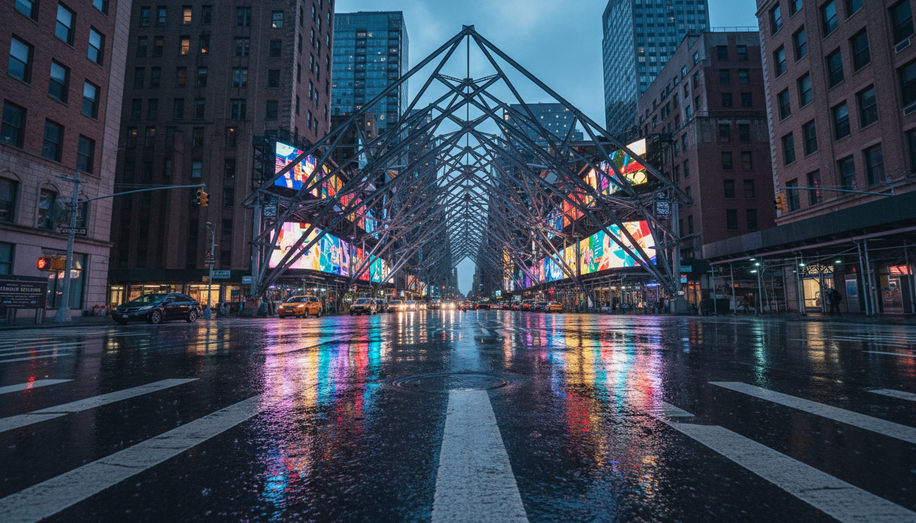

When R. Scott Lewis designed his first spectacular sign structure in Times Square in 1991, he entered a world where buildings themselves become the medium. Three decades later, the structural engineer remains among the few professionals who understand that modern out-of-home advertising is fundamentally a feat of engineering as much as creative expression. The billboards that capture millions of eyes daily are not simply canvases hung on existing architecture—they are integrated systems requiring load analysis, reinforcement planning, and building department approval that rivals the complexity of the buildings they adorn.
Modern LED displays weigh between 20,000 and 50,000 pounds each, demanding structural support systems that extend far beyond the visible display panels. The weight calculations alone encompass support frames, electrical equipment, cooling systems, and maintenance catwalks. One Times Square, perhaps the world’s most iconic advertising platform, supports multiple displays totaling over 100,000 pounds of equipment distributed across its facade. When a billboard operator decides to convert an existing static structure to digital, the engineering challenges intensify. Engineers must follow current building codes that require designs for both higher wind pressure and greater weight loads than the original print billboard structure could accommodate. This isn’t merely an upgrade—it’s a complete structural reassessment.
The solution often involves foundation expansion and reinforcement. When site constraints prevent traditional pile-driving equipment—such as proximity to railroad rights-of-way or neighboring structures—engineers employ innovative alternatives. Mini-pile drivers can drill piles in place around existing foundations, allowing the installation to proceed without extensive ground disruption. New support brackets must be precisely engineered to attach LED cabinets while maintaining structural integrity against wind forces and weather conditions that can shift dramatically throughout the year.
Beyond the structural skeleton lies an intricate electrical infrastructure that supplies power to thousands of LEDs while managing thermal output that would overwhelm conventional cooling systems. Contemporary architecture anticipates rapidly evolving display technology through modular systems that allow panel replacement and upgrades without facade reconstruction. Wireless connectivity, sensors, and interactive capabilities integrate into these systems. Roof-mounted equipment, concealed cable runs, and dedicated telecommunications infrastructure transform modern structures into platforms for responsive advertising experiences rather than static displays.
The evolution reflects economic and environmental realities. When One Times Square underwent a $500 million renovation beginning in 2022, the project pursued LEED Gold certification while maintaining advertising capacity—an apparent contradiction that architects resolved through intentional design. The 1960s marble facade was replaced with a glass curtain wall that improves thermal performance while accommodating display attachment. This vertical zoning strategy, separating sustainable tower space above from spectacular commercial signage at pedestrian level, has become a template for subsequent Times Square development.
Visibility optimization drives architectural decisions from the ground level upward. Building placement and height create viewing corridors extending blocks in multiple directions, while the geometry of Times Square itself creates natural focal points where multiple sightlines converge. Architects and advertising professionals analyze sight lines from pedestrian eye level, elevated viewing platforms, and vehicle approaches. Lower billboard placement maximizes pedestrian engagement while higher positioning extends viewing distance. Corner locations gain multiple exposure angles, transforming the three-dimensional environment into an immersive advertising experience where viewing angles multiply impact.
The craft behind iconic OOH structures represents a synthesis of disciplines rarely visible to observers walking beneath them. Structural engineers like Lewis have made sign structures their entire professional focus, mastering load calculations, wind dynamics, and building codes that most architects encounter only tangentially. Material science, electrical engineering, and architectural design converge to create platforms that must withstand decades of weather exposure while accommodating technological advances their original designers couldn’t anticipate. When pedestrians glance up at a digital billboard in Times Square or pause before a creatively engineered structure on the Sunset Strip, they’re witnessing the culmination of invisible expertise—the engineering that makes the art possible.