

In an era dominated by digital noise, small businesses and startups are rediscovering the power of out-of-home (OOH) advertising to cut through the clutter and connect directly with local audiences. Far from being an extravagant luxury reserved for corporate giants, OOH offers budget-conscious strategies that deliver massive impact through clever formats, precise placements, and inventive creativity. With costs averaging just $2.84 per thousand impressions—cheaper than many traditional media options—entrepreneurs can now launch campaigns via intuitive online platforms that simplify booking, targeting, and measurement, turning what was once a complex process into a few clicks.
The misconception that OOH demands deep pockets persists, but reality tells a different story. Diverse formats like bus benches, posters, banners, and digital billboards allow flexibility for any wallet. A neighborhood coffee shop, for instance, might opt for a simple bus shelter ad near a commuter hub, reaching thousands daily without breaking the bank. Online buying platforms such as AdQuick provide maps of available inventory, demographic insights, and performance forecasts, enabling owners to select spots that align with their reach goals and spend limits. This democratization has fueled OOH’s resurgence, especially as consumers report digital ad fatigue—71 percent tune out online ads, while 53 percent notice outdoor ones more post-pandemic.
Strategic placement emerges as the linchpin for maximizing local reach. Visibility trumps volume; a billboard screaming premium steaks outside a vegan café misses the mark entirely. Instead, savvy businesses pinpoint high-traffic zones where their ideal customers linger—public transport stops, landmarks, or event venues—ensuring relevance and engagement. For a startup fitness studio, ads at eye level near schools or parks target families, while a food truck might wrap benches close to office districts during lunch hours. Street furniture like benches or kiosks blends seamlessly into daily routines, offering non-intrusive exposure that’s particularly cost-effective for hyper-local brands. The 2024 Small Business Marketing Report underscores this: posters and banners help 23 percent of consumers discover nearby shops, proving that well-placed simplicity drives foot traffic.
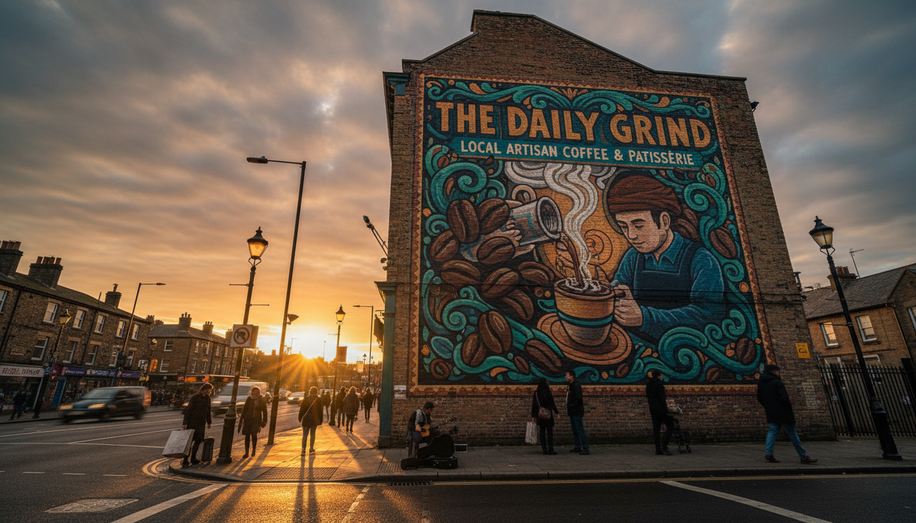
Creativity elevates these efforts from mere visibility to memorable storytelling, amplifying brand awareness on shoestring budgets. Forget generic billboards that fade into memory; innovative tactics turn heads and spark shares. Vehicle wraps transform company cars into mobile billboards, cruising neighborhoods for continuous exposure at minimal ongoing cost. Local murals, commissioned from community artists, weave brand narratives into urban fabric—imagine a café’s vibrant wall painting that draws selfies and social media tags, providing years of free publicity. Grass or field advertising, where mowers carve logos into visible patches near highways, generates buzz akin to Gillette’s massive shave campaign with Roger Federer, all for the price of paint and labor.
Weather-responsive ideas add whimsy without waste. Rain-activated stencils on pavements reveal travel agency messages only during downpours, capitalizing on cabin-fever impulses when sunny dispositions turn soggy. Sidewalk chalk art or pop-up booths at markets offer interactive demos—samples, contests, or QR codes linking to deals—fostering immediate connections. These tactics shine because they prioritize standout design amid competition: limited space demands bold, simple messaging with high-contrast visuals and calls-to-action like “Scan for 20% off now.” Pairing OOH with digital reinforcement, such as identical QR codes driving to Google My Business profiles, bridges offline sights to online actions, attributing traffic spikes accurately.
For startups eyeing growth, timing and consistency seal the deal. Launch campaigns during peak seasons—back-to-school for tutors, holidays for retailers—or align with local events for amplified exposure. Branding relentlessly across formats builds familiarity; repeat sightings convert passive viewers into loyal patrons. Measurement tools on modern platforms track impressions, website visits, and even demographic breakdowns, allowing refinements without guesswork. A boutique aiming for 30 percent in-store traffic uplift might deploy bus shelter ads near its location, monitoring results to scale winners.
Challenges exist—weather wears on static ads, and intricate messages falter in fleeting glances—but these are mitigated by digital OOH’s dynamism and creative brevity. Local businesses thrive by starting small: test a single poster cluster or vehicle wrap, gauge response, then expand. Collaborations, like sponsoring community installations, stretch dollars further while fostering goodwill.
Ultimately, OOH empowers underdogs to dominate their turf. In a world weary of scrolls, a well-placed, witty outdoor ad doesn’t just advertise—it ignites conversations, footfalls, and futures. For small businesses and startups, the message is clear: think big, spend smart, and watch local love bloom.