
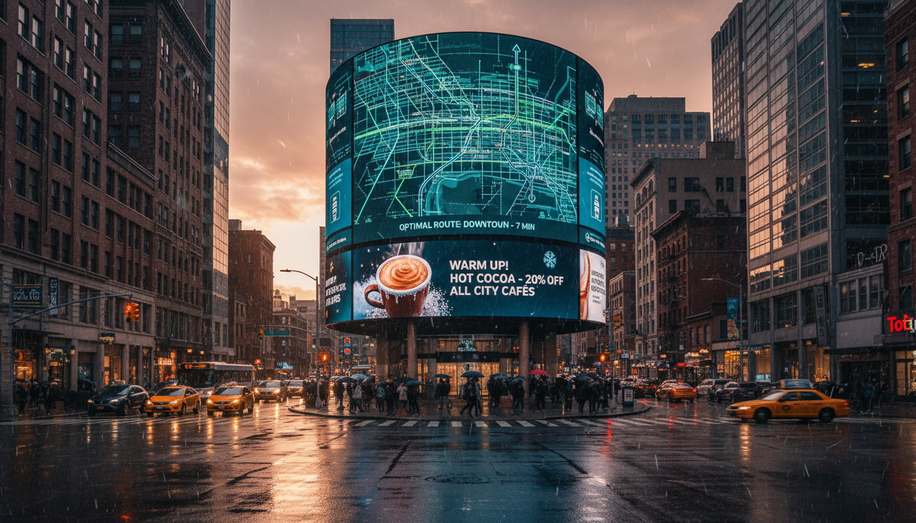

In the bustling heart of a city like New York, a digital billboard flickers to life as rain begins to patter against the streets. Instead of a generic apparel ad, it swaps seamlessly to promotions for cozy hot drinks and umbrellas from nearby cafes, capturing the attention of hurried pedestrians who suddenly feel the chill. This is hyper-targeting in action, powered by programmatic digital out-of-home (DOOH) advertising, where real-time data transforms static screens into dynamic storytellers. By 2026, programmatic DOOH spend is projected to surge into the billions, driven by automated buying and audience-based activation that makes out-of-home (OOH) not just visible, but profoundly relevant.
At its core, programmatic DOOH leverages supply-side platforms (SSPs) and demand-side platforms (DSPs) to automate ad placements across digital screens in high-traffic venues—from Times Square billboards to airport displays and retail hubs. Unlike traditional OOH, which relied on manual negotiations and fixed creatives, this ecosystem enables real-time bidding (RTB), private marketplace (PMP) deals, and preferred programmatic (PG) transactions, blending the efficiency of digital programmatic with the physical immediacy of OOH. Advertisers can now secure premium inventory programmatically while integrating it into omnichannel strategies alongside CTV, mobile, and social, using unified workflows and shared KPIs for consistent reporting.
The magic lies in the data triggers that fuel contextual relevance. Weather APIs, for instance, allow campaigns to adapt instantly: on a sweltering summer day, screens near gyms might push hydration drinks or cooling apparel, while foggy mornings trigger messages for heated beverages or safe driving tips. Traffic data adds another layer, identifying congestion hotspots to deliver timely promotions—like quick-service restaurant deals for commuters stuck in gridlock or ride-sharing incentives during peak hours. Event triggers elevate this further; during a major sports event like the Olympics or a local marathon, ads can pivot to fan merchandise, energy boosts, or post-event recovery products, syncing with live feeds for maximum timeliness.
Audience data takes hyper-targeting to the next level, often drawing from first-party sources such as loyalty programs, app usage, and purchase history. Brands upload anonymized customer insights into DSPs, enabling screens to serve personalized messages without invasive tracking—think a coffee chain greeting loyalty members near their favorite store with tailored offers based on past orders. When layered with contextual signals like time of day, location type, and foot traffic density, these activations create “moment-driven” messaging that feels intuitive rather than intrusive. For example, office district screens during lunch hours might highlight nearby eateries with real-time availability data, while evening retail zones promote flash sales synced to inventory levels.
Dynamic creative optimization (DCO) is the engine making this scalable. Once experimental, DCO has matured into a strategic staple by 2026, with AI accelerating creative variations and platforms streamlining approvals across buyers, media owners, and publishers. Campaigns pull from data signals—weather, product stock, social trends—to swap visuals, copy, and calls-to-action in milliseconds. A retailer’s billboard could cycle through sun protection in clear skies, rain gear during downpours, or event tie-ins like concert tickets when nearby venues buzz with activity. This responsiveness boosts engagement; studies show contextually relevant DOOH lifts recall and action rates significantly higher than static ads, as viewers encounter messages that mirror their immediate environment and needs.
Automation further democratizes access. Planners now manage guaranteed and non-guaranteed OOH from single platforms, mixing RTB for flexibility with in-advance bookings for high-demand slots. This evolution lowers barriers for mid-sized advertisers, who can tap premium inventory without protracted negotiations, while standardized workflows ensure transparency and faster execution. Integration with emerging tech like augmented reality (AR) QR codes enhances interactivity—passersby scan for exclusive deals, bridging physical exposure to digital conversion.
Challenges persist, of course. Coordinating data privacy across regions demands robust consent frameworks, especially with first-party data’s rise amid cookie deprecation. Creative production must scale for endless variations, though AI tools are closing that gap by automating ideation. Measurement has improved, with enhanced reach and frequency reporting across channels providing clearer ROI visibility, from foot traffic lifts to cross-device attribution.
Yet the trajectory is clear: programmatic DOOH is no longer a novelty but the global standard, prioritizing context over mere visuals in short, punchy formats optimized for fleeting attention. Brands like those partnering with platforms for live events are already automating budgets around tentpoles, extending digital narratives into the real world at peak moments. As screens proliferate in retail media and transit hubs, hyper-targeting will drive OOH’s integration into always-on strategies, where a rainy commute or sunny festival becomes the perfect cue for connection.
The result? Advertising that anticipates life as it unfolds, turning every screen into a relevant companion rather than a interruption. In 2026, this isn’t just smarter OOH—it’s the future of contextual persuasion, measurable and unstoppable.