
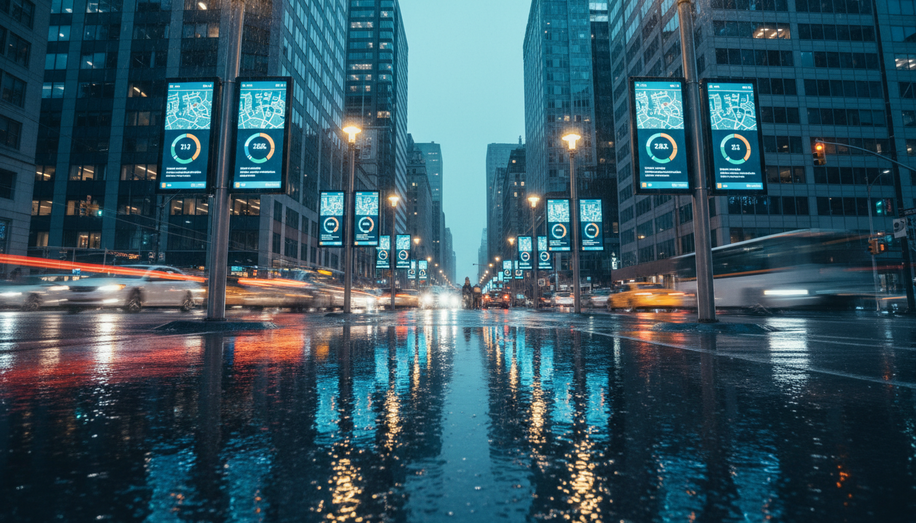

In the bustling arteries of modern cities, digital out-of-home (OOH) displays are evolving from mere advertising canvases into vital cogs in the smart city machinery. These screens, embedded in bus shelters, kiosks, and billboards, now deliver real-time traffic updates, weather alerts, and emergency notifications alongside targeted ads, fostering a seamless blend of commerce and public utility. As urban populations swell and technology permeates infrastructure, OOH is redefining connectivity, turning passive urban spaces into dynamic hubs of information and interaction.
Smart city initiatives, which leverage data and AI to optimize everything from traffic flow to energy use, have propelled this shift. In places like Singapore’s transit hubs, digital OOH screens at metro stations and bus stops provide live arrival times and travel updates, while simultaneously running advertisements, creating multifunctional nodes that enhance commuter efficiency. Similarly, New York City’s LinkNYC kiosks integrate free Wi-Fi, public service announcements, and ad revenue streams, funding the very infrastructure they inhabit. This integration not only streamlines daily life but also generates revenue to support public projects, as seen in various U.S. cities where digital OOH funds kiosks and shelters.
The technology powering these displays—AI-driven analytics, energy-efficient LEDs, and interactive features—amplifies their role beyond promotion. AI-powered billboards in Tokyo’s Shibuya district analyze crowd demographics, age, and gender to tailor content in real time, boosting engagement while adapting to urban rhythms. In London, screens sync with live traffic data to refine ad delivery, ensuring messages reach the right audiences at optimal moments. These systems process data on weather, foot traffic, and even pollution levels, dynamically switching to public advisories—like promoting public transit during high smog or alerting to storms—thus bridging commercial interests with civic needs.
Public safety and environmental stewardship further underscore OOH’s expanded mandate. During emergencies, screens in cities like those piloting AI integrations can override ads to broadcast critical alerts, from evacuation routes to health advisories, proving their worth as rapid communication tools. Sustainability aligns perfectly too: unlike static posters, digital screens powered by renewables cut paper waste and energy use, supporting green urban agendas. In Zurich, outdoor digital signs promote electric vehicle adoption with contextual messaging, while Norway’s smart bicycle pavilions use displays to encourage eco-friendly transport.
Citizen engagement takes this evolution interactive, transforming one-way ads into two-way dialogues. Touchscreens on hybrid billboards offer wayfinding maps, event calendars, and QR codes for augmented reality (AR) experiences, drawing pedestrians into immersive brand interactions or community polls. France’s healthcare facilities employ outdoor totems for visitor guidance and awareness campaigns, while Austria’s government kiosks foster community ties through local art showcases and surveys. IBM’s “Smarter Outdoor” campaign exemplified this early on, with posters doubling as benches and ramps that educated city-dwellers on global urban innovations, blending utility with subtle branding.
Urban planning now routinely incorporates these displays as infrastructure staples. Interactive kiosks in Denmark serve as virtual call centers, providing all-day access to services, while Czech Republic info-boards ensure constant community updates. This multifunctionality enhances aesthetics too—dynamic content reduces visual clutter by cycling relevant messages, keeping streets vibrant without overwhelming them. As AI advances, facial recognition and machine learning promise hyper-personalized feeds, adjusting for time, weather, or viewer profiles, while AR overlays merge digital campaigns with physical environments.
Challenges persist, including data privacy concerns with audience analytics and the need for equitable access in underserved areas. Yet, the trajectory is clear: OOH is no longer peripheral to smart cities but central, funding connectivity while driving engagement. In New York’s Times Square or Tokyo’s neon veins, these screens pulse with life—informing, entertaining, and uniting residents in a shared digital-urban tapestry. As cities like those in Europe and Asia scale these deployments, OOH stands poised to shape more responsive, inclusive metros, where every glance at a screen enriches the public realm. The symbiosis of advertising revenue and smart infrastructure heralds an era where urban spaces don’t just accommodate life—they anticipate and elevate it.