
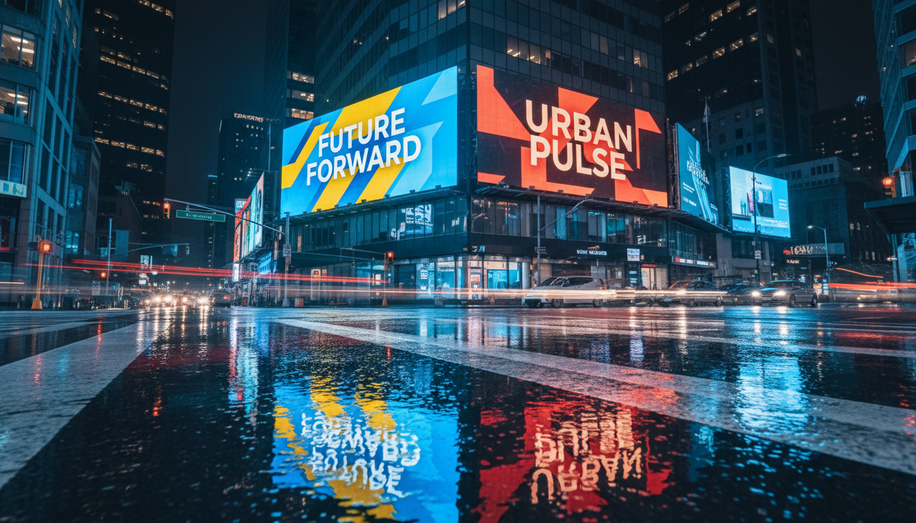

When a driver passes a billboard at sixty miles per hour, their brain has mere seconds to decide whether to process the message or ignore it entirely. That split-second judgment hinges not on the advertiser’s intent, but on three fundamental design principles: color, typography, and visual hierarchy. Understanding how these elements work together at a psychological level is essential for any out-of-home advertiser seeking to cut through the visual noise and create lasting impressions.
Color serves as the emotional gateway to outdoor advertising. The human brain doesn’t simply register hues; it reacts to them viscerally and subconsciously. Red triggers urgency and excitement, making it ideal for limited-time offers or calls to action. Blue conveys trust and calm, lending itself to financial services or healthcare messaging. Yellow evokes optimism and draws the eye naturally, while high-contrast color combinations ensure designs penetrate the visual clutter of urban environments. This isn’t aesthetic preference—it’s neuroscience. By strategically pairing bold, contrasting colors, designers tap into the brain’s reticular activating system, the mechanism responsible for filtering relevant stimuli from irrelevant background noise. Research demonstrates that a consistent color scheme across advertising materials increases brand recognition by up to 80 percent, making color choices a measurable investment in recall.
Typography operates on a similarly critical level. Bold, short headlines are processed faster than detailed copy because they align with how the human brain prioritizes visual information. The 3-Second Rule governs outdoor advertising effectiveness: viewers should understand the core message within three seconds. This constraint demands that typography be legible at distance and speed, prioritizing clarity over creative flourish. Sans-serif fonts typically outperform serif varieties in outdoor contexts due to their simplicity and immediate readability. The hierarchy of type sizes—with headlines dominating the visual field and supporting text receding—ensures the viewer’s eye follows a natural reading pattern that absorbs the intended message sequence.
Visual hierarchy represents the architectural backbone of effective OOH creative. When elements are strategically positioned to guide viewers through a sequence of information, comprehension improves dramatically. This principle leverages cognitive load theory: the human brain can only process limited information simultaneously, so outdoor ads reliant on simplicity achieve superior retention compared to cluttered alternatives. Well-structured advertisements position the most critical elements—headline, brand identifier, call to action—in locations where the eye naturally travels, typically following an F-pattern or Z-pattern across the visual plane. Strategic placement of human faces, particularly those making direct eye contact, amplifies engagement since humans are neurologically hardwired to prioritize faces in their visual field.
The synergy between these three elements creates what neuroscientists call the mere exposure effect—a psychological phenomenon where repeated exposure builds familiarity and trust. A commuter encounters the same billboard during daily trips; the consistent color palette, legible typography, and clear visual hierarchy combine to transfer the message from working memory into long-term memory through repetition. Over time, this strengthens brand awareness and increases the likelihood of consumer action.
Emotional triggers amplify these mechanical principles. When color, typography, and visual hierarchy work in concert to evoke feeling—whether through humor, inspiration, or urgency—the advertisement transcends functional communication and becomes memorable. A smiling face conveying happiness or relatability, paired with a bold color suggesting action and typography emphasizing the message’s importance, creates a multisensory psychological experience that drives both recall and behavior.
The most effective outdoor advertising operates invisibly, working beneath conscious awareness to influence perception and preference. Designers who understand that every color choice, font selection, and element placement sends a psychological signal can architect campaigns that capture attention and convert it into brand loyalty. In the crowded landscape of modern advertising, this mastery of foundational design psychology isn’t simply an advantage—it’s essential.