
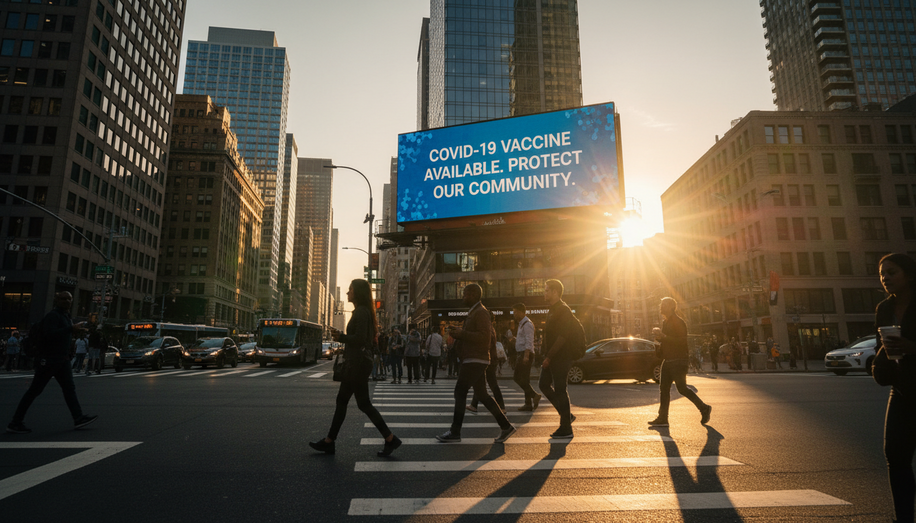

In the midst of chaos, when seconds count and panic threatens to spread faster than the crisis itself, out-of-home (OOH) advertising emerges as a silent sentinel in public spaces, delivering urgent messages with unmatched immediacy and reach. Billboards, transit shelters, bus wraps, and digital displays—ubiquitous fixtures in our daily commutes—transform into lifelines for crisis communication and public service announcements, guiding behavior and fostering calm amid uncertainty. Unlike digital channels prone to algorithmic delays or misinformation floods, OOH cuts through the noise, visible to millions without needing a screen swipe or Wi-Fi signal.
Consider natural disasters, where timely warnings can save lives. During extreme weather events, authorities like Lancaster County leveraged mass notification systems integrated with OOH to blast alerts across high-traffic areas, ensuring residents received evacuation orders or shelter directives in real time. Spartanburg Community College similarly dispatched tornado warnings to over 22,000 people in under 10 minutes via multi-channel efforts, including transit and roadside displays, preventing potential tragedies by directing students and staff to safety. These examples underscore OOH’s core strength: its scale and inescapability. Programmatic OOH platforms enable rapid deployment, geotargeting messages to precise zip codes or regions—a grocery chain, for instance, could notify only affected shoppers about a food safety issue without alarming the nation.
Effectiveness hinges on executional precision. Research shows larger OOH formats outperform smaller ones, capturing more engagement through visual saliency and repetition as passersby encounter them repeatedly in transit hubs or parking garages. Exterior bus ads, exposed to broader audiences, eclipse interior ones, while general, urgent messaging—such as “Evacuate Now: Flooding Ahead”—resonates more than nuanced appeals, prompting immediate action like seeking higher ground or avoiding contaminated areas. Creative strategies amplify this: novel stimuli, bold colors, and contextual relevance make messages stick, influencing attitudes and behaviors even in fleeting glances. A Lot Media’s parking and transit solutions exemplify this, turning high-traffic garages and commuter routes into arenas for real-time alerts that monitor sentiment and respond to emerging threats.
Crisis communication pillars—transparency, timeliness, consistency, and empathy—align seamlessly with OOH’s attributes. Swift assessment by a dedicated response team allows for transparent updates posted instantly on digital billboards: “Road Closed Due to Hazmat Spill—Detour North on I-95.” This prevents rumors, builds trust, and controls the narrative, much like advertising firms do by prioritizing stakeholder communication during brand crises. A single, trained spokesperson’s voice, echoed across OOH networks, ensures uniform messaging, avoiding the confusion of mixed signals that plague social media frenzies. In public service campaigns, such as anti-smoking drives or vaccination pushes, OOH promotes behavioral shifts with empathetic, consistent calls: “Get Vaccinated Today—Protect Your Community,” displayed relentlessly in urban cores to normalize action.
Yet OOH’s power extends beyond emergencies to proactive public service initiatives. Amid climate challenges, creative OOH has raised awareness on general issues like global warming more effectively than niche topics, persuading audiences to engage or act despite counter-movements from vested interests. The 2022 Effie report links OOH integration in campaigns to stronger business and societal outcomes, a principle transferable to PSAs urging water conservation during droughts or mask-wearing in pandemics. Programmatic targeting refines this further: scale national anti-drug messages or localize flu shot reminders to high-risk neighborhoods, adjusting spend as situations evolve.
Challenges persist, demanding rigorous planning. Internal collaboration across PR, legal, and creative teams is vital to craft messages that are honest yet non-alarmist, with real-time monitoring tools flagging negative sentiment for course corrections. Predefined protocols—clear roles, multi-channel synergy—mitigate pitfalls like overexposure in unaffected areas, preserving credibility. Still, OOH’s background presence as a “always-on” medium ensures it complements social feeds, where misinformation proliferates, by providing verifiable, apolitical anchors.
Ultimately, OOH redefines crisis response as a public good. In an era of 24/7 news cycles and fleeting digital attention, its physical omnipresence delivers timely, empathetic guidance that calms chaos and empowers action. From averting stampedes in terror threats to mobilizing blood donations post-disaster, OOH proves indispensable—bridging the gap between announcement and adherence, one unmissable message at a time. As threats grow more unpredictable, its role in safeguarding communities will only intensify, a testament to advertising’s pivot from persuasion to protection.