
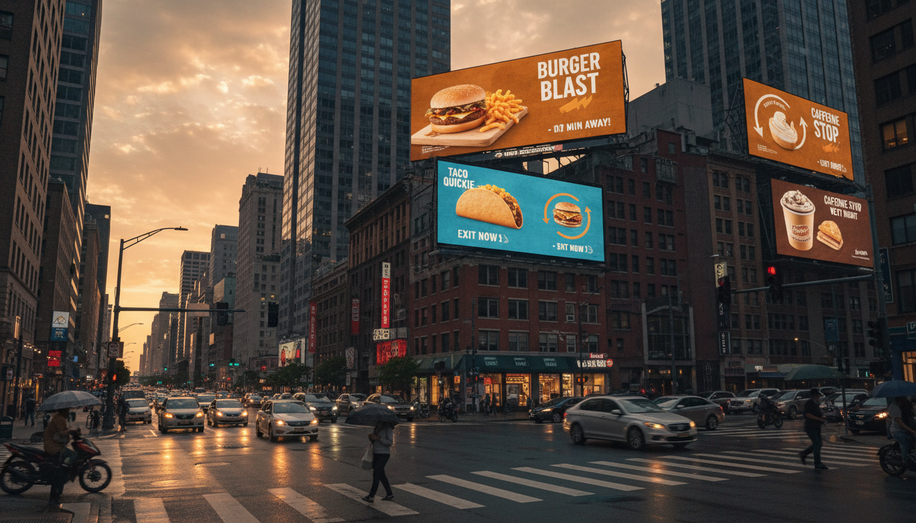

Digital out-of-home advertising has undergone a dramatic transformation through dynamic creative optimization, a technology that allows advertisers to automatically adjust billboard content in real-time based on live data feeds. Rather than displaying static messages to every passerby, DCO empowers brands to deliver precisely calibrated messaging that responds to weather conditions, traffic patterns, local inventory, sporting events, and audience demographics as they unfold throughout the day.
The core advantage of dynamic creative optimization lies in its ability to eliminate irrelevance at scale. Traditional DOOH campaigns required manual creation of multiple ad variations for different screens and circumstances, a process that was time-intensive and often resulted in generic messaging that failed to resonate with specific audiences. Modern DCO technology streamlines this workflow by taking a single ad template and instantly converting it into variations tailored to each screen and its specific software requirements. This automation reduces setup time dramatically while enabling campaigns to reach wider audiences across multiple networks without proportional increases in production overhead.
Weather-triggered campaigns exemplify the real-time responsiveness that DCO enables. When McDonald’s sought to promote its Summer Coolers in Qatar, the brand partnered with multiple platforms to launch the region’s first weather-responsive programmatic DOOH campaign, activating ads specifically during the hottest days when the product held maximum appeal. Similarly, Aperol strategically deployed weather-triggered messaging to activate advertisements only when temperatures exceeded 66°F, ensuring their Aperol Spritz ads appeared precisely when consumers were most inclined to purchase a refreshing cocktail outdoors. These campaigns move beyond traditional seasonal planning by responding to actual atmospheric conditions in real-time, maximizing relevance at the moment of decision-making.
Location-based inventory integration represents another powerful application of dynamic creative optimization. Retailers can leverage DCO to highlight region-specific products and limited-time offers by tapping into data feeds containing local inventory lists, ensuring that grocery store promotions feature items actually available at nearby locations rather than generic product messaging. This approach transforms DOOH from a mass-market medium into a location-aware selling tool that drives foot traffic by promoting precisely what consumers can purchase in their immediate area.
Live event activation has proven particularly effective for sports-related campaigns. Brands can display ads featuring live scores and updates during major sporting events like the World Cup or Super Bowl, keeping messaging fresh throughout competition days. PrizePicks demonstrated this capability by combining programmatic and direct DOOH to reach fans near major sports venues with influencer-led creative and localized messaging that captured game-day excitement, ultimately achieving an 80% lift in consideration and 103% improvement in brand favorability.
The integration of behavioral data and demographic detection further enhances DCO’s precision. Public Health England’s One You campaign equipped DOOH screens at bus stops with gender and age detection software, personalizing creative messages to whoever interacted with the screen at that moment. This approach proved instrumental in reaching a traditionally disengaged audience and driving engagement with their health appraisal initiative.
Real-time testing and optimization form the strategic backbone of successful DCO campaigns. Marketers can deploy A/B and multivariate testing across different ad variations, cross-referencing engagement data during campaign flight to understand what resonates most with specific audiences. This continuous learning loop transforms DOOH from a set-and-forget medium into an actively optimized channel that improves performance throughout its run.
The measurable impact of dynamic creative optimization extends beyond engagement metrics. Lifeblood’s blood donation campaign linked its DOOH ads to live blood supply APIs, dynamically activating messaging near donor centers only when specific blood types were critically low and displaying localized calls to action. The campaign directly increased donor center visits and won awards for behavior change, demonstrating that DCO drives not just awareness but measurable conversions and real-world outcomes.
Research indicates that dynamic creative optimization increases engagement by up to 40% when combined with contextual triggers, with results further amplifying when paired with mobile retargeting strategies. As advertisers increasingly recognize that relevance drives both engagement and conversion, dynamic creative optimization has shifted from an emerging experimental tactic to a essential component of sophisticated out-of-home strategy.