
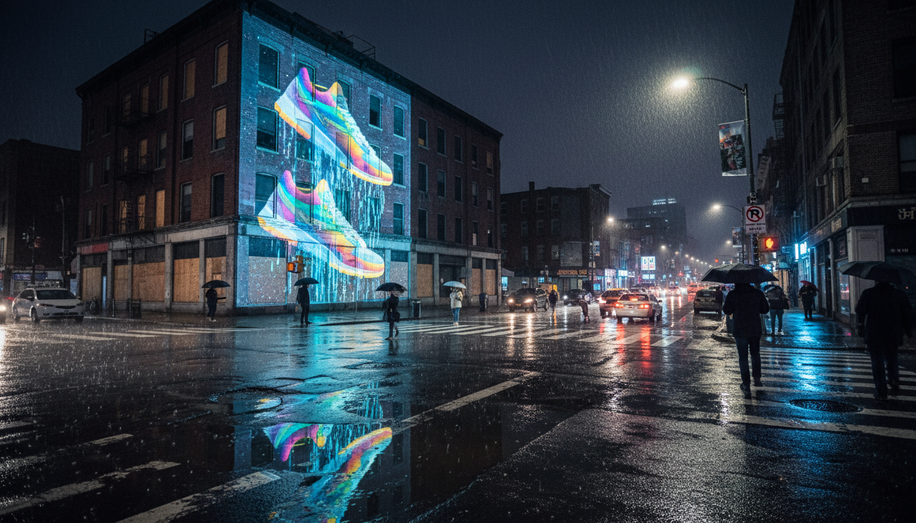

In the relentless urban assault of billboards, digital screens, and transit wraps, guerrilla out-of-home (OOH) advertising slices through the noise like a street artist’s stencil in the dead of night. By hijacking unexpected spaces—sewer grates, park benches, or even the sky above a river—brands deploy unconventional placements and audacious stunts that demand double-takes, spark social media frenzies, and etch messages into public memory without multimillion-dollar media buys. This renegade evolution of OOH thrives on surprise, low cost, and sheer audacity, turning passersby into unwitting participants in a brand’s narrative.
Consider the horror flick “It,” which terrorized Sydney sidewalks in a masterstroke of budget guerrilla genius. Red balloons tethered to drainage grates fluttered ominously, paired with chalk scrawls proclaiming, “It is closer than you think.” Nearby murals of Pennywise the clown’s leering face amplified the dread, igniting social media buzz that blended delight with chills. Users dubbed it “awesomely creepy,” proving how a simple, stencil-driven ploy could eclipse traditional trailers for viral impact. Similarly, Folgers Coffee transformed New York’s steaming manholes into illusory fresh brews. Saatchi & Saatchi plastered manhole covers with steaming coffee cup images, letting sewer vapor do the heavy lifting—or so they hoped. The visual was spot-on, but the unmistakable whiff of the underworld undercut the aroma, a reminder that guerrilla risks include real-world sensory pitfalls.
Furniture giant IKEA has long mastered the art of domestic invasion, plopping full-scale living rooms into the most mundane public voids. In Sydney and Perth, bus stops sprouted sofas, cabinets, and catalogues, turning commuter drudgery into cozy previews of catalog bliss. Commuters scored free transit cards alongside the handouts, blending utility with seduction. This echoed IKEA’s “Everyday Fabulous” campaign, which blanketed Manhattan over 600 blocks with hammocks at payphones, dog bowls, and subway-furnished trains—all stamped with the mantra, “Good design can make the everyday a little better.” Parisians and Istanbulites had seen similar bus-stop makeovers, but IKEA’s scale turned urban blight into branded oases, proving furniture doesn’t need showrooms to sell dreams.
Nike’s park benches in New York parks took motivational minimalism to extremes: seats gutted, backs emblazoned with the swoosh and a bold “RUN.” You couldn’t sit; you had to move. The stunt’s raw simplicity screamed action, forcing interaction in a way static posters never could. Automaker Jeep echoed this in Copenhagen, painting parking spots in no-go zones to flaunt vehicle toughness—cheap vinyl, zero cars needed, yet media swarmed and shares exploded. Milwaukee Bucks upped the ante with a green-tinted skybridge over the Milwaukee River, using transparent window film for their #FearTheDeer playoff push. Pedestrians crossed with unobstructed views while the city’s glow screamed team spirit, merging infrastructure with fandom.
Non-profits wield guerrilla OOH like a megaphone for conscience. UNICEF’s New York vending machine dispensed “dirty water” laced with fictional diseases, a visceral gut-punch on the global water crisis that drove donations through sheer shock value. Frontline’s flea spray billboard featured a colossal dog with human “fleas” scrambling across it, turning rush-hour gawking into a hilarious testament to pest annihilation. British Airways’ “Magic Billboards” near Heathrow synced real-time flight data to spotlight jets overhead, whispering “Look Up” and igniting wanderlust with tech-fueled prescience.
These stunts often flirt with illegality, amplifying their edge. Wild postings—those rugged, hand-pasted posters blanketing NYC fences and barricades—trace roots to defiant stencil graffiti in Soho and the Lower East Side, evolving into Hailey Bieber-clad Versace splashes or Spider-Man sticker assaults. Ballyhoo’s floating barge billboards on New York waters grabbed eyes before regulators yanked the plug, underscoring the tightrope between buzz and bylaws. Mous phone cases shattered fears by hurling iPhones from rooftops in busy plazas, survivors gleaming amid gasps and instant videos. Sixt Rent-a-Car rechristened NYC’s Sixth Avenue as “Sixt Avenue” with signage and a car cavalcade, a wordplay takeover that stuck.
Yet guerrilla’s power lies in its ephemerality and shareability. Subway’s Chicago building projections of towering sandwiches subliminally hungered crowds; Anytime Fitness scattered purple bikes to intrigue joggers. Gigil’s 2024 vending surprises and landmark-carved billboards in the Philippines won global awards, showing even modest markets can roar. Risks abound—Jeep’s spots vanished fast, Folgers reeked—but successes like 3M’s glass-encased $3 million bounty or Red Bull’s airdrops prove the formula: infiltrate daily paths, provoke reaction, amplify online.
In an era of ad blindness, guerrilla OOH reclaims the streets as canvases for the bold. It demands creativity over cash, turning clutter into conversation and one-off glances into cultural moments. As urban spaces densify, expect more manholes to steam, benches to vanish, and skies to brand—guerrilla isn’t just breaking through; it’s rewriting the rules of visibility.