
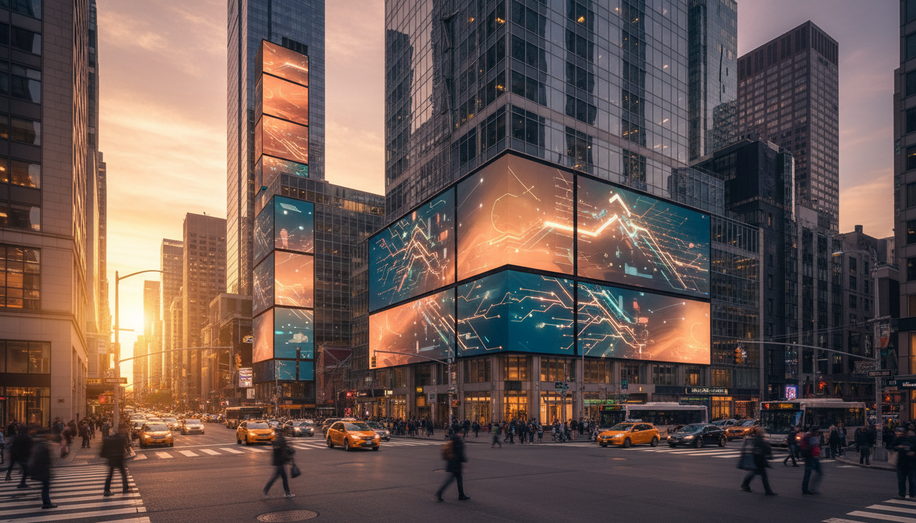

The landscape of out-of-home advertising is undergoing a profound transformation as programmatic buying evolves into a powerhouse of efficiency and precision. By 2026, programmatic digital out-of-home (pDOOH) has transcended its nascent phase, delivering sophisticated platforms that prioritize audience segmentation and seamless execution over mere creative dynamism. This shift empowers advertisers to harness global networks of digital screens with the agility of digital media, slashing entry barriers and enabling data-fueled strategies that were once the domain of deep-pocketed enterprises.
At the heart of this evolution lies advanced buying platforms that automate and optimize every facet of OOH campaigns. Platforms like the newly launched global programmatic DOOH system from JCDecaux have democratized access, reducing minimum investments from $25,000 to as little as $500 per month. Advertisers now log in, set budgets, select locations, and deploy creatives without protracted negotiations or contracts—mirroring the self-service model of Google Ads but applied to real-world billboards, transit screens, and retail displays. This automation is no longer experimental; forecasts indicate it will become the industry standard, with a significant portion of OOH budgets flowing through these channels by year’s end. Demand-side platforms (DSPs) have matured, integrating real-time bidding, frequency capping, and performance analytics into unified workflows that allow brands to adjust bids, slots, and targeting on the fly.
Data-driven audience segmentation stands out as the linchpin of pDOOH’s future, moving beyond rudimentary location-based planning to hyper-precise targeting. Screen proximity alone no longer suffices; platforms now layer in behavioral data, retail signals, and mobility patterns to construct bespoke audiences. A coffee shop can target morning commuters via verified impressions on nearby transit screens, while a gym triggers ads for hot yoga classes only when temperatures dip below 50 degrees. Real-time contextual triggers—weather, events, time of day—enable relevance at scale, ensuring messages resonate in dynamic urban environments. Artificial intelligence amplifies this capability, forecasting audience flows, selecting optimal creatives, and optimizing for lift without human intervention. For instance, a Denver real estate agency segmented neighborhoods for open-house promotions, boosting foot traffic by 40% on a $1,200 monthly budget. Such granularity extends OOH’s reach through audience extension, retargeting digital exposures from physical sightings to online channels, multiplying ROI.
Streamlined campaign execution further cements pDOOH’s efficiency edge. Traditional OOH relied on static contracts and 1980s-era impression estimates; today’s platforms deliver verified metrics, foot traffic attribution, and brand lift studies in real time. Agencies and brands launch global campaigns in minutes, paying solely for confirmed views rather than approximations. This transparency has spurred adoption across scales: small businesses experiment with $800 weather-responsive yoga ads yielding 25% drop-in surges, while B2B firms target convention-center screens for leads outpacing costlier booths. Integration with broader programmatic ecosystems—encompassing CTV, audio, and display—creates omnichannel synergy, where OOH acts as a high-impact anchor in physical spaces.
Yet, this future demands adaptation. As pDOOH matures into a core pillar of media plans, collaboration between OOH specialists and digital teams is essential, bridging silos to fully exploit AI-driven insights. Measurement evolves too, with passive interactions like QR scans and geo-fencing replacing overt calls-to-action, fostering seamless consumer journeys. Global expansion accelerates this trend, with premium screen networks proliferating in high-traffic locales from city centers to retail aisles.
Challenges persist, including data privacy in contextual targeting and equitable access amid rapid scaling. Still, the trajectory is clear: pDOOH’s audience-first ethos is reshaping OOH from a blunt instrument into a scalpel of precision marketing. Brands embracing these platforms now secure premium inventory and learning curves that will prove invaluable as competition intensifies. In 2026, efficiency isn’t just an advantage—it’s the new baseline for out-of-home success, positioning programmatic buying as the definitive path to audience mastery in the physical world.