
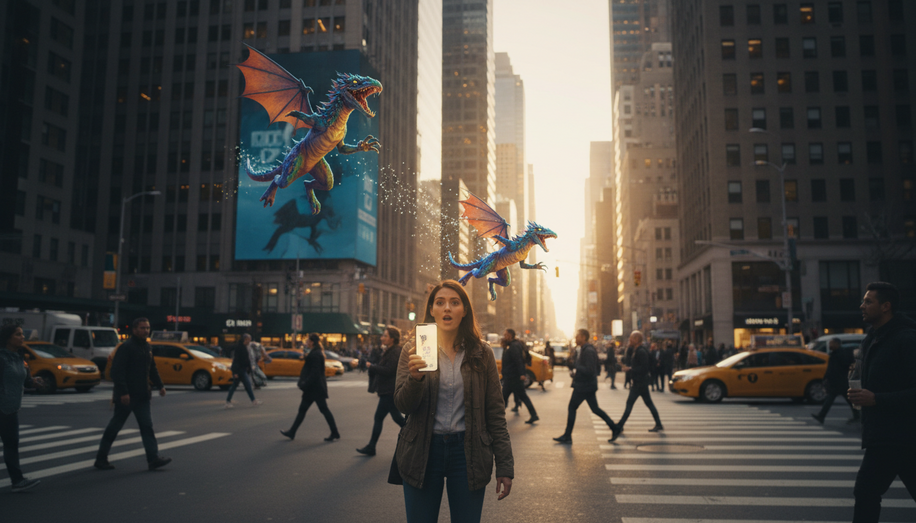

The outdoor advertising landscape has undergone a dramatic transformation. What once existed as static billboards and unchanging posters has evolved into dynamic, interactive environments that extend seamlessly from the street into users’ pockets. Augmented reality is bridging the gap between physical and digital spaces, turning ordinary commutes into opportunities for brands to create memorable experiences that resonate long after passersby move on.
The mechanics of this convergence are straightforward yet powerful. Consumers simply scan a QR code displayed on a billboard, bus shelter, or mural with their smartphone camera to unlock an entirely new layer of content. This seamless activation transforms a static advertisement into an interactive gateway, requiring no app downloads and minimal friction between discovery and engagement. The appeal lies partly in this accessibility—AR has become affordable and attainable for brands of all sizes, democratizing technology that once seemed exclusively futuristic.
Major brands have already demonstrated the potential of this approach. Burger King’s “Burn that ad” campaign in Brazil cleverly repurposed competitors’ billboards as AR activation points. Users pointed their phones at rival brand advertisements and virtually set them ablaze, revealing a Burger King ad and a free Whopper coupon in their place. The campaign turned competing outdoor advertisements into marketing opportunities, exemplifying how AR can inject creativity and humor into transit spaces.
Similarly, Ally Bank partnered with Monopoly to create a live treasure hunt across six American cities. The campaign installed 36 game squares at various locations, each containing an AR experience accessible through web-based scanning. Players collected virtual rewards as they moved through physical spaces, resulting in 100,000 plays and an 86% completion rate—a striking testament to how gamification and spatial interaction can drive engagement.
The emotional dimension of these experiences cannot be overlooked. AR creates immersive encounters that forge genuine connections between consumers and brands. When users interact with an advertisement in real time and receive instant feedback, they experience a bonding moment that traditional advertising rarely achieves. The NHS blood donation campaign exemplified this by allowing users to virtually donate blood and witness the direct impact of their actions. These aren’t merely ads—they’re participatory experiences that invite users to become part of the brand narrative.
Retail environments have become particularly fertile ground for AR integration. BON V!V Spiked Seltzer deployed interactive murals throughout Los Angeles and San Diego, allowing passersby to place a fully functional 3D vending machine into their physical surroundings through their phones. Kinder similarly used in-store AR to create immersive safari experiences complete with animated animals and educational annotations, demonstrating how this technology can entertain while delivering product information.
The metrics speak to the effectiveness of these campaigns. A recent Vodafone AR initiative reached 50 million people, with 40 percent of engaged users visiting physical stores afterward. More impressively, 82 percent of participants reported excitement about the experience, and 81 percent expressed desire for more AR advertisements in the future. These numbers suggest that consumers aren’t merely tolerating AR-enhanced outdoor advertising—they’re actively seeking it out and translating digital interactions into real-world commercial behavior.
The success of AR in OOH advertising stems from its fundamental ability to command attention in cluttered urban environments. In cities where advertising competes relentlessly for consumer focus, interactive experiences that invite participation stand apart from passive billboards. Location context amplifies this effect; campaigns placed in high-traffic transit hubs and urban centers achieve repeated exposure and reinforce brand recall through genuine engagement rather than passive viewing.
As we move deeper into 2026, the convergence of physical and digital advertising continues to accelerate. Brands are recognizing that outdoor advertising need not end at the billboard’s edge. By extending their campaigns into smartphone screens, they create continuous narratives that begin on the street and continue in users’ hands. Augmented reality has transformed outdoor advertising from a one-way broadcast into a two-way conversation—one where audiences can interact, play, and ultimately, choose to engage with brands on their own terms.
As outdoor advertising continues its evolution into these interactive, data-rich AR experiences, platforms like Blindspot become indispensable for quantifying their impact. By offering real-time campaign performance tracking, audience analytics, and granular ROI measurement, Blindspot empowers brands to optimize their location intelligence and attribute real-world conversions directly from these digital-physical engagements, ensuring every AR activation is a strategic investment. Explore how to elevate your next campaign at https://seeblindspot.com/