
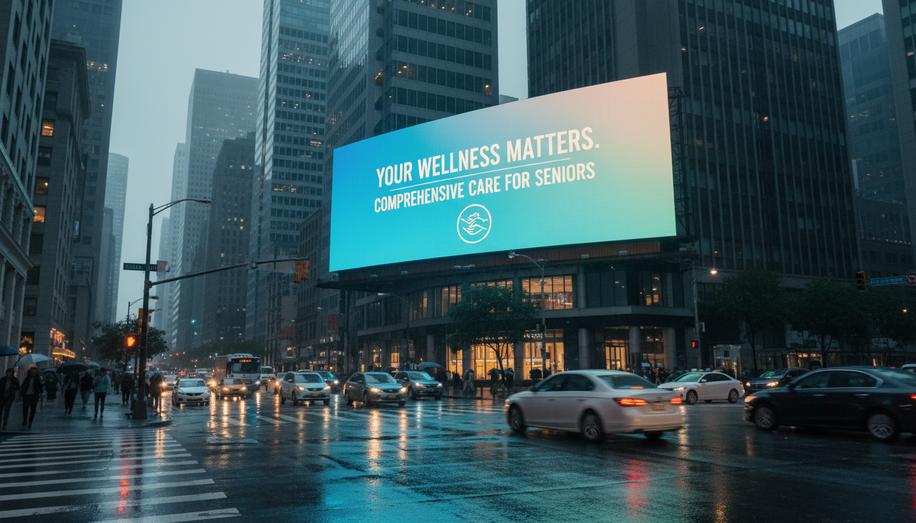

In an era where trust is the cornerstone of healthcare decisions, out-of-home (OOH) advertising has emerged as a vital tool for providers, pharmaceutical companies, and public health initiatives to connect with patients in real-world settings. By placing messages in high-traffic environments like bus stops, medical facilities, and community hubs, OOH cuts through digital noise to deliver credible, contextually relevant information that fosters awareness and confidence.
Healthcare marketing faces unique hurdles: skepticism toward ads, stringent regulations, and the need to address diverse patient needs without overt selling. Traditional channels like TV or social media often feel ephemeral, but OOH integrates into daily life, creating an impression of stability and reliability. Billboards along commutes or digital screens in waiting rooms become familiar fixtures, signaling that a hospital or clinic is an established community pillar. This environmental presence reassures prospective patients, who seek facilities that feel integral to their locale rather than transient digital entities.
For healthcare networks, OOH excels at building broad awareness without hyper-targeting, reaching large segments cost-efficiently. Environmental placements—from mall screens to transit hubs—ensure visibility across ethnicities, income levels, and education backgrounds, tailoring messages to localized concerns like seasonal flu spikes or allergy alerts. Digital OOH (DOOH) adds flexibility, allowing real-time updates: a sudden rise in pollen counts can trigger sunscreen reminders or vaccine prompts, keeping communities informed and engaged.
Pharmaceutical companies leverage OOH to guide patients through their journey, from awareness to action. Early-stage messaging in health-conscious spots educates on new treatments, with 36% of consumers noting attention to timely, informative ads about products or programs. Location-based targeting shines here—37% express interest in nearby care options—while point-of-care screens in doctors’ offices amplify impact, as 59% of patients notice brands and 84% discuss them with providers. Privacy-compliant DOOH pairs contextual data with placements, delivering relevant pharma info when intent peaks, such as near pharmacies, without invasive tracking.
Public health campaigns thrive on OOH’s accessibility, placing reminders in high-footfall public spaces to drive preventative behaviors. The UK’s NHS, for instance, used DOOH on Adshel Live screens to boost blood donations from diverse ethnic groups, blending storytelling with calls-to-action like QR codes linking to resources. This approach educates on complex topics through relatable patient journeys, establishing authority while encouraging mobile engagement. During open enrollment, insurers harness OOH to highlight benefits, with DOOH proving most action-oriented—49% of consumers report it prompts steps like signing up.
Reaching specific demographics demands precision. For aging populations, OOH targets senior centers or transit routes with messages on chronic care, building trust through consistent, non-intrusive visibility. Younger groups, like Gen Z and millennials—91% and 82% respectively willing to share impactful OOH on social media—respond to telehealth promotions or app downloads, bridging physical ads to digital worlds. In underserved communities, localized OOH addresses cultural barriers, as seen in public health efforts solving access challenges by embedding messages in everyday environments.
OOH’s true power lies in omnichannel amplification. Integrated with TV, digital, radio, or print, it boosts performance: lifting TV effectiveness by 33%, digital by 17%, radio by 14%, and print similarly. Pharma brands drive traffic to apps or sites via clear CTAs on DOOH, then retarget digitally for seamless journeys—17% of consumers show strong interest in virtual care ads. Hospitals enhance reputations through well-placed billboards or in-facility screens, blending professionalism with community feel.
Storytelling elevates these efforts. Real patient narratives on DOOH humanize services, making abstract health info relatable amid regulatory scrutiny. As telehealth and personalization rise, OOH adapts with programmatic buying for dynamic, transparent campaigns that prioritize trust over sales.
Challenges persist—regulations demand accuracy, and static formats limit some flexibility—but DOOH’s evolution counters this, enabling data-driven, ethical targeting. For healthcare marketers, OOH isn’t just visibility; it’s a trust-building conduit in spaces where decisions brew. By meeting patients where they live, work, and wait, it turns passive exposure into lasting awareness and loyalty, proving indispensable for modern health services.
For healthcare marketers striving to build this essential trust and ensure messages resonate with diverse populations, platforms like Blindspot offer crucial capabilities. Its location intelligence and programmatic DOOH management enable precise, contextually relevant placements that foster community integration and respond dynamically to health needs. This empowers providers to deliver transparent, impactful health information exactly where and when it matters most, solidifying their role as trusted community pillars. Learn more at https://seeblindspot.com/