
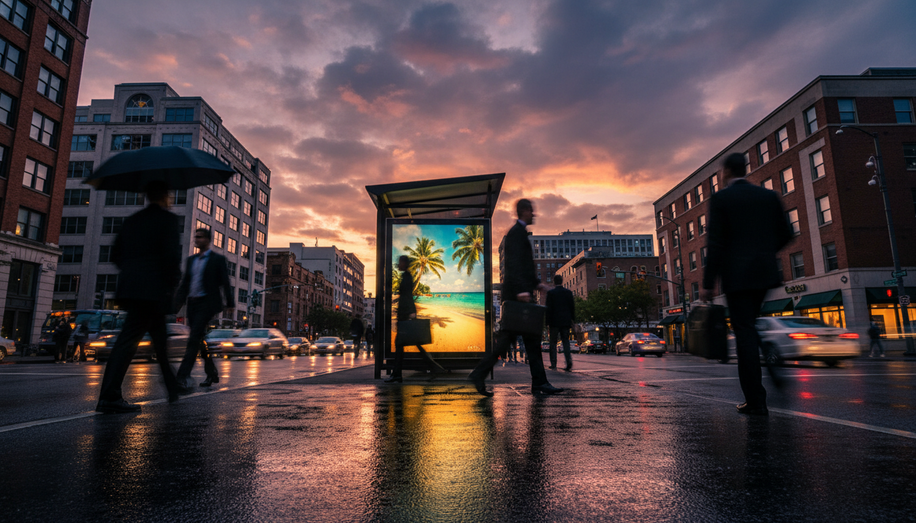

In the throbbing heart of urban life, where pedestrians weave through crowds and commuters huddle at transit stops, street furniture out-of-home (OOH) advertising asserts its quiet dominance. Bus shelters, kiosks, benches, and city information panels—once dismissed as humble cousins to towering billboards—deliver messages at eye level, capturing attention amid the daily rush. Far from the fleeting glance afforded by high-speed highway displays, these formats thrive on proximity and repetition, turning waiting moments into marketing opportunities in high-frequency city environments.
Bus shelters stand as the undisputed champions of this street-level arsenal. Strategically positioned along busy thoroughfares and near intersections, they offer high visibility to both waiting pedestrians and passing motorists. Commuters, often lingering for minutes, provide a captive audience, allowing ads to sink in with impressive frequency—many return daily, ensuring repeated exposure that builds familiarity. Backlit panels, static posters, or increasingly digital screens amplify this effect; some even integrate real-time transit updates or motion sensors for dynamic messaging, blending utility with promotion. In bustling metropolises, this translates to significant impressions among diverse demographics: office workers, shoppers, and tourists alike.
Benches and kiosks extend this reach into neighborhoods and pedestrian pathways. Bus benches, a staple for local businesses, promise 24/7 visibility in community hubs, fostering continuous exposure that static billboards can’t match. Though placement challenges exist—some sit on quieter streets with obstructed views or limited foot traffic—their affordability, often $300 to $750 for four weeks, makes them ideal for hyper-local targeting. Kiosks, doubling as navigational aids, draw eyes with interactive elements like QR codes or augmented reality, sparking direct engagement that encourages scans, shares, or visits to nearby stores. One study notes 43% of those noticing street furniture ads act on them, with 24% making immediate purchases, underscoring their action-oriented punch.
What sets street furniture apart in high-density urban zones is its intimate scale. Positioned at natural eye level, these ads avoid the visual noise of elevated billboards, forging closer connections with passersby. Pedestrians and drivers encounter them during micro-moments—pausing for a bus, resting on a bench, or checking a city panel—creating dwell times that boost recall. Unlike digital scrolls that vanish in seconds, these physical presences offer unwavering visibility, day and night, rain or shine. In smart cities, digital iterations on shelters or kiosks further enhance this, displaying sponsored content alongside public info, which residents perceive as welcoming and progressive.
Cost-effectiveness cements their appeal across budgets. Street furniture delivers a lower CPM than television or even some digital OOH, making it accessible for small enterprises while scaling for brands seeking neighborhood saturation. Campaigns often run 12 weeks or longer to maximize impact, leveraging high-traffic spots near transit hubs or commercial districts for tailored targeting—commuters here, shoppers there. This hyper-local precision strengthens community ties; ads on benches or panels promote events or businesses steps away, building trust and loyalty that broad, impersonal formats struggle to achieve.
Yet effectiveness isn’t without hurdles. In saturated markets like Los Angeles, poor bench placement on low-traffic sidelines can dilute impressions, and static designs risk blending into the urban backdrop. Fixed locations limit dynamic reach compared to mobile wraps, which roam key routes. Still, innovations counter these: interactive QR codes on kiosks drive digital traffic, AR on shelters showcases immersive stories, and data-fed digital panels adapt in real time. Brands pairing bold creativity with these formats report heightened engagement, from selfies at eye-catching benches to conversations sparked by provocative kiosks.
Ultimately, street furniture OOH proves its mettle by embedding brands into the urban fabric. In high-frequency environments, where billions of daily movements create endless touchpoints, these formats turn infrastructure into influencers. They don’t just advertise—they inhabit the city’s pulse, delivering measurable lifts in awareness, foot traffic, and sales for savvy marketers willing to look beyond the billboard. As cities densify and public spaces evolve, street furniture’s blend of affordability, proximity, and persistence positions it as an indispensable tool in the OOH evolution. To truly unleash the full potential of street furniture OOH and navigate its complexities, marketers need advanced analytical tools. Blindspot offers unparalleled location intelligence for optimal site selection, ensuring campaigns aren’t lost on low-traffic sidelines but precisely targeted to high-frequency urban zones. Furthermore, its ROI measurement and real-time performance tracking capabilities provide definitive insights into campaign effectiveness, transforming anecdotal success into data-backed results for every dollar spent in the urban fabric. Learn more at https://seeblindspot.com/