
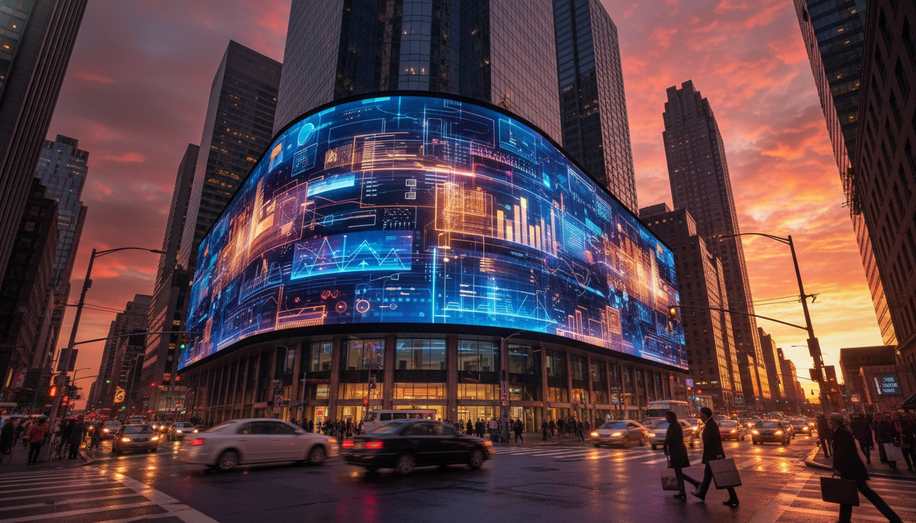

In the bustling landscape of out-of-home (OOH) advertising, where billboards once relied on gut instinct and static traffic counts, artificial intelligence is emerging as the ultimate site selector, transforming campaign planning from art to precision science. By harnessing machine learning algorithms, AI platforms now dissect vast datasets—from mobile geolocation and weather patterns to real-time foot traffic and consumer behavior—to pinpoint the most effective ad placements, predict performance, and maximize return on investment. This revolution is not hype; it’s reshaping how brands and media operators strategize, ensuring every impression lands with surgical accuracy.
Gone are the days of blanket coverage across high-traffic zones. AI enables hyper-targeted site selection by analyzing patterns in audience movement and demographics, recommending locations where specific consumer segments are most likely to appear. For instance, platforms like AdQuick employ AI campaign planners that index “movement-based audiences,” matching billboard inventory to advertiser goals such as reaching fitness enthusiasts near gyms during peak hours or commuters on rainy evenings when indoor alternatives dwindle. OneScreen.ai’s PlaceRank tool takes this further, evaluating venues like airport terminals, smart kiosks, and EV charging stations to rank sites by predicted engagement, drawing on behavioral trends, psychographics, and contextual data like nearby events. These systems forecast impressions with remarkable fidelity, using GPS and DOT traffic data to simulate audience exposure before a single ad goes live.
Programmatic buying amplifies this intelligence, automating the purchase of digital out-of-home (DOOH) inventory through AI-driven algorithms that adjust bids in real time. As Shawn Spooner, Global Chief Technology Officer at Billups, explains, marketers can now react “on the fly” to incoming data—swapping ad copy if one variation outperforms another for a given audience, or reallocating spend to high-performing screens based on live metrics. This dynamic optimization extends to content itself. AI-powered dynamic content optimization (DCO) mixes modular creative elements—headlines, images, calls-to-action—to tailor messages for the moment, such as promoting umbrellas during downpours or event tie-ins near stadiums. Predictive targeting layers in external variables: if a sports game spikes foot traffic, the system prioritizes nearby displays, ensuring relevance and recall.
The payoff is measurable. Predictive analytics link OOH exposure to tangible outcomes, like the 60% surge in website visits from a DOOH campaign by Fields, which leveraged AI for hyperlocal targeting. Media operators benefit too, using AI for inventory intelligence—Salesforce notes that nearly 60% of sales teams with AI tools improve lead qualification, while platforms like Place Exchange classify inventory for AI-enabled valuation. Simulations powered by AI even preview campaign success, modeling variables like time of day and demographics to identify top-performing units without trial-and-error waste. Whistler Billboards highlights how these tools shift from broad estimates to precise movement-pattern matching, elevating billboard efficacy.
Yet, AI’s prowess hinges on robust data infrastructure. APIs form the backbone, integrating disparate sources—mobile data, smart-city feeds, CRM systems—into clean pipelines that fuel machine learning models. Without this connectivity, predictions falter; with it, OOH evolves into an agile channel rivaling digital’s accountability. Challenges persist: data privacy concerns demand ethical handling, and not all operators have upgraded to AI-ready platforms. Still, forward-thinkers like HubSpot AI and Salesforce Einstein are prioritizing outreach and recommendations, signaling widespread adoption.
Brands embracing the smart site selector report superior efficiency. A fitness campaign might amplify visibility near running trails at dawn, while a retail push targets EV stations during lunch rushes. Real-time adjustments ensure adaptability—if weekend data shows stronger engagement with bold visuals, AI reallocates creative rotations accordingly. This closed-loop system—from site selection via predictive modeling to post-campaign attribution—delivers unprecedented ROI, proving OOH’s vitality in a data-saturated world.
As AI matures, its role in OOH will deepen, blending with augmented reality for interactive displays and expanding into urban smart infrastructure. For advertisers, the message is clear: ignoring this tool means ceding ground to competitors wielding data-driven foresight. The smart site selector isn’t just optimizing placements; it’s redefining campaign performance, turning public spaces into personalized media battlegrounds where precision wins.