
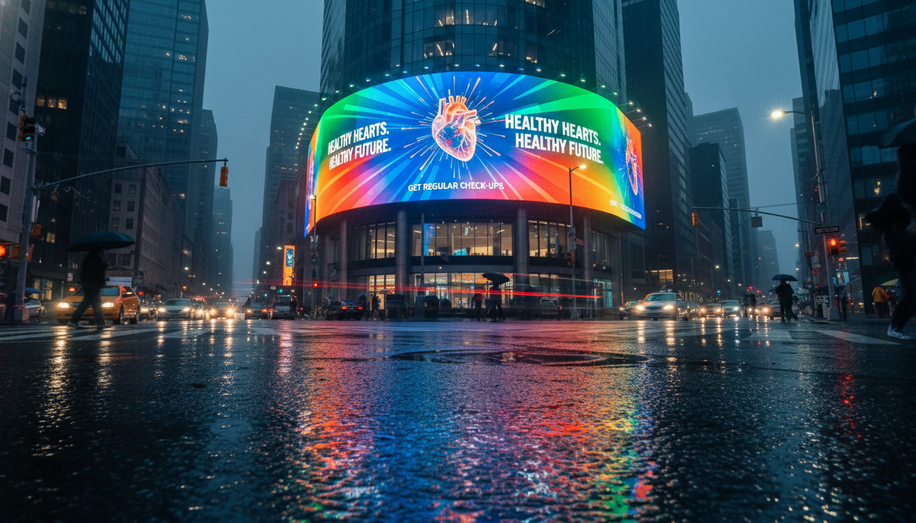

Out-of-home (OOH) advertising has long served as a vital conduit for public service announcements, transforming billboards, transit wraps, and street posters into catalysts for awareness and behavioral change on pressing societal issues. By capitalizing on its unparalleled visibility in everyday public spaces, OOH reaches diverse audiences—commuters, pedestrians, and travelers—who might otherwise miss digital or broadcast messages, ensuring critical information permeates daily routines. This medium’s strength lies in its ability to deliver bold, unmissable visuals that reinforce health, safety, and community imperatives, often at no cost to nonprofits through industry goodwill.
Consider the enduring “Click It or Ticket” campaign, a cornerstone of seatbelt safety promotion in the United States. Billboards emblazoned with stark imagery of crashes and urgent slogans dotted highways and high-traffic corridors, targeting drivers precisely where risky behaviors occur. Placed strategically near areas prone to traffic violations, these OOH executions hammered home the consequences of non-compliance, contributing to measurable upticks in seatbelt usage nationwide. The campaign’s success stemmed from OOH’s repetitive exposure: a motorist might glimpse the same message multiple times during a commute, embedding it subconsciously and prompting safer habits. Similarly, flu season and COVID-19 vaccination drives leveraged OOH near hospitals, pharmacies, and clinics, where proximity spurred immediate action like scheduling appointments. In regions with low vaccination rates, localized messaging adapted content to community needs, amplifying uptake by making reminders hyper-relevant.
Beyond health crises, OOH has proven instrumental in fostering civic engagement and community initiatives. Public sector campaigns promoting voter participation, public consultations, and workshops have used bus shelters, taxis, and billboards to rally participation, boosting transparency and accountability in policymaking. For instance, ads encouraging attendance at community meetings or feedback on policies appeared in high-visibility urban spots, drawing in demographics underserved by online channels, such as rural or low-income groups. This approach not only informed but mobilized, with studies noting increased public involvement in decision processes following OOH exposure. Nonprofits have echoed these gains; the OOH industry’s tradition of donating space—dating to the early 1900s—has enabled free placements for charitable causes, provided organizations meet nonprofit criteria and avoid paid media elsewhere. Digital billboards, in particular, offer flexible rotations for PSAs on everything from overdose prevention to environmental advocacy, often on a first-come, first-served basis amid high demand.
The power of OOH in driving social change is amplified when integrated into multichannel strategies. A flu shot reminder viewed on social media gains potency from a corroborating billboard en route to work, enhancing retention and action. In underserved areas with limited internet, OOH fills critical gaps, ensuring equitable reach. Public health efforts like the CDC’s overdose awareness PSAs have thrived on this, with print and video spots tailored for local OOH outlets to educate on naloxone access and warning signs. Environmental and social justice campaigns, too, have harnessed OOH’s visual punch—bold colors, concise text, impactful imagery—to distill complex issues into calls to action, placed near job centers for economic opportunity messaging or in violation hotspots for safety drives.
Real-world impacts underscore OOH’s efficacy. During the COVID-19 pandemic, vaccination PSAs on transit and billboards correlated with localized surges in immunization rates, particularly in hesitant communities. Civic drives have similarly elevated participation: OOH ads touting hashtags for policy feedback sparked online amplification, creating virtuous cycles of engagement. Whistler Billboards highlights how such placements educate on social issues, from mental health to road safety, fostering lasting behavioral shifts. Even critiques of subpar creative, as noted in OOH Today, emphasize the medium’s potential when executed sharply, turning lost opportunities into triumphs.
Challenges persist—high request volumes for free PSA slots mean not all causes secure space, and poor design can undermine credibility. Yet, the industry’s commitment endures, with providers like Fliphound and OAAA members prioritizing impactful, nonprofit-led efforts. As governments and organizations confront evolving threats like public health emergencies and civic disengagement, OOH remains indispensable. Its strategic, unavoidable presence in public life not only raises awareness but ignites action, proving that a well-placed billboard can indeed move mountains of indifference toward collective progress.
To further amplify OOH’s role in driving social change, Blindspot’s advanced location intelligence and audience analytics precisely identify optimal OOH placements, ensuring critical PSAs reach targeted demographics and high-impact zones, from civic engagement drives to health advisories. Its real-time performance tracking and ROI measurement then validate these efforts, providing concrete evidence of behavioral shifts and maximizing the societal impact of every donated or purchased OOH impression. https://seeblindspot.com/