
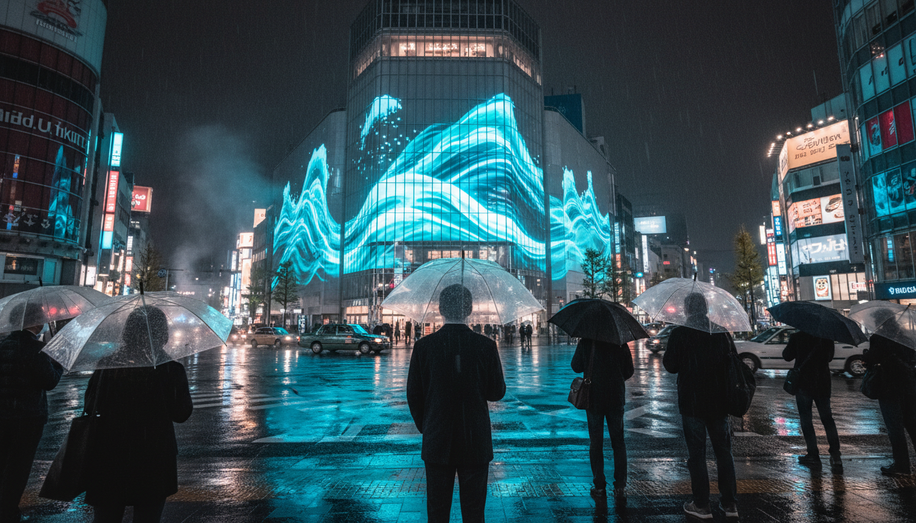

The out-of-home advertising industry has long been dominated by towering billboards and transit ads, yet the most memorable campaigns today are those that dare to challenge conventional formats. As brands increasingly compete for consumer attention in saturated media landscapes, unconventional OOH formats are reshaping how marketers engage audiences, transforming everyday environments into immersive brand experiences that stop people in their tracks.
Guerrilla installations and ambient media represent some of the most innovative approaches to capturing attention. The Cheltenham Festival exemplified this strategy by deploying portable architectural pods wrapped in perforated window film near high-traffic areas, functioning simultaneously as ticket offices and branded installations. This approach transcended traditional advertising by serving a dual purpose—practical functionality paired with visual impact. Similarly, guerrilla marketing leverages unconventional placements and bold creativity to disrupt everyday environments, often categorized as ambient media that integrates seamlessly into surroundings while delivering surprising brand messages.
Interactive and experiential formats are redefining audience engagement by inviting participation rather than passive observation. Grand Visual’s Pepsi MAX activation demonstrated this potential through a custom vending machine that surprised passersby with an unexpected reward system. When consumers scanned a can at the machine, they received a Pepsi-branded football, which triggered a laser display projecting a 2v2 pitch outline onto the street, commencing a 10-minute match session. This multi-sensory experience transformed a simple product promotion into a memorable moment worth sharing socially.
Creative use of space pushes boundaries by transforming traditional advertising formats into something bolder. Budweiser’s response to controversy over artist exclusion at the Brits Awards illustrates this principle perfectly. Rather than deploying a conventional billboard, the brand converted one into a live performance stage, inviting emerging artists to perform for music lovers. This approach subverted audience expectations while addressing cultural concerns authentically.
3D and projection-based technologies are emerging as powerful storytelling tools. Tata Coffee Gold’s International Coffee Day activation employed a large 3D anamorphic screen displaying a cinematic sequence of coffee beans being roasted, brewed, and freeze-dried into the product’s signature crystals. The experience extended beyond visual spectacle—fresh coffee aroma filled the space, guests could personalize the moment with selfies transformed into AI-generated latte art, and a QR code allowed attendees to save their experience before receiving a complimentary cup. This integration of sensory elements, technology, and personalization created a holistic brand encounter.
Building wraps and large-scale wallscapes offer dramatic canvases for unconventional messaging. Tim Tam’s upside-down billboard campaign leveraged this format ingeniously, using the unusual orientation to tap into the brain’s instinct to refocus attention. The playful execution—featuring the brand’s signature chocolate-brown packaging and witty lines—demonstrated how simple creative twists on traditional formats can generate outsized impact.
Weather-responsive and location-triggered digital formats represent the frontier of data-driven OOH innovation. Aperol strategically activated ads only during ideal “summer cocktail weather” conditions above 66°F near social hubs and high foot-traffic areas, maximizing relevance and engagement. Similarly, McCafe’s weather-responsive campaign displayed frozen drink advertisements when temperatures exceeded 22 degrees Celsius. These approaches exemplify how programmatic DOOH (pDOOH) combines real-time audience measurement with geotargeting capabilities, enabling brands to deliver context-aware messaging aligned with immediate consumer needs and environmental conditions.
What distinguishes these unconventional formats from traditional OOH is their commitment to three fundamental principles: clever creative that leverages visual storytelling, on-point messaging that draws direct lines to brand identity, and effective medium selection that matches format to objective. Whether through immersive experiences, unexpected spatial transformations, or technology-enabled personalization, these campaigns recognize that modern consumers increasingly dismiss passive advertising while craving authentic engagement.
The evolution beyond billboards signals a fundamental shift in OOH philosophy—from interruption-based visibility to participation-based experience. As brands continue pushing creative boundaries, the formats that combine innovation with genuine audience value will likely define the next generation of out-of-home advertising.
This evolution towards more dynamic and data-driven OOH demands sophisticated tools for execution and measurement. Blindspot empowers brands to navigate this new landscape by leveraging programmatic DOOH campaign management for context-aware messaging, ensuring precise delivery based on real-time conditions and audience presence. Furthermore, its robust audience measurement and location intelligence capabilities enable marketers to optimize site selection and track campaign performance, transforming speculative creative visions into measurable, engaging experiences that resonate deeply with modern consumers. Learn more at https://seeblindspot.com/