
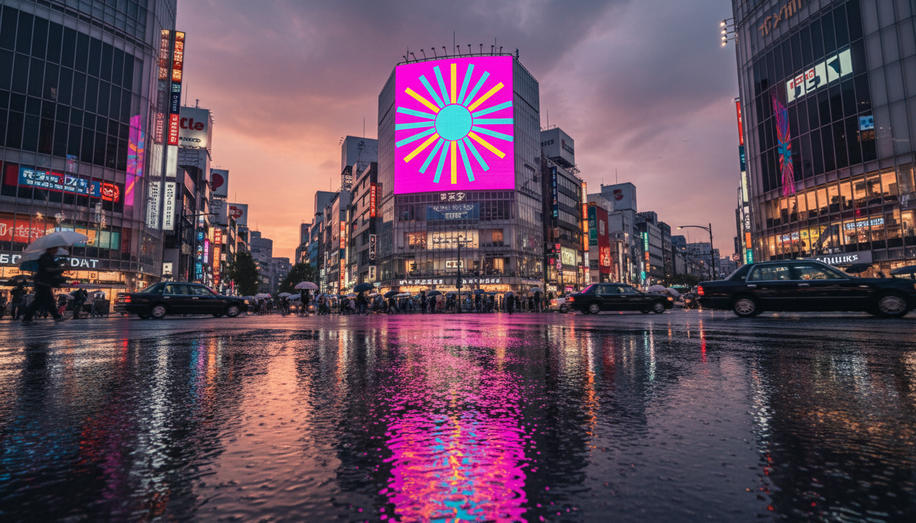

In the fleeting world of outdoor advertising, where commuters glance at billboards from speeding cars or pedestrians spare a split-second look at transit posters, minimalist design emerges as a masterstroke. By stripping away excess to reveal only the essential, this approach delivers maximum impact through visual clarity and brevity, turning passive passersby into engaged audiences.
The philosophy of “less is more” has long defined effective out-of-home (OOH) campaigns, rooted in the reality that viewers have mere seconds—often three to eight—to absorb a message. Clutter overwhelms; simplicity captivates. Brands like Apple and Nike exemplify this, crafting iconic ads with bold imagery, scant text, and unmistakable branding that lingers in memory long after the glance. Minimalism isn’t mere aesthetics—it’s a strategic necessity, boosting message retention by up to 40% compared to information-heavy designs.
At its core, minimalist OOH hinges on visual clarity, achieved through high-contrast elements that “pop” from afar. Bold, sans-serif typography ensures readability at speed, with fonts large enough to scan instantly and limited to 6-8 words maximum. A single, powerful headline stands alone, free of qualifiers or fine print, while ample white space—or negative space—provides breathing room, guiding the eye to the focal point and evoking sophistication. This negative space isn’t emptiness; it’s intentional elegance that amplifies key components, preventing visual chaos.
Color plays a pivotal role in this clarity. Minimalist designs favor restricted palettes—often one or two hues, monochromatic schemes, or stark black-and-white contrasts for modernity. High contrast between text and background sharpens legibility, as black on white or vice versa cuts through urban glare and motion blur. Overloading with hues dilutes focus; restraint creates harmony, making the ad feel cohesive and premium.
Brevity in messaging is equally vital, distilling the ad to its essence: every word, image, and logo must justify its presence. The core message—be it a slogan, tagline, or single evocative word—demands ruthless editing, akin to crafting a headline rather than a paragraph. Supporting imagery, when used, is singular and high-quality: a simple geometric shape, clean photograph, or symbolic icon that reinforces without distracting. Guerrilla tactics, like chalk stencils or digital projections, thrive here too, their pared-down forms ensuring instant recognition amid city chaos.
Creating memorable campaigns demands discipline. Start by identifying the singular takeaway: What must stick? Everything else gets cut. Establish a focal point—text, image, or logo—and subordinate all else to it. Simplify visuals to bold, recognizable forms, avoiding intricate graphics that blur at distance. Test rigorously: View the design from 50, 100, even 200 feet to mimic real-world conditions, refining until it sings in seconds.
Real-world triumphs abound. Apple’s campaigns, with their vast white expanses and terse “Think Different,” embody purity, letting the product shine unadorned. Nike’s “Just Do It” pairs a sweeping athlete silhouette with the tagline, high-contrast and unyielding, inspiring action without elaboration. McDonald’s has leaned into minimalism for drive-thru billboards, using a lone golden arch against negative space to evoke crave-worthy familiarity. These aren’t accidents; they’re engineered for recall, proving simplicity forges emotional bonds faster than elaboration.
Yet minimalism’s power extends beyond billboards to digital OOH, where animations must remain sparse to avoid overwhelming screens. In 2026, as programmatic OOH evolves, this trend intensifies: data shows minimalist digital wraps on buses or building facades outperform busy counterparts in engagement metrics. The discipline forces brands to interrogate their story—what’s truly essential?—yielding ads that feel timeless amid sensory overload.
Critics might argue minimalism risks blandness, but success lies in execution: pair restraint with emotional resonance, and the result is magnetic. Agencies report that simple OOH not only cuts production costs by focusing resources but also scales effortlessly across formats, from static posters to LED spectacles.
Ultimately, minimalist design in OOH transforms constraints into strengths. In an era of information deluge, it honors the audience’s time, delivering clarity that commands attention and breeds loyalty. By embracing less, advertisers achieve profoundly more: campaigns that don’t just advertise, but imprint.