
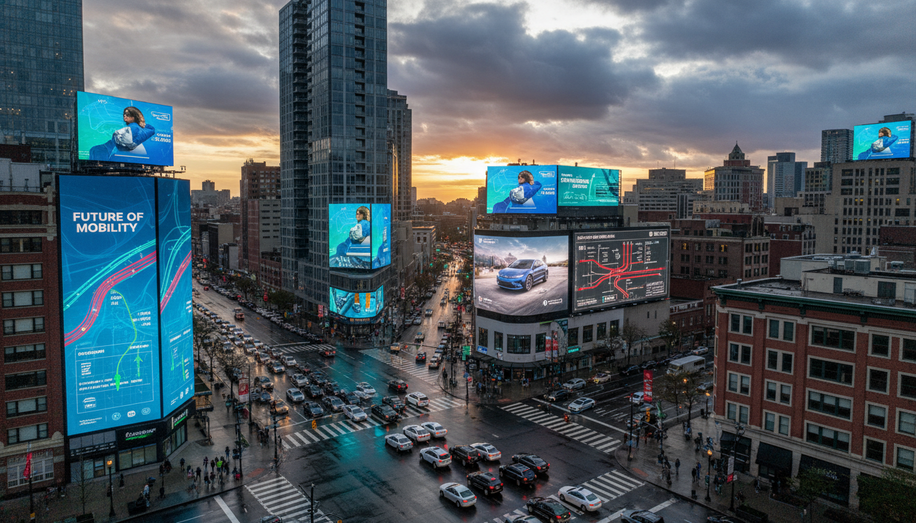

In the bustling arteries of modern metropolises, outdoor advertising is evolving from static billboards into dynamic nodes within the smart city ecosystem, weaving technology and urban life into a seamless tapestry. Digital out-of-home (DOOH) displays, once mere canvases for brand messages, now harness real-time data from sensors, traffic systems, and weather feeds to deliver hyper-relevant content, turning public spaces into interactive hubs that both serve residents and amplify advertiser reach. This integration not only enhances engagement but positions OOH as a vital contributor to smarter, more connected urban environments.
Smart cities, with their networks of IoT devices and data analytics, provide fertile ground for OOH’s renaissance. Consider public transport hubs where DOOH screens sync with passenger flow sensors, adjusting messages based on peak hours, local events, or even commuter demographics. In one scenario, a screen at a busy subway station might promote coffee during morning rushes and evening cultural events as crowds shift, all powered by live data integration. This real-time adaptability surpasses traditional static ads, offering flexibility that aligns with the fluid rhythms of city life. Brands benefit from measurable impacts—dynamic content captures attention in high-traffic zones, driving foot traffic to nearby stores or online extensions via QR codes and augmented reality overlays.
Data lies at the heart of this synergy. Smart city infrastructures generate vast streams of information on audience behavior, preferences, and movement patterns, which OOH operators can tap to personalize campaigns. Advertisers analyze this to tailor messaging for specific demographics, such as eco-conscious millennials near green zones or professionals in business districts. For instance, DOOH in shopping centers might display promotions tied to purchase patterns or foot traffic, boosting conversions while contributing to urban efficiency by promoting sustainable initiatives like bike-sharing or electric vehicle stations. Such precision not only elevates ROI through targeted engagement but also fosters a community-centric approach, aligning ads with city goals like reduced emissions via energy-optimizing tech.
Sustainability emerges as another key pillar. Smart technologies in OOH minimize environmental footprints without compromising visibility. Automated lighting schedules and GPS-coordinated controls dim screens during low-light off-hours or sunrise/sunset transitions, slashing energy use and costs. In smart cities, these features integrate with broader grids, supporting green urban planning. Advertisers gain from this ethos—campaigns highlighting eco-products on efficient DOOH screens reinforce brand values while aiding cities’ net-zero ambitions. Partnerships amplify these gains: collaborations between tech firms, governments, and OOH providers pool expertise to innovate, such as linking billboards to public Wi-Fi for interactive polls or traffic alerts.
Omnichannel integration further blur boundaries between physical and digital realms. OOH acts as a tangible bridge, syncing with social media, mobile apps, and online platforms for cohesive narratives. A DOOH ad spotted on a street might trigger personalized push notifications via location data, extending the experience across devices. AI-powered billboards take this further, using machine learning to predict audience responses and optimize content in real time, creating immersive stories that resonate throughout a consumer’s day. In connected cities, this multichannel harmony enhances data insights, enabling advertisers to track cross-platform performance and refine strategies dynamically.
Yet challenges persist. Privacy concerns around data collection demand robust safeguards, while equitable access ensures OOH benefits all urban strata, not just affluent zones. Successful models emphasize strategic alliances—local governments provide infrastructure insights, tech companies supply analytics, and advertisers infuse creativity. Cities like those pioneering sensor-linked kiosks demonstrate the potential: enhanced public services, from real-time transit info to emergency alerts, alongside vibrant commercial spaces.
As urban populations swell and technology permeates daily life, OOH’s role in the urban fabric grows indispensable. By contributing to data-driven planning and benefiting from smart infrastructures, it transforms advertising from interruption to integration. The result is a more connected environment where commerce, community, and innovation converge, proving that in smart cities, the most effective ads are those that illuminate the path forward for everyone.