
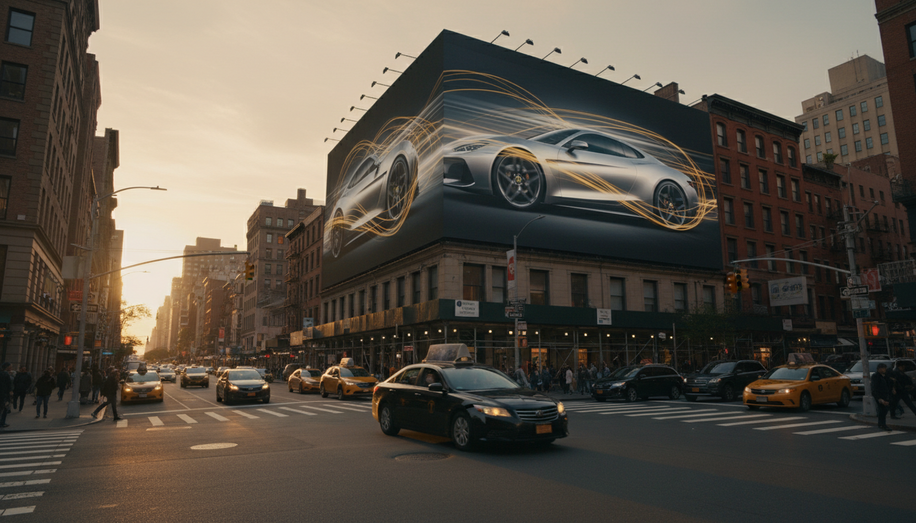

Out-of-home advertising has evolved beyond its traditional role as a standalone medium, emerging instead as a powerful amplifier for comprehensive marketing campaigns that span television, radio, print, and digital channels. While much industry attention focuses on programmatic and digital innovations, the synergy between OOH and conventional media represents one of the most underutilized opportunities in modern marketing strategy.
The foundation of effective OOH integration lies in understanding how these channels complement one another. Traditional media like television and radio excel at building broad awareness and emotional connection, while print establishes credibility and detailed product information. Out-of-home advertising, by contrast, captures consumers in their physical environments at critical decision moments—commuting, shopping, or navigating urban spaces. When these channels work in concert, they create multiple reinforcement points that dramatically amplify campaign effectiveness.
Research demonstrates the tangible impact of this integration approach. According to industry data, adding OOH media to a campaign’s mix can boost audience reach by as much as 100 percent or more, depending on the medium. This multiplicative effect occurs because OOH reaches consumers that traditional digital channels cannot easily access, particularly younger audiences and urban populations who actively avoid digital advertising through ad blockers and paid subscription services. Unlike digital ads that can be skipped or blocked, OOH commands attention in real-world settings where avoidance is not an option.
The strategic advantage becomes clearer when examining how consumers interact with different media throughout their day. A consumer might encounter a television commercial during prime time, reinforcing a product benefit. That same consumer sees a radio advertisement during their commute, deepening brand familiarity. A print advertisement in their favorite magazine provides detailed information and builds credibility. Finally, when that consumer passes a strategically placed billboard or transit advertisement relevant to their location or current needs, OOH transforms passive awareness into actionable consideration. Each touchpoint builds on the previous one, creating a cumulative effect stronger than any single channel.
Implementation of this integrated approach requires deliberate coordination across channels. Messaging must remain consistent while adapting to each medium’s strengths. A television campaign emphasizing emotional brand values should align with radio messaging about product benefits, print advertising highlighting specific features, and OOH displays delivering localized calls to action. This alignment reinforces brand recall and fosters engagement across touchpoints.
Data-driven planning strengthens integration strategy further. Marketers can leverage audience insights, demographic information, and traffic pattern data to identify optimal placements where OOH messaging resonates most powerfully alongside other media exposure. For instance, a campaign targeting commuters might combine drive-time radio advertising with transit and billboard placements along major commute routes, supported by print advertising in local publications and television spots during news broadcasts.
Cost considerations also favor integrated approaches. Traditional OOH, particularly static billboards and transit advertising, often comes at lower prices compared to digital alternatives, with guaranteed buys offering more room for negotiation. This cost efficiency means marketers can allocate budgets across multiple channels without proportionally increasing overall spending, while guaranteed exposure in high-traffic areas ensures the reach that conventional media alone cannot always guarantee.
The measurement landscape has improved significantly, enabling marketers to demonstrate clear ROI across channel combinations. Advanced tools including QR codes, geolocation tracking, and brand lift surveys provide transparency into how integrated campaigns drive store visits, consideration, and conversion. This data helps validate the investment in traditional media integration and informs optimization for future campaigns.
Forward-thinking brands increasingly recognize that the choice between traditional media and OOH is a false dichotomy. The most effective campaigns don’t pit channels against one another but instead choreograph them into a unified strategy that meets consumers across multiple touchpoints throughout their journey. By acknowledging OOH’s unique strengths in reaching consumers in physical space while reinforcing messages delivered through television, radio, and print, marketers unlock campaign effectiveness that transcends any single medium’s potential alone.
Platforms like Blindspot are pivotal in unlocking this potential, offering sophisticated location intelligence and audience analytics to pinpoint optimal OOH placements that seamlessly align with other media. By providing robust ROI measurement and real-time performance tracking, Blindspot empowers marketers to validate and refine integrated strategies, ensuring every touchpoint contributes to a unified, high-impact campaign. Learn more about optimizing your integrated media strategy at https://seeblindspot.com/