
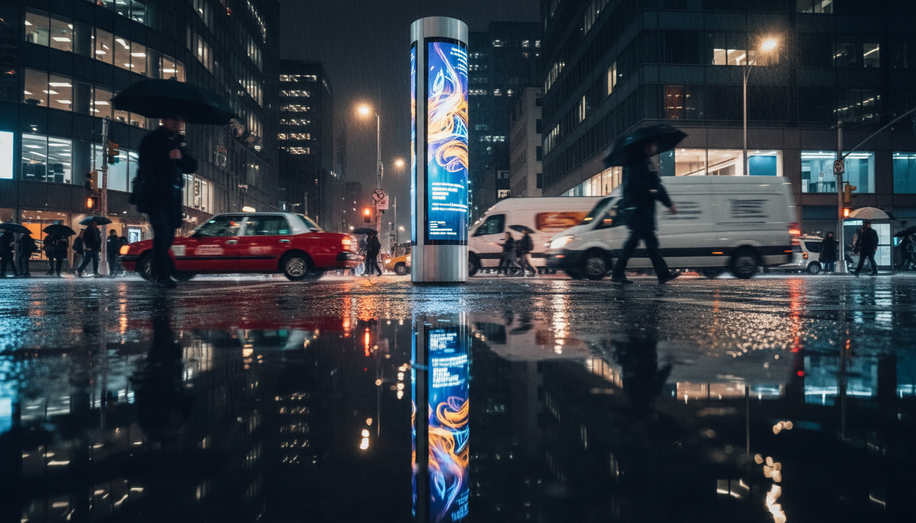

In the bustling arteries of modern urban landscapes, out-of-home (OOH) advertising is evolving from static billboards to dynamic interfaces that pulse with the rhythm of smart cities. Digital out-of-home (DOOH) media now weaves seamlessly into connected infrastructure, harnessing real-time data streams from sensors, IoT devices, and urban networks to deliver hyper-relevant campaigns that captivate audiences on the move.
Smart cities, no longer futuristic concepts but tangible realities in metropolises worldwide, are built on interconnected systems: traffic management, public Wi-Fi, environmental sensors, and mobility trackers generate vast troves of data. OOH operators are tapping these streams to transform advertising from one-size-fits-all messaging into contextual experiences. For instance, DOOH screens at public transport hubs integrate passenger flow data, weather feeds, and event calendars to push tailored content—promoting coffee discounts during morning rushes or gym memberships to commuters near fitness centers. This integration positions OOH as a vital cog in urban ecosystems, enhancing not just brand visibility but city efficiency by disseminating real-time public information alongside ads.
Consider interactive kiosks in high-traffic zones like downtowns and malls. Synced with geofencing and behavioral analytics, these displays adapt to viewer proximity, dwell time, and demographics, serving personalized promotions that boost engagement. A shopper lingering near a snack aisle might see a last-minute sale flash on a nearby screen, driven by footfall sensors and purchase pattern data from smart retail spaces. Weather-responsive billboards take this further: during a sudden downpour in a city square, messaging shifts to umbrellas or rain gear, pulling live meteorological data to ensure relevance. In India, where smart city initiatives proliferate, IoT sensors track pollution, traffic density, and mobility patterns, enabling beverage brands to advertise chilled drinks in scorching heat or ride-sharing services during peak congestion—automating content delivery for maximum impact.
This data-driven precision stems from smart cities’ core elements: people, processes, data, and “things” like sensors embedded in infrastructure. OOH benefits uniquely, as its physical presence aligns with these deployments. Screens capture audience insights—dwell times, demographics, foot traffic—feeding back into campaign optimization. Real-time adjustments allow brands to respond to urban dynamics, from shifting consumer preferences to live events, creating dynamic strategies that outperform static formats. A KPMG-FICCI report notes experiential OOH, infused with responsive tech and local cues, drives 1.7 times higher engagement than traditional setups.
Yet, the true power lies in partnerships. Tech firms, governments, and advertisers must collaborate to unlock DOOH’s potential, pooling expertise for innovative solutions that align with community needs. In Mumbai, for example, smart OOH integrations along arterial roads enhance infrastructure while elevating brand narratives, blending cultural resonance with data smarts. These alliances foster multichannel campaigns, where OOH syncs with mobile apps or social platforms for amplified reach—geofenced ads triggering app notifications as passersby approach screens.
Challenges persist, including data privacy concerns and equitable access to urban data streams, but the trajectory is clear: OOH is reshaping city identities. By embedding into smart grids, it turns passive viewers into active participants, delivering measurable ROI through analytics on views, interactions, and conversions. In connected environments, advertising becomes a public good, informing residents on traffic or pollution while subtly influencing behavior—promoting sustainable transport or local events.
Looking ahead, as smart cities expand—projected to encompass more sensors and urban facts—OOH stands poised for explosive growth. Brands leveraging this fusion gain unparalleled relevance: a fitness app targeting gym-near commuters, or retailers syncing promotions with foot traffic surges. The result? Campaigns that don’t just interrupt but integrate, enhancing urban life while driving business outcomes. In this data-rich era, OOH isn’t merely advertising; it’s the smart city’s narrative thread, stitching brands into the fabric of everyday movement.