
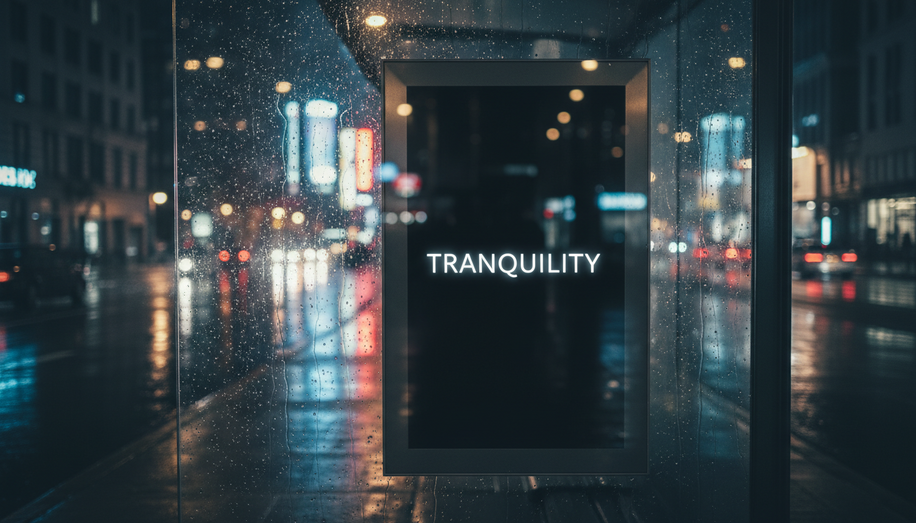

In the high-decibel world of out-of-home (OOH) advertising, where billboards battle for fleeting glances amid urban chaos, a quiet revolution is underway. Minimalism has emerged as a potent force, proving that subtlety can outshine spectacle. By harnessing negative space, clever placement, and pared-back design, campaigns are achieving profound impact without raising their voice.
This approach strips advertising to its essence, embracing the philosophy that less is more. Minimalist billboards prioritize clarity and functionality, using clean lines, ample white space, and concise messaging to deliver a punch in mere seconds—the average time a driver or pedestrian has to absorb an ad. Negative space, often called white space, plays a starring role, allowing key elements to breathe and drawing the eye inexorably to the core message. As one design expert notes, it eliminates the extraneous, highlighting what truly matters and making the communication straightforward and memorable.
Consider the teeth-whitening campaign by Alma in Miami, a standout example from recent years. Rather than flashy endorsements or cluttered visuals, it employed a simple light projection on a billboard, simulating a radiant smile emerging from darkness. The understated glow against a dark backdrop leveraged environmental light and placement to make the point visceral and immediate, turning a static surface into a dynamic demonstration. This clever use of context amplified the subtlety, proving that integration with surroundings can magnify minimalism’s power.
Similarly, The Ordinary skincare brand opted for pure textual restraint in its OOH execution by Uncommon Creative Studio. Against a stark white background, minimalist illustrations paired with straightforward copy drove engagement—no celebrities, no bombast, just words that invited curiosity. The campaign’s slick simplicity embodied the brand’s ethos of transparency, standing out in a sea of overproduced ads by being defiantly ordinary.
Food giants have mastered this art too. McDonald’s vector-based billboards rely solely on instantly recognizable golden arches and simple icons, forgoing text overload. The brand’s colors and style alone convey hunger and familiarity, a testament to equity built over decades. Chipotle flips the script with word-only designs, using high-contrast typography to spotlight phrases like fresh ingredient boasts. The fun, creative contrast ensures the message pops without imagery, engaging passersby through clever hierarchy and negative space.
Tesco and McDonald’s have further popularized this trend in Europe, adopting zoomed-in, everyday visuals with cropped compositions and off-center elements. Neutral palettes, symmetry, and organic shapes foster approachability and trust, drawing viewers in rather than overwhelming them. Nike’s iconic “Just Do It” exemplifies the textual pinnacle: three words, bold and motivational, paired with potent imagery that inspires action universally across demographics.
These successes stem from core principles tailored to OOH’s constraints. Text must be ultra-concise—ideally seven words or fewer—delivering a single, powerful idea with a clear call to action. Imagery, when used, is singular and high-impact, often high-quality shots that speak volumes without clutter. Placement enhances subtlety; strategic spots like high-traffic intersections or building facades allow ambient light or motion to activate the ad, as in projections or stencils on sidewalks.
The rise of minimalism reflects broader cultural shifts. In an era of information overload, brands project confidence by trusting audiences to connect dots, avoiding the bombardment of multiple messages. It transcends demographics with universal appeal, works across media—from digital projections to guerrilla posters—and boosts recall through arresting restraint. Studies and industry observers note that simple designs are more shareable on social media, extending OOH’s reach organically.
Yet minimalism demands precision. Poor execution risks invisibility, so brands invest in premium production: crisp fonts scaled for distance, colors that pop against environments, and testing for legibility at speed. Agencies like those behind Apple’s and Nike’s campaigns have honed this, building legacies on bold visuals and minimal text that lodge in collective memory.
As OOH evolves with digital integration and urban density, minimalism offers a timeless toolkit. It proves advertising doesn’t need to shout to be heard—strategic whispers, amplified by space and smarts, resonate longest. Campaigns like these redefine impact, inviting us to pause, ponder, and remember in a world that never stops moving.