
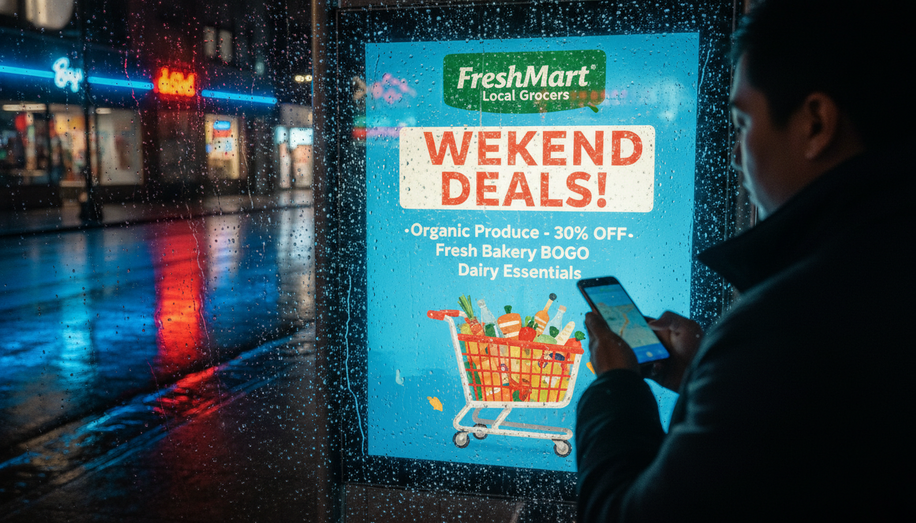

In the high-stakes world of retail marketing, out-of-home (OOH) advertising is evolving from a broad-reach broadcaster to a precision tool that funnels shoppers directly into stores, creating a seamless loop with in-store digital screens, promotions, and loyalty programs. This “last mile loop” closes the gap between awareness and purchase, turning transient impressions into tangible foot traffic and sales lifts. Retailers like Kroger and 7-Eleven are pioneering this integration, deploying digital shelf screens, checkout kiosks, and entrance displays that respond in real time to shopper behavior, leveraging first-party data from loyalty apps and online histories.
The shopper journey today spans digital and physical realms, demanding continuity that traditional OOH struggled to provide. Static billboards once promised exposure but offered scant proof of impact; now, digital OOH (DOOH) at strategic pre-store locations—think screens at EV chargers or along high-traffic routes—primes consumers just as they finalize shopping lists. A brand targeting snack buyers might blast geo-fenced messages on nearby DOOH networks, directing traffic to a specific retailer. Upon arrival, in-store retail media networks (RMNs) pick up the thread: a digital endcap screen flashes a complementary beverage promo, personalized via loyalty data, nudging the add-to-cart decision. This handoff isn’t coincidental; it’s engineered through omnichannel platforms that sync campaigns across channels, ensuring messaging builds momentum rather than restarts.
Place-based DOOH amplifies this loop’s effectiveness. At-store inventory, positioned near entrances or parking lots, delivers viewable, contextually relevant ads in clutter-free environments, free from the digital noise of social feeds. Marketers prize its proximity to purchase: a last-minute message can sway brand choice amid mental list-making. Inside, the environment shifts to hyper-targeted engagement. Screens atop shelves or at aisles draw on real-time inputs like weather, inventory levels, or even mobile beacons to serve dynamic content—far beyond traditional DOOH’s broad blasts. For instance, a loyalty member scanning produce might trigger a nearby screen promoting a deal on paired proteins, informed by past buys, enhancing relevance and reducing decision friction.
This integration thrives on data symmetry. Retailers, armed with rich first-party insights, transform stores into ad hubs where OOH drives inflows and in-store screens monetize them. Omnichannel ad spending underscores the momentum: projections peg it at $61.2 billion in 2025, with off-site elements— including OOH—nearing $42 billion, cementing in-store DOOH as a core pillar. Unlike outdoor DOOH, where attribution relies on footfall estimates, in-store RMNs deliver closed-loop metrics: track a DOOH-exposed shopper’s loyalty scan, promo redemption, or basket uplift. Collaboration between merchants and media teams is key; aligning ad placements with store design avoids clutter, fostering a unified experience that boosts satisfaction and spend.
Yet challenges persist. In-store screens risk overwhelming shoppers if not tailored—every location has its “soul,” demanding customized setups over cookie-cutter deployments. Noisy aisles can dilute impact, so best practices emphasize governance: balance product visibility with ads, prioritizing consumer preferences. Emerging tech addresses this. By 2026, AI-driven personalization via beacons could adapt screens to individuals, while programmatic buying scales OOH-to-store handoffs. Social commerce’s $100 billion surge will accelerate this, blending OOH awareness with in-store conversion in full-funnel strategies.
Brands leveraging this loop report outsized returns. OOH along decision-making routes builds top-of-mind status, while retail media seals the deal at point-of-purchase. Talon, an OOH specialist, champions this tandem approach: external formats persuade consideration, in-store ones drive action. Catalina highlights DOOH’s role in “surrounding” near-store customers, fueling RMN growth. For advertisers, it’s a renaissance—physical retail reclaims centrality, backed by ironclad ROI.
As RMNs mature, the last mile loop redefines shopper marketing. OOH no longer ends at exposure; it ignites a cohesive journey where pre-store priming meets in-store precision, loyalty ties, and measurable wins. Retailers acting as publishers offer omnipresent reach, from billboard to basket. For OOH pros, the message is clear: integrate or get left at the curb. Stores aren’t just destinations—they’re dynamic media ecosystems, looping every visit into high-value encounters.