
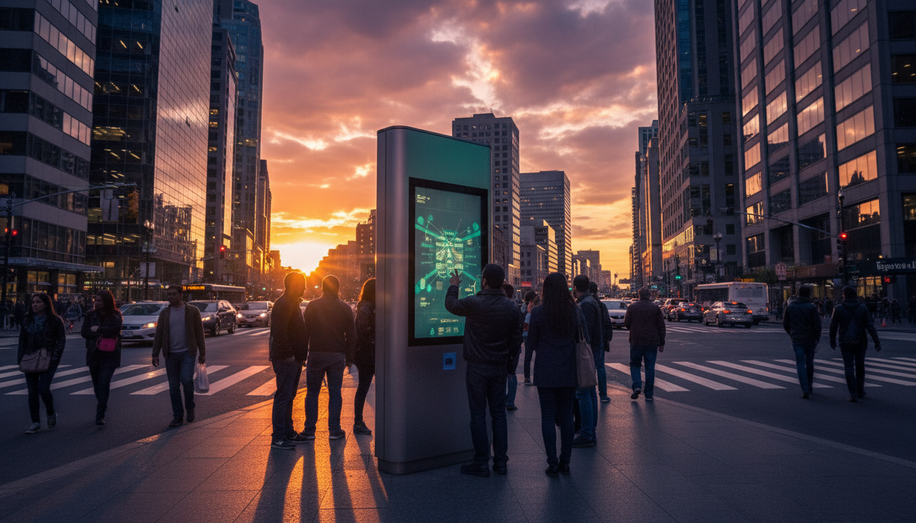

In the heart of bustling city streets and shopping malls, interactive kiosks are reshaping out-of-home (OOH) advertising from passive billboards into vibrant conversation starters. These touch-enabled hubs, blending high-brightness screens with real-time data, invite pedestrians to swipe, tap, and transact, transforming fleeting glances into meaningful engagements.
Once confined to static posters or looping videos, OOH spaces struggled to hold attention amid urban distractions. Interactive kiosks change that equation. Equipped with LED displays rated for outdoor durability—often IP55 weatherproofing and 3000-5000 nits of brightness—they withstand rain, sun, and heavy foot traffic while delivering crisp, context-aware content. In high-dwell areas like lifestyle centers and transit stops, where slower traffic allows longer interactions, these kiosks capture eyes that traditional media might miss. For instance, New York’s LinkNYC network provides free WiFi, directions, and calls, all subsidized by targeted ads that users actively engage with during their wait.
The magic lies in two-way communication. Unlike one-sided billboards, kiosks respond to user input, offering personalized experiences that drive immediate action. Shoppers at a mall kiosk might scan a QR code for a tailored discount, play a quick brand game, or complete a survey for rewards, turning ad exposure into data-rich transactions. Retailers leverage this for point-of-sale influence: dynamic promotions rotate fresh content to combat ad blindness, geofenced to nearby stores—like restaurant deals popping up at intersections—ensuring relevance in seconds. Hospitality and tourism sectors deploy them as brochure alternatives; PARTTEAM & OEMKIOSKS’ ZYTEC and PLASMV models deliver virtual tours, real-time maps, and event info, drawing visitors deeper into destinations while collecting insights on preferences.
This interactivity bridges digital and physical worlds, creating unified campaigns. A digital billboard might tease a product with a social prompt, leading users to a nearby kiosk for checkout or customization—hospitality kiosks guide bookings, retail ones enable self-serve payments. In Atlanta, IKE Smart City kiosks rolled out 120 WiFi-enabled units with air quality monitors, blending utility with ad space to foster community trust and repeated visits. San Antonio’s IKE deployments at VIA transit stops greet pedestrians with street-level ads, extending reach into urban cores where billboards can’t compete.
Data is the silent powerhouse. Kiosks log touches, dwell times, and demographics via remote platforms, enabling hyper-targeted follow-ups. Ethnic-specific messaging reaches household influencers in diverse neighborhoods, while programmatic DOOH automates ad buys for peak efficiency. This feedback loop refines messaging: simple calls-to-action shine in seven-second windows, with games or polls boosting recall over passive views.
Challenges persist, but innovations address them. High upfront costs for rugged hardware yield through scalability—kiosks pair seamlessly with billboards or mobile OOH for omnichannel blasts, amplifying reach across demographics. Content fatigue is mitigated by rotation and AI-driven personalization, keeping hubs fresh. Sustainability adds appeal: digital replacements cut paper waste, as seen in tourism kiosks promoting eco-friendly exploration.
Brands across industries are buying in. Grocery chains use Screenverse kiosks for impulse buys at checkout; convenience stores target on-the-go shoppers with KeyMe’s retail screens. Outdoor heritage displays engage locals with interactive histories, directories, and promotions, streamlining navigation while monetizing space. The result? Higher conversions: studies show interactive DOOH lifts engagement 40-60% over static formats, as users opt in rather than tune out.
As 5G and edge computing advance, expect kiosks to evolve further—facial recognition for non-intrusive personalization, AR overlays for virtual try-ons, voice commands for hands-free queries. OOH is no longer shouting into the void; it’s listening, adapting, and converting in real time. Interactive kiosks prove advertising thrives when it hands the reins to the audience, forging loyalty one touch at a time.