
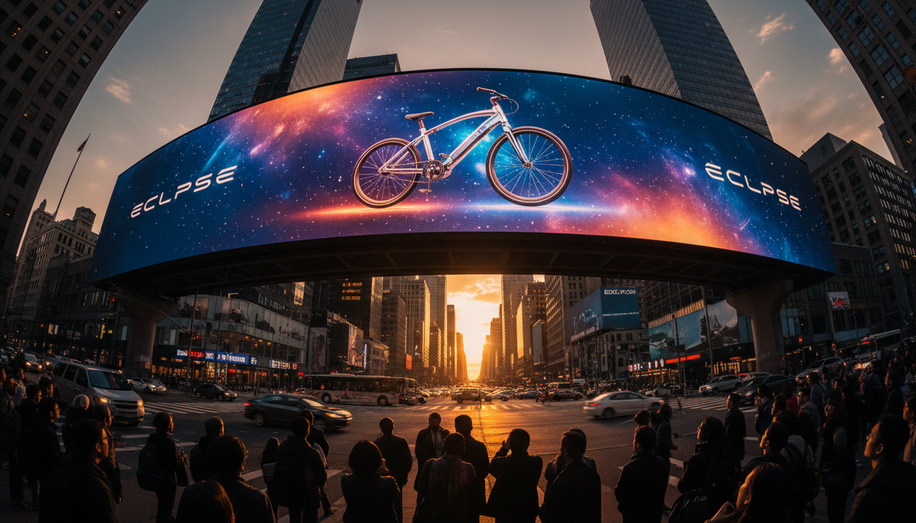

In the high-stakes world of product launches, out-of-home (OOH) advertising stands as a commanding force, transforming quiet introductions into citywide spectacles that ignite instant mass awareness and instill unshakeable credibility. Unlike digital ads that can be scrolled past in seconds, OOH’s massive billboards, transit wraps, and digital displays command attention in public spaces, turning a new product or service into a shared cultural moment. When strategically deployed, these formats don’t just inform—they electrify conversations, signal a brand’s confidence, and propel early adoption, making OOH indispensable for launches in competitive markets like consumer goods, tech, and services.
The journey often begins with teaser campaigns, where ambiguity builds intrigue. Picture enigmatic visuals on prime urban real estate—silhouettes of a revolutionary gadget or cryptic taglines like “Something Big is Coming”—plastered across high-traffic overpasses and commuting routes. This approach leverages OOH’s physical scale to convey legitimacy; a towering billboard in a bustling district like Hanoi’s Phạm Văn Đồng or Ho Chi Minh City’s Nguyễn Thị Minh Khai doesn’t whisper— it declares arrival. Consumers interpret the prominence as proof of investment and seriousness, fostering trust that smaller online formats struggle to match. Industry data underscores this: Nielsen reports that 40% of smartphone users take action after spotting a digital billboard, bridging passive viewing to active engagement.
As buzz peaks, the grand reveal unleashes the full force. A synchronized rollout across iconic locations floods the market with vivid product imagery, pricing, benefits, and calls-to-action, creating an “event-like” presence that feels urgent and collective. People don’t merely notice; they photograph, share on social media, and discuss, amplifying reach organically. This spontaneous virality turns passersby into advocates, accelerating word-of-mouth in real time. For impulse categories like FMCG, beauty, or food and beverage, placements near retail clusters—supermarkets, pharmacies, or malls—shorten the path from awareness to purchase. Directional cues such as “Now available at Circle K” or “Exclusive launch at Guardian” transform impressions into foot traffic, with OOH proving especially potent at the “final mile” of decision-making.
Modern digital OOH (DOOH) elevates these strategies further, embedding interactivity that blur lines between offline spectacle and online conversion. QR codes on dynamic screens link directly to e-commerce or AR experiences, while real-time messaging adapts to weather, events, or stock levels, guiding consumers seamlessly. A Harris Poll survey found 76% of DOOH viewers took follow-on actions, from store visits (29%) to purchases (30%), highlighting OOH’s power to drive measurable behavior. Paired with digital channels, it amplifies everything: research from the Canadian Out of Home Marketing and Management Bureau shows OOH boosts online ad effectiveness by 31%, paid social by 56%, and search by 80%. Consumers primed by a bold street poster arrive online more receptive, primed to engage with complementary content.
Credibility builds not just through flash but repetition. OOH’s unskippable nature in daily routines—commutes, shopping runs—ensures top-of-mind recall, sustaining momentum post-launch. For durables like electronics or automobiles, sustained visibility in high-traffic zones reinforces familiarity, influencing shelf decisions subconsciously. In quieter periods, OOH maintains presence without digital fatigue, supporting sell-through as shoppers encounter reminders en route to stores. Categories from beverages and personal care to real estate thrive here, as OOH hones in on pricing and features to spark interest and action.
Case in point: launches in Vietnam’s fast-paced market demonstrate OOH’s edge. Brands dominating pedestrian overpasses and arterial roads not only claim instant visibility but also psychological momentum—multiple placements signal rising popularity, nudging purchases. Globally, OOH cuts through digital clutter, with consumers 33% more alert outdoors, making it ideal for bold, creative storytelling that etches brands into memory.
Yet success demands precision. Location trumps volume; prioritize high-dwell or impulse zones over scattershot coverage. Creative must be simple—strong visuals, minimal text—to resonate at speed. Integration is key: sync OOH with social, search, and retail promotions for a unified ecosystem. Measure via mobile lifts, footfall data, or sales spikes to refine.
Ultimately, OOH reframes product launches as public triumphs, delivering the mass awareness and credibility that digital alone can’t replicate. In an era of fragmented attention, its tangible dominance ensures new entrants don’t just enter the market—they own the conversation from day one.