
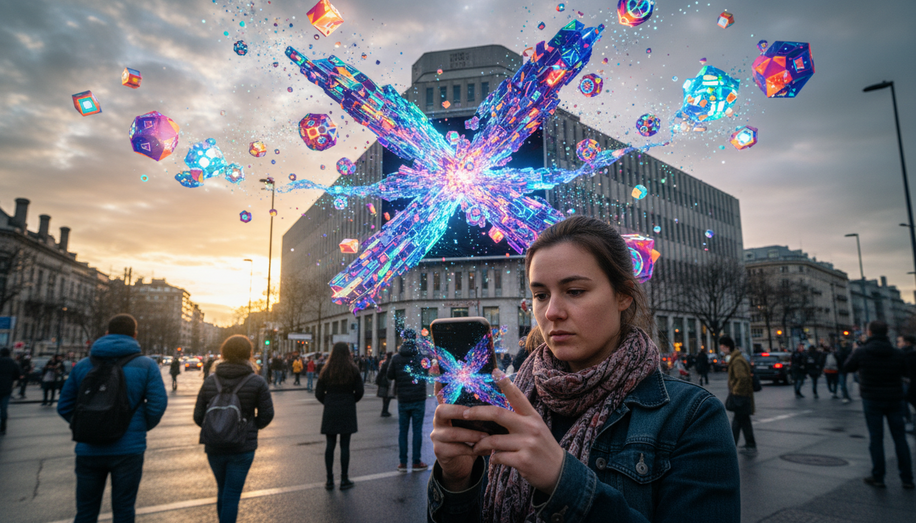

Augmented reality is redefining the boundaries of out-of-home advertising, transforming everyday billboards and transit displays into interactive brand experiences that capture attention in ways static creative never could. By overlaying digital information onto physical advertisements, AR technology enables brands to merge the permanence of traditional OOH with the flexibility and engagement potential of digital media, creating a hybrid approach that resonates with today’s smartphone-savvy audiences.
The mechanics are straightforward but powerful. Viewers encounter a physical billboard, bus shelter, or mural and scan a QR code using their mobile devices. Within seconds, three-dimensional models and animations materialize on their screens, appearing to emerge from or interact with the real-world creative. This seamless bridge between physical and digital worlds transforms passive observation into active engagement, fundamentally shifting how audiences interact with OOH advertising.
The creative possibilities this technology unlocks are extensive. Brands can overlay decorative 3D graphics that simply make ads more captivating, or employ more practical applications like animated directions guiding consumers to nearby retail locations. A floating logo hovering in front of a transit ad bears little resemblance to a lifelike 3D dragon perched atop a billboard, yet both leverage the same fundamental technology to enhance brand presence. This versatility allows advertisers to tailor AR experiences to their specific campaign objectives, whether prioritizing entertainment value, brand recall, or conversion metrics.
Real-world campaigns demonstrate the tangible impact of this approach. Vodafone’s AR billboard campaign across Germany transformed eight traditional billboards into interactive experiences where audiences could scan QR codes to unlock 3D content and play branded games for exclusive prizes, generating significant retail foot traffic and social media buzz. Similarly, Burger King integrated AR into digital displays with QR-activated experiences that revealed plumes of smoke flowing toward nearby restaurant locations, effectively leveraging the technology for wayfinding and customer acquisition. Pepsi Max’s bus stop campaign took the concept further, transforming transparent windows into immersive 3D environments where imaginative scenarios unfolded using augmented effects while maintaining realistic street backgrounds, creating genuine surprise moments for commuters.
Beyond creative appeal, AR OOH advertising delivers measurable business benefits. Research indicates that AR campaigns increase engagement levels by up to twenty percent, with consumers spending an average of seventy-five seconds interacting with AR advertisements compared to mere seconds with static creative. This extended dwell time translates directly to improved brand recall and deeper memory encoding. Additionally, AR technology provides OOH advertisers with enhanced measurement capabilities previously difficult to achieve with traditional formats. By tracking user engagement through location data and monitoring website traffic generated by virtual content, brands gain richer analytics and clearer performance insights than conventional billboard campaigns offer.
The technology also addresses a fundamental limitation of traditional OOH: physical space constraints. AR content exists entirely in the digital realm once activated, effectively providing unlimited virtual space for brand messaging. Advertisers can expand their creative canvas beyond what physical billboards permit, delivering more comprehensive brand narratives without requiring proportionally larger physical installations.
Industry projections underscore the growing investment in this space. The AR advertising market is projected to reach eight billion dollars by 2025, signaling a significant industry-wide shift in consumer engagement strategies. This expansion reflects both advertiser confidence in AR’s effectiveness and consumer appetite for interactive experiences that transcend traditional advertising formats.
As OOH advertising continues evolving, AR technology represents not a replacement for traditional formats but rather a complementary enhancement strategy. Businesses will continue investing in physical posters and billboards, but increasingly fusing them with digital AR content designed to amplify dwell times, strengthen brand retention, and deliver actionable performance data. For advertisers seeking to elevate their out-of-home presence in an increasingly competitive marketplace, augmented reality offers a proven pathway to more memorable, engaging, and measurable campaigns.