
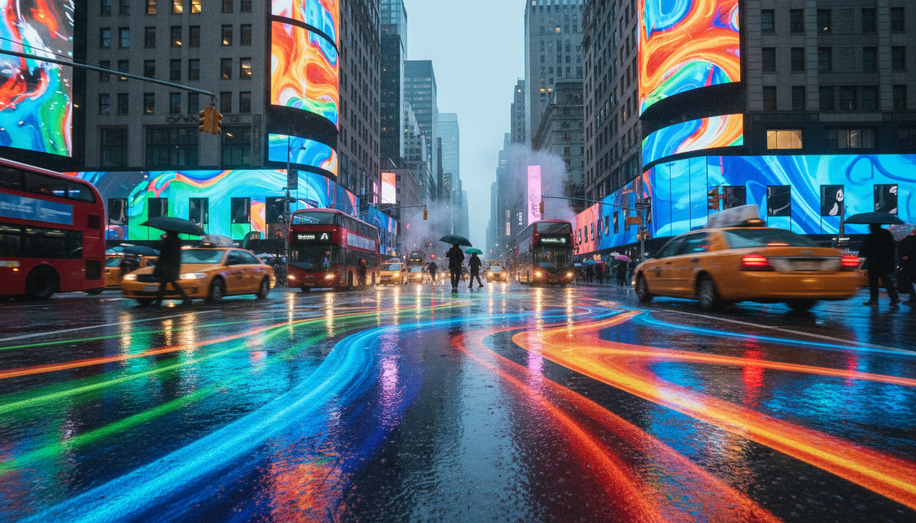

The golden age of the billboard is far from over, but the out-of-home advertising landscape has evolved dramatically beyond those towering highway fixtures. As urban spaces become more crowded and consumer attention more fragmented, forward-thinking brands are discovering that the most memorable OOH campaigns often exist in the margins, in the unexpected places where audiences encounter them during their daily routines.
Street furniture advertising represents one of the most underutilized yet powerful opportunities in modern OOH. These placements—bus shelters, benches, kiosks, and pedestrian panels—occupy a unique position in the consumer journey. Unlike billboards designed to be viewed from moving vehicles at high speed, street furniture sits at eye level in high-traffic pedestrian areas where people naturally pause and wait. This captured attention window allows for more sophisticated messaging and creative detail. A coffee brand promoting its new location can reach potential customers exactly where they congregate, while a public health campaign gains credibility through proximity to everyday community spaces. The contextual relevance of street furniture advertising makes it particularly effective for local businesses and time-sensitive promotions.
Transit advertising has similarly transcended its traditional role as a simple canvas on vehicle exteriors. Modern transit wraps transform buses, taxis, and even delivery vehicles into mobile billboards that generate tens of thousands of impressions daily as they navigate through multiple neighborhoods and business districts. More innovative still are digital AdVans—vehicles equipped with large LED screens that allow advertisers to select specific routes, times, and locations with GPS verification. This mobile flexibility enables brands to reach areas where traditional OOH infrastructure doesn’t exist or to conduct competitor conquesting by parking outside rival locations during key moments. For event marketing and product launches, the combination of movement and eye-catching digital content creates an immediacy that static displays cannot match.
The real innovation frontier, however, lies in experiential OOH formats that blur the line between advertising and entertainment. Three-dimensional billboards, projection mapping, and interactive street campaigns transform public spaces into immersive brand experiences. These formats serve a dual purpose: they capture attention through sheer novelty and creativity, while simultaneously generating social media amplification as consumers photograph and share their encounters. Pop-up events and interactive installations create moments memorable enough to become part of cultural conversations, extending reach far beyond the physical audience through digital channels.
Place-based advertising in retail environments, airports, and entertainment venues represents another significant niche. These locations offer contextually relevant advertising opportunities at crucial moments in the consumer decision-making process. An airport display reaches travelers with leisure time and disposable income, while a gym installation connects with audiences actively engaged in lifestyle choices. The advantage of place-based OOH is its ability to target not just demographics but behaviors and mindsets.
Digital out-of-home advertising has democratized the medium for smaller brands while providing larger ones with unprecedented flexibility. Instead of committing to static creative for months, DOOH screens enable real-time updates, dynamic content that responds to weather or time of day, and programmatic buying that targets specific hours and contexts. This evolution transforms OOH from a set-it-and-forget-it medium into one that responds to market conditions and consumer behavior patterns.
The convergence of traditional and digital, static and mobile, global and hyperlocal defines contemporary OOH advertising. Brands that once viewed out-of-home as a supporting channel are now recognizing it as central to omnichannel strategies. Street furniture, transit wraps, experiential projections, and place-based installations create touchpoints throughout the consumer journey, reinforcing digital campaigns while building brand awareness in physical spaces where smartphones cannot entirely replace human attention.
As competition for consumer attention intensifies across all media channels, the most successful OOH campaigns are those that treat the format not as a constraint but as an opportunity to surprise, delight, and engage audiences in moments when they’re genuinely present and receptive.