
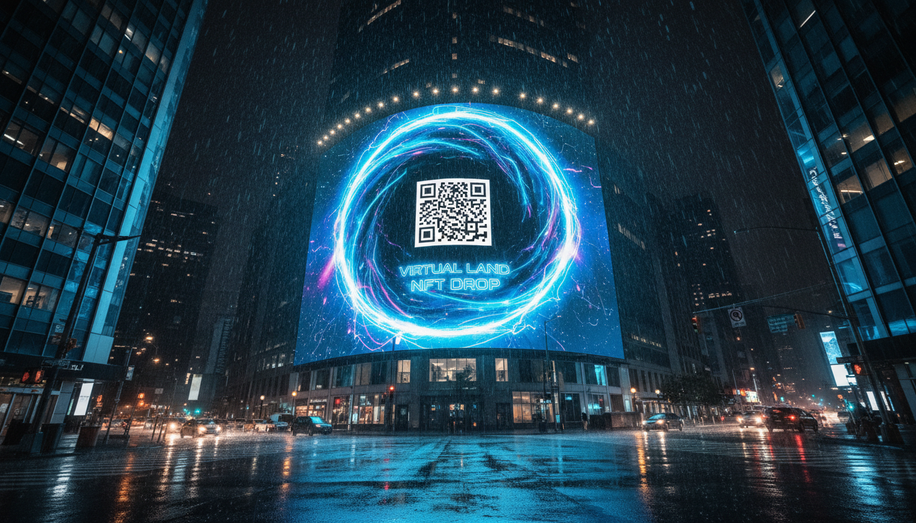

In the neon glow of urban billboards and the hum of subway screens, out-of-home (OOH) advertising is quietly forging a bridge to the digital frontiers of Web3 and the metaverse. For brands thriving in these decentralized realms—think NFT marketplaces, blockchain protocols, and virtual worlds—physical OOH serves as a tangible gateway, pulling passersby from the streets into immersive online ecosystems. No longer confined to static posters, these campaigns leverage augmented reality (AR), QR codes, and programmatic precision to spark awareness, deepen engagement, and even trigger real-time NFT mints, transforming fleeting glances into lasting connections.
The fusion of OOH with Web3 technologies addresses a core challenge for metaverse brands: discoverability in a sea of virtual noise. Traditional digital channels like social media often fragment audiences, but OOH plants seeds in high-traffic real-world hubs—airports, finance districts, and event corridors—where crypto enthusiasts and tech-savvy professionals converge. Take Hong Kong’s bustling Central district, where LED billboards and MTR panels have become corridors of visibility for blockchain projects. Campaigns timed around anchors like Consensus Hong Kong or TOKEN2049 use provocative visuals and scannable QR codes to funnel viewers to metaverse landing pages, blending physical credibility with viral digital reach. As one agency executive notes, “OOH gives Web3 brands a street-level authenticity that Discord servers can’t match, turning skeptics into explorers.”
Augmented reality supercharges this bridge, animating billboards into portals of interaction. Imagine a towering OOH display in London’s Piccadilly Circus, where scanning a McDonald’s-style AR trigger—adapted for a metaverse fashion brand—unveils customizable avatars trying on virtual NFTs against the real skyline. Brands report staggering metrics: 200-300% lifts in engagement over static ads, with users lingering 1.5 to 2 minutes on average and 45% higher brand recall. This isn’t hype; AR OOH merges the offline with online, driving dwell time and rich analytics. A fast-food chain’s weather-responsive AR billboard once let users order via their phones; now, metaverse projects adapt the formula, offering geo-targeted NFT drops that activate only for local scanners, creating urgency and exclusivity.
Programmatic OOH (PDOOH) elevates the strategy further, enabling real-time dynamism tailored to Web3’s ethos of decentralization and user ownership. Powered by automation, PDOOH adjusts creatives based on audience behavior, weather, or blockchain events—like a sudden Ethereum surge triggering bullish messaging on digital transit screens. In high-stakes locales such as New York’s Times Square or Tokyo’s Shibuya Crossing, this means metaverse brands can bid for impressions programmatically, layering in Web3 elements like blockchain-verified data for transparent targeting. The result? Campaigns that feel personal and participatory, resonating with audiences who value control over their digital identities. Post-pandemic, PDOOH has surged as omnichannel glue, with Web3 innovators stacking it alongside KOL endorsements and performance digital for integrated buys that convert views to wallet actions.
Yet the true alchemy happens at the point of NFT minting and metaverse onboarding. QR-enabled OOH ads now streamline entry: a bus shelter panel in San Francisco’s SoMa district might prompt instant wallet connects, minting a free NFT badge for scanners—complete with metaverse coordinates for a branded virtual lounge. This “scan-to-own” model has proven viral, especially when designs beg for social shares, echoing the Bitcoin tram’s cultural splash in Hong Kong. Compliance remains key, particularly in regulated hubs like the city-state, where licensed VASPs push educational messaging over direct trading pitches. Still, the data speaks volumes: AR-fused OOH yields trackable interactions, from scan rates to mint completions, arming brands with metrics that rival indoor digital.
Critics might argue OOH feels analog in a metaverse era, but that’s its strength—a deliberate counterpoint to screen fatigue. By anchoring virtual brands in physical space, these strategies cultivate emotional ties, fostering communities that extend from street corners to decentralized networks. As Web3 evolves with blockchain-enhanced personalization, expect OOH to pioneer even bolder integrations: holographic projections, AI-driven personalization via facial cues (privacy-opted, of course), and metaverse “echoes” where real-world scans unlock persistent virtual assets.
For metaverse and Web3 pioneers, OOH isn’t a relic—it’s the frontline recruiter, converting urban footfall into onchain loyalty. In 2026, as AR downloads crest beyond billions and programmatic platforms mature, this physical-digital nexus will define how tomorrow’s brands claim space in both realities. The billboards are calling; the metaverses await.