
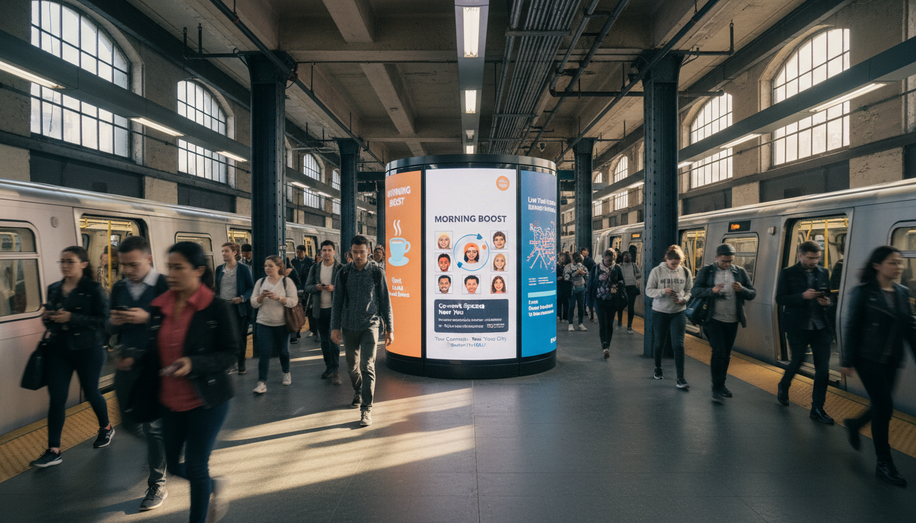

In theory, out-of-home advertising is simple: the right message, in the right place, at the right time. In practice, choosing that “right place” has historically meant a mix of experience, intuition, and broad traffic counts. The explosion of location and audience data is changing that equation. Today, OOH strategy can be built on the same kind of granular insight that has long powered digital campaigns—without losing the mass reach that makes OOH so valuable.
The starting point is understanding that modern OOH no longer relies solely on raw impressions. Organizations such as Geopath combine traffic counts, census data, and location analytics to estimate not just how many people pass a given placement, but who they are likely to be. Layered on top of this are mobile location signals, anonymized and aggregated, that reveal real-world movement patterns: which neighborhoods commuters traverse, where “new moms” cluster during the day, or how often “yoga enthusiasts” frequent certain corridors. Instead of planning around broad ZIP codes or gut feel, planners can now design campaigns around clearly defined audience segments tied to specific geographies.
Mobile data plays a central role in this evolution. When users grant location permissions on their devices, those signals can be fed into ad exchanges and location intelligence platforms. Advertisers can then identify clusters of devices that exhibit particular behaviors—visiting parenting blogs, using fitness apps, or frequenting luxury retailers—and build probabilistic audience profiles around them. These profiles remain anonymous at the individual level, but in aggregate, they reveal powerful patterns about where certain audiences tend to be at different times of day and week. OOH locations are then “scored” based on how strongly they index for these audiences compared with the general population.
This scoring process is what transforms a static billboard into a data-driven asset. For a brand targeting first-time parents, planners can define a “new mom” segment based on digital behaviors such as app usage and content consumption, match those behaviors to mobile devices, and then map where those devices most frequently appear across a city. A bus shelter outside a pediatric clinic might suddenly score higher than a generic high-traffic location because the audience affinity is much stronger. The same logic applies to niche B2B segments, regional tourism campaigns, or hyperlocal retail pushes: the goal is no longer just reach, but reach against the right audience profile.
Data is also reshaping message strategy. In digital out-of-home environments, creative can be dynamically adjusted based on audience insights and real-time conditions. If location intelligence shows that a screen outside a transit hub indexes strongly for young professionals in the morning and families in the evening, a campaign can run different creative by daypart to reflect those shifts—coffee offers at 8 a.m., family dining in the early evening. Weather triggers, live scores, and local news can be layered in, but the underlying logic starts with audience: who is most likely to be here now, and what message is most likely to resonate with them?
Beyond planning and creative, data is redefining how OOH performance is measured. Traditionally, proving impact relied on recall studies and broad directional metrics. Now, brands can look for lifts in online searches, website visits, app downloads, or social mentions in areas exposed to a specific OOH campaign versus control markets. When mobile devices exposed to a digital billboard are later seen visiting a retailer’s store or browsing its website, attribution models can estimate incremental impact. While these models are not perfect, they bring OOH into the same measurement conversation as digital media, helping marketers justify spend and optimize future buys.
Privacy, of course, sits at the center of any conversation about mobile and location data. Responsible OOH planning depends on aggregated, anonymized datasets rather than individual tracking. Reputable partners rely on data that is collected with explicit user consent, adhere to regional privacy regulations, and limit targeting and measurement to group-level insights. The goal is not to know that a specific person saw a specific billboard, but to understand that a particular type of consumer is highly likely to encounter certain locations and respond in certain ways.
The most effective OOH strategies use data as a bridge rather than a silo. Geo audience insights can inform not only where to place billboards, but how to coordinate messaging across channels. If mobile exchange data shows that “festival-goers” cluster along certain routes during event season, that insight can shape OOH placements, but also paid social, mobile in-app campaigns, and search strategies timed to those moments. When a high-impact OOH site in an iconic location drives increased brand searches, search and social campaigns can be primed to capture that interest with coordinated creative and offers.
Brands that embrace this data-rich approach to OOH planning are finding that the medium’s traditional strengths—scale, presence, and credibility—are amplified, not diminished, by precision. OOH is no longer a blunt instrument competing with digital targeting; it is a physical canvas guided by the same intelligence that powers online media. For marketers willing to move beyond intuition, location and audience insights offer a way to turn every sign, shelter, and screen into a smarter, more accountable touchpoint in the customer journey.