
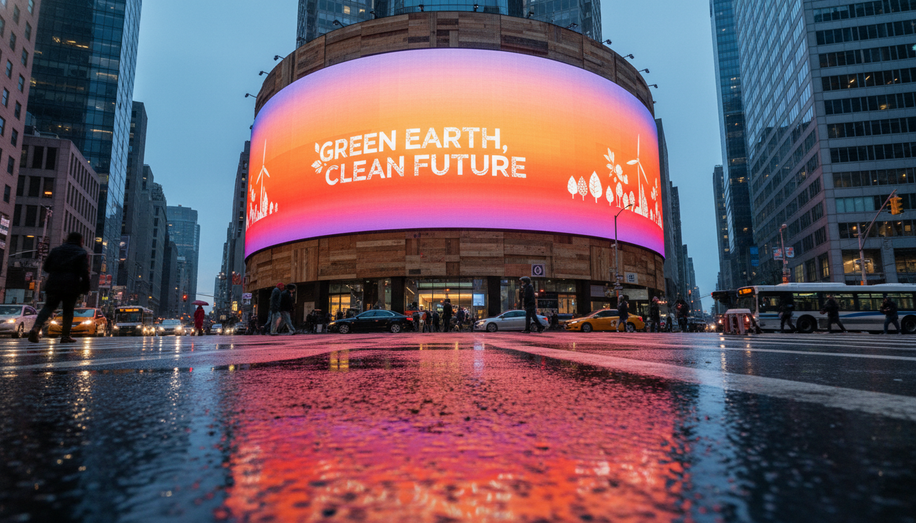

Out-of-home advertising has long been associated with giant PVC billboards, energy-hungry lights and a heavy physical footprint. But as brands, agencies and media owners face mounting pressure to decarbonize, OOH is rapidly reinventing itself. From low-impact materials to solar-powered street furniture and sophisticated recycling programs, the sector is quietly becoming one of the most progressive media channels on sustainability.
At the heart of this shift is a rethinking of what a billboard is made of. Traditional PVC vinyl, which can take centuries to break down and often contains toxic additives, is slowly losing its dominance. In its place, media owners and printers are experimenting with recycled plastics, paper-based substrates, bamboo composites and biodegradable or compostable materials designed with end-of-life in mind. Some providers now offer “tree-free” posters that are fully recyclable yet robust enough for street furniture, rain and sun.
The push goes beyond substrates. Eco-friendly inks, such as water-based or soy-based varieties, are replacing solvent-heavy formulations packed with volatile organic compounds and heavy metals. These new inks not only reduce emissions during printing but also make it easier to recycle or safely dispose of used creatives. Printers that serve major OOH networks are investing in energy-efficient presses, closed-loop washing systems and rigorous waste management, allowing advertisers to specify lower-impact production without compromising color fidelity or durability.
Digital out-of-home (DOOH) is also transforming the environmental profile of the medium. While LED screens raise understandable questions about energy use, their lifecycle picture can be compelling when managed properly. One obvious advantage: digital formats eliminate the need for frequent printing, shipping and installation of new creative. Campaigns can be updated instantly, minimizing materials and logistics. Many networks are now powered, at least in part, by renewable energy, with solar arrays increasingly common on bus shelters and standalone units. Some operators report thousands of solar-equipped shelters, making street furniture a visible symbol of clean energy in cities.
Energy efficiency has become a design requirement for new inventory. LED lighting has largely replaced older, energy-intensive fixtures, with smart controls that dim displays in line with ambient light levels or switch them off during low-traffic hours. For digital billboards, improved panel technology and more efficient drivers significantly cut power consumption compared with earlier generations. In some markets, media owners highlight real-time energy savings or renewable sourcing as part of their pitch to sustainability-minded brands.
Sustainability in OOH is not just about using “better” materials; it is also about using fewer materials overall. The industry is embracing the circular economy mantra of reduce, reuse and recycle. Old billboards are being salvaged and repurposed into consumer products such as bags, accessories and furniture, extending the life of durable substrates that would otherwise end up in landfill. Media companies are designing frames and structures that can accommodate multiple campaigns without modification, cutting the need for new hardware.
Structured recycling programs are gaining traction as standard practice. Rather than leaving clients to figure out disposal, some OOH operators now take back used materials at the end of a campaign and route them through specialist recyclers. Education is part of the process: advertisers are being briefed on which substrates are most easily recycled and which should be avoided. These initiatives help tackle the tens of thousands of tons of waste that legacy outdoor formats once generated annually.
Innovation is also reshaping what OOH infrastructure can do beyond display advertising. In several markets, bus shelters and street-level screens double as public amenities, offering WiFi, USB charging and real-time information. This multi-purpose approach spreads the environmental cost of building and maintaining the structures across a broader set of public services. Some media owners are even experimenting with green roofs on shelters or modular components that can be upgraded rather than replaced, extending asset lifespans.
Perhaps the most futuristic developments involve materials that actively improve air quality. Experimental coatings containing titanium dioxide can be applied to posters or billboard surfaces, using sunlight to trigger a chemical reaction that breaks down certain pollutants into neutral compounds. While still niche and subject to ongoing scrutiny, these technologies hint at a future where OOH infrastructure does not just minimize harm but contributes to healthier urban environments.
The sustainability story in OOH is not only operational; it is also creative. Brands are increasingly using outdoor campaigns to spotlight their own climate commitments, low-impact products and behavioral nudges. From transit ads encouraging public transport over driving, to interactive bus shelter campaigns that visualize the environmental cost of different choices, OOH is being used to normalize green behavior in everyday contexts. The medium’s physical presence in public space gives these messages a credibility and immediacy that online formats sometimes struggle to match.
Measurement and accountability are starting to catch up. Agencies and media owners are working with third-party partners to quantify the carbon footprint of OOH campaigns, factoring in materials, energy use and logistics. Some operators offset emissions through tree planting or other certified projects, while others focus on direct reductions through cleaner energy and more efficient infrastructure. In markets like the UK, research suggests OOH already accounts for a relatively small share of advertising’s overall carbon impact, but the ambition is to go further and formalize standards for low-carbon inventory.
For advertisers, the implications are clear. Sustainability is no longer an optional extra in outdoor; it is becoming embedded in how the medium is planned, produced and sold. Brands that proactively ask about recycled content, eco inks, renewable power and end-of-life strategies are finding willing partners and increasingly sophisticated solutions. As regulations tighten and consumer expectations rise, OOH’s blend of real-world presence, technological innovation and material upgrades positions it as a powerful—and increasingly green—platform for the next generation of campaigns.
As OOH continues its sustainable evolution, platforms like Blindspot are crucial for actualizing these green ambitions. By leveraging advanced location intelligence, audience measurement, and programmatic DOOH management, Blindspot empowers advertisers to optimize campaign placement and delivery, ensuring sustainable infrastructure and materials are utilized with maximum efficiency and minimal waste. This strategic optimization helps brands maximize their positive impact in the evolving OOH landscape. Learn more at https://seeblindspot.com/