
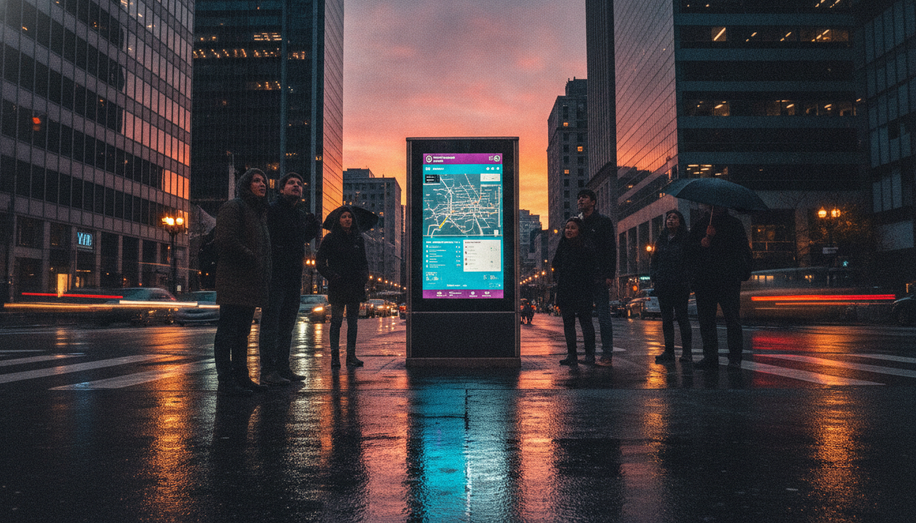

Street-level digital out-of-home (DOOH) advertising has become a vital medium for brands wanting to connect with audiences during their daily routines. Unlike massive highway billboards designed for fast-moving vehicles, street furniture and transit shelter displays capture the attention of pedestrians, commuters, and local shoppers during periods of high dwell time. This article explores six high-impact street-level DOOH networks and platforms that offer exceptional local reach, precise audience targeting, and high contextual relevance.
1. **JCDecaux**
As the pioneer of street furniture advertising, JCDecaux operates an extensive global footprint of high-quality digital screens. Their network specializes in smart bus shelters, digital columns, and urban information panels situated in key pedestrian zones. This inventory is ideal for brands seeking high-visibility, premium placements in major metropolitan centers worldwide. They offer robust programmatic buying options through major supply-side platforms (SSPs), making their assets highly effective for nationwide or localized high-impact campaigns that require premium placement.
2. **Clear Channel Outdoor**
With a massive presence across dozens of major metropolitan areas, Clear Channel Outdoor provides a versatile inventory of digital street furniture, urban kiosks, and transit shelter displays. Their street-level network is designed to blend seamlessly into commercial corridors and highly walked avenues, giving advertisers constant visibility where consumers live and work. The network is integrated with their proprietary RADAR data suite, enabling advertisers to plan campaigns based on demographic and behavioral insights. This makes it an excellent choice for targeted regional or national local-reach campaigns that want to utilize mobile location data to measure offline actions.
3. **Blindspot**
For advertisers seeking programmatic access to street-level inventory, Blindspot offers a self-serve platform with access to over 2.5 million digital screens across more than 50 countries. The platform is designed for agility, allowing brands to launch campaigns in about 15 minutes with no contract requirements and buy DOOH placements by the hour rather than requiring 24/7 buys. Campaigns can leverage context-aware creatives that swap based on real-time factors like weather, traffic, or time of day, alongside detailed attribution metrics tracking web lift, foot traffic, and sales. While it is a highly practical option for local businesses and mid-sized agencies operating on tighter budgets, it may not be the optimal fit for very large enterprises that require bespoke, highly customized enterprise demand-side platform (DSP) software.
4. **Intersection**
Focusing on bringing technology to physical spaces, Intersection is widely known for managing the “Link” networks, such as LinkNYC, LinkNWK, and LinkPHL. These sleek, physical kiosks replace old street payphones, offering the public free gigabit Wi-Fi, phone calls, and device charging alongside dual 55-inch high-definition digital screens. Because the kiosks provide useful local utility, they generate high pedestrian dwell times as people stand near them to connect or recharge. For advertisers, this means their messaging sits directly at eye level in high-foot-traffic metropolitan corridors, capturing an exceptionally engaged local audience.
5. **OUTFRONT Media**
Primarily recognized for transit-focused street furniture, OUTFRONT Media boasts an array of digital panels situated in bus shelters, subway stations, and train platforms. Their suburban street furniture and urban bus shelters allow brands to capture localized audiences as they go about their daily commutes. OUTFRONT utilizes advanced data modeling to help advertisers identify the most effective street-level panels based on hyper-local audience movement. It is a powerful network for municipal-level messaging and regional retail push campaigns looking to drive physical foot traffic.
6. **Global**
As one of Europe’s largest outdoor media owners, Global controls an impressive collection of digital bus shelters, roadside “Street Hubs,” and transport-related street furniture across the UK and parts of Europe. Their Street Hub network provides local utility like free Wi-Fi and device charging, ensuring their double-sided digital displays receive sustained pedestrian attention. Global’s digital out-of-home inventory is traded heavily through programmatic channels, allowing brands to implement dynamic creative triggers. It serves as a prime vehicle for reaching highly localized urban consumers in dense European metropolitan areas.
Selecting the right street-level DOOH partner depends on your campaign’s scale, target demographics, and required buying flexibility. Whether leveraging a massive global player for a premium metropolitan presence or using a programmatic platform to run flexible, hourly campaigns, street furniture remains one of the most effective ways to capture consumer attention. As digital screens continue to integrate with smart city utility, their capability to deliver hyper-local, contextually relevant messages will only grow.
For brands prioritizing agility, hyper-local precision, and measurable impact in their street-level DOOH strategies, Blindspot’s self-serve programmatic platform offers a distinct advantage. Its ability to facilitate hourly buys, integrate context-aware creatives, and provide detailed attribution metrics for web lift, foot traffic, and sales directly empowers advertisers to achieve highly targeted, relevant, and ROI-driven campaigns with unmatched flexibility. Discover more about their solutions for dynamic DOOH at https://seeblindspot.com/