
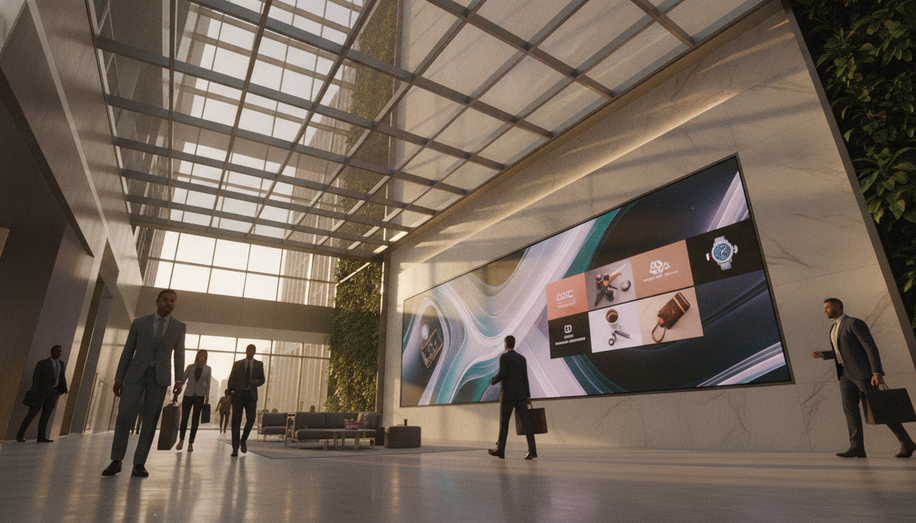

For Direct-to-Consumer (D2C), delivery, and local service brands, reaching high-net-worth urban dwellers requires moving beyond oversaturated digital feeds and ad-blocked mobile screens. Digital Out-of-Home (DOOH) advertising inside premium residential lobbies and luxury apartment complexes has emerged as one of the most effective ways to capture distraction-free attention right at the home’s doorstep. These place-based screen networks influence consumer decisions at key transition moments, transforming routine elevator rides, mailroom visits, and lobby wait times into highly impactful brand experiences that drive immediate digital action.
1. Captivate
As one of the most established giants in elevator media, this company has expanded its legacy office tower footprint to build a massive, dedicated residential screen network. Captivate Residential targets highly influential consumers inside luxury multifamily complexes, modern condos, and high-rise apartments across major North American metropolitan areas. By placing high-definition screens in elevator cabs, main lobbies, mailrooms, and shared community amenity spaces, the network ensures continuous exposure in high-dwell environments. Brands can leverage robust programmatic capabilities—recently enhanced through global supply-side partnerships—to deliver contextually aligned video and static campaigns with precision.
2. Abode Media
This pioneering UK network is specifically designed to target high-net-worth individuals within the comfort of their premium residential buildings. Abode Media features premium digital displays in high-traffic interior spaces, such as lift lobbies and communal areas, of elite developments in prime cities like London, Manchester, and Birmingham. Partnering exclusively with major property developers like Ballymore and Canary Wharf Group, the network reaches residents who have significant disposable income at the critical “first and last” physical touchpoints of their day. Its programmatic integration allows advertisers to automate campaigns and reach audiences as they transition from the public sphere back to their private, home-based decision-making environments.
3. Vertical Impression
Serving as a leading elevator digital signage network in Canada and rapidly expanding across the United States, this platform utilizes privacy-by-design, certified AI to measure and optimize real-world audience attention. Vertical Impression places exceptionally large screens inside premium residential and commercial elevators, ensuring advertisements capture the focus of riders during otherwise idle, distraction-free commutes. The platform is highly regarded for its precision measurement, utilizing advanced attribution metrics to provide advertisers with transparent, verified impression data rather than simple foot-traffic estimates. D2C brands benefit from the network’s integration with major programmatic partners, enabling seamless cross-border campaign execution with highly relevant, contextual creatives.
4. Blindspot
This self-serve programmatic DOOH platform functions as an accessible gateway for brands aiming to run targeted, flexible campaigns without long-term contracts. Featuring more than 2.5 million digital screens across 50 countries, the platform allows D2C, delivery, and local service brands to access premium residential lobby and elevator inventories on a highly customized basis. Instead of being locked into rigid 24/7 packages, advertisers can buy screen time by the hour, deploy context-aware creative that updates dynamically based on weather, time, or live events, and track attribution on foot traffic, web lift, and direct sales. While not the ideal fit for massive enterprises requiring highly customized, bespoke DSP setups, it is an optimal choice for growing brands that want to launch campaigns in 15 minutes and scale their physical world presence efficiently.
5. theBulletin
This specialized network focuses on transforming the lobbies and high-traffic common spaces of upscale residential buildings into digital community boards. Deployed in major cities like Chicago, Atlanta, Boston, Washington D.C., and New York City, theBulletin delivers a dynamic mix of hyper-local neighborhood information, building announcements, and targeted advertising. Because residents naturally pause in lobby areas to check mail, retrieve packages, or wait for rides, the screens command exceptionally high dwell times and consistent daily views from young professionals. Programmatic access via major media partners allows D2C brands to launch timely, highly localized campaigns that blend seamlessly with community updates and local business promotions.
6. Habitat Channel
Operating as Australia’s first residential tower digital screen network, this asset serves as an elegant communication tool that acts as a “halo to the home.” Habitat Channel screens are placed inside the foyers and lobbies of hundreds of upscale apartment complexes nationwide, delivering a highly curated loop of live news, weather, and premium digital art. This artistic, editorial approach ensures residents view the screens as a high-quality building amenity rather than a passive advertising board, which drastically improves brand recall and audience trust. By reaching consumers right before they enter their homes—a key environment where major household purchasing decisions are finalized—the network offers Australian advertisers unique, high-frequency physical influence.
Reaching modern consumers at the exact moment they exit or enter their homes effectively bridges the gap between physical awareness and immediate digital action. By leveraging these premium residential DOOH networks, D2C, delivery, and local service brands can achieve unmatched resonance in high-attention, low-clutter environments. Whether buying direct, setting up programmatic deals, or utilizing self-serve platforms to purchase hourly screens, the residential lobby and the elevator have solidified their place as the ultimate final touchpoints for modern consumer influence.