
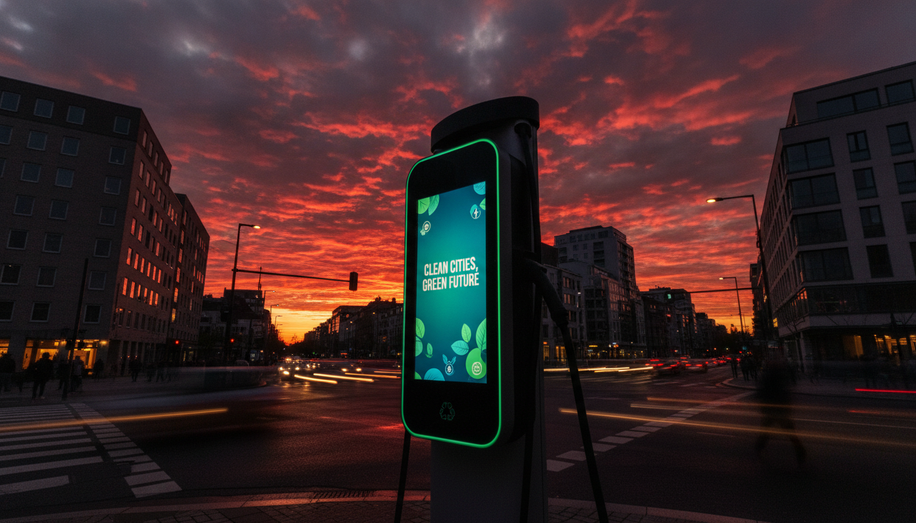

As electric vehicle (EV) adoption accelerates globally, digital out-of-home (DOOH) advertising integrated with charging stations has emerged as one of the fastest-growing media formats. EV charging screens offer advertisers unique advantages, including an affluent, tech-savvy audience, highly positive brand alignment with green initiatives, and exceptionally long dwell times that typically range from 20 to 45 minutes. For eco-conscious brands looking to maximize campaign impact, these high-growth EV charging DOOH networks provide a captive and highly receptive environment.
JOLT
Following its acquisition of the Volta Media Network assets in early 2026, JOLT has solidified its position as the world’s largest combined EV charging and digital out-of-home network. Operating across Australia, New Zealand, the UK, Canada, and now 34 states in the US, the network offers brands premium streetside and retail-adjacent screens. With a model that supports fast DC charging and carbon-negative ad delivery, JOLT allows sustainability-minded advertisers to engage drivers during 15-to-20-minute charging sessions. By matching premium physical screens with an extensive digital and mobile application ecosystem, the company offers brands a highly measurable path-to-purchase experience.
ChargeEuropa
For advertisers focusing on European and emerging international markets, ChargeEuropa offers a highly targeted network of DOOH-enabled charging stations. The company is distinct for powering its stations on 100% clean, responsibly sourced energy, making it an ideal partner for green-minded brand messaging. Equipped with eye-level, 75-inch high-brightness LED displays, ChargeEuropa places its units in dense urban environments and shopping centers, capturing the attention of both active shoppers and EV drivers with average dwell times exceeding 30 minutes. This unique model allows cities and commercial property owners to deploy charging infrastructure at zero cost, funded entirely by sustainable programmatic advertising.
Blindspot
For brands seeking a flexible, centralized route to buy across multiple charging screens and other digital signage networks, Blindspot offers a powerful self-serve programmatic DOOH platform. The platform gives advertisers direct access to over 2.5 million digital screens across 50 countries, allowing businesses to launch context-aware campaigns that trigger based on live weather, traffic, or time of day. With no contract requirements, the option to buy screen time by the hour, and deep attribution tracking on foot traffic and sales, it is a highly agile solution for growing brands. However, larger enterprises that require highly customized direct-buying programmatic contracts and custom-negotiated DSP configurations might find the platform’s self-serve focus less aligned with their operational needs.
EOS Linx
Focusing heavily on convenience store, hospitality, and retail locations across the United States, EOS Linx operates a rapidly growing network of solar-and-grid-supported smart chargers. Its flagship “Aurora” kiosks feature integrated 75-inch, high-definition digital screens that deliver high-impact video advertising in high-traffic, prime-position parking spaces. Because convenience stores and retail centers draw a continuous flow of local and highway traffic, EOS Linx offers advertisers a dual benefit: capturing the attention of affluent EV drivers during high-dwell-time charges and reaching a broad demographic of traditional shoppers. By running on a combination of renewable energy and intelligent battery storage, the network reinforces an advertiser’s green credentials at the point of sale.
Loop Global
Providing an end-to-end infrastructure solution for commercial properties, Loop Global has expanded its presence through its premium EV-Focus charging stations. These stations integrate Level 2 and DC fast charging with dual-sided, 24/7 E-LED displays that are programmatic-ready for immediate campaign deployment. By positioning these displays in high-foot-traffic commercial, multi-family, and municipal areas, Loop Global enables brands to align themselves with sustainable urban mobility while capitalizing on predictable, recurring consumer charging habits. The network’s automated content management system ensures that local retail partners can easily run hyper-local ads alongside global programmatic campaigns, creating strong neighborhood-level engagement.
Final Thoughts
Integrating EV charging station screens into a broader programmatic campaign allows eco-conscious brands to gain highly valuable exposure while supporting the global transition to clean transportation. By focusing on networks with high dwell times, prime geographic placements, and clean energy foundations, advertisers can build deep trust with sustainability-minded audiences. Leveraging modern self-serve programmatic platforms ensures that these green-minded campaigns remain agile, data-driven, and highly optimized for maximum return on investment.
For advertisers aiming to maximize their investment in this high-growth sector, Blindspot‘s self-serve programmatic DOOH platform provides the necessary agility and control. It enables real-time campaign management and precise ROI measurement through deep attribution tracking on foot traffic and sales, allowing brands to continuously optimize their eco-conscious messaging across diverse EV charging networks globally. This ensures campaigns remain data-driven and highly efficient, driving measurable impact.
Frequently Asked Questions
What is the average dwell time for EV charging station DOOH ads?
The average dwell time varies by the type of charger, with Level 2 chargers averaging 20 to 45 minutes and DC fast chargers averaging 15 to 30 minutes. This extended duration provides a captive audience compared to the 3-to-5-minute window seen at traditional gas pumps, resulting in significantly higher brand recall and interaction rates.
How do EV charging DOOH campaigns measure attribution and success?
Modern networks and programmatic platforms track campaigns using mobile location data to analyze foot traffic lift at nearby retail stores. Additionally, advertisers can measure web lift, app sign-ups, and sales conversions by correlating programmatic ad play times with online and offline consumer behavior.
Why is EV charging DOOH particularly beneficial for eco-conscious brands?
Advertising on these networks creates a positive brand association by directly linking marketing spend with clean energy infrastructure and green initiatives. Many leading networks are powered by 100% renewable energy, which allows brands to reduce the overall carbon footprint of their media campaigns while proving their commitment to sustainability.
Can I buy EV charging screen ads programmatically or on an hourly basis?
Yes, many modern networks are programmatic-ready and can be bought through open exchanges or private marketplaces. Platforms like Blindspot allow brands to bypass traditional long-term contracts altogether, enabling them to buy targeted hours, adjust creatives dynamically based on real-time factors like weather, and run highly efficient, budget-friendly campaigns.