
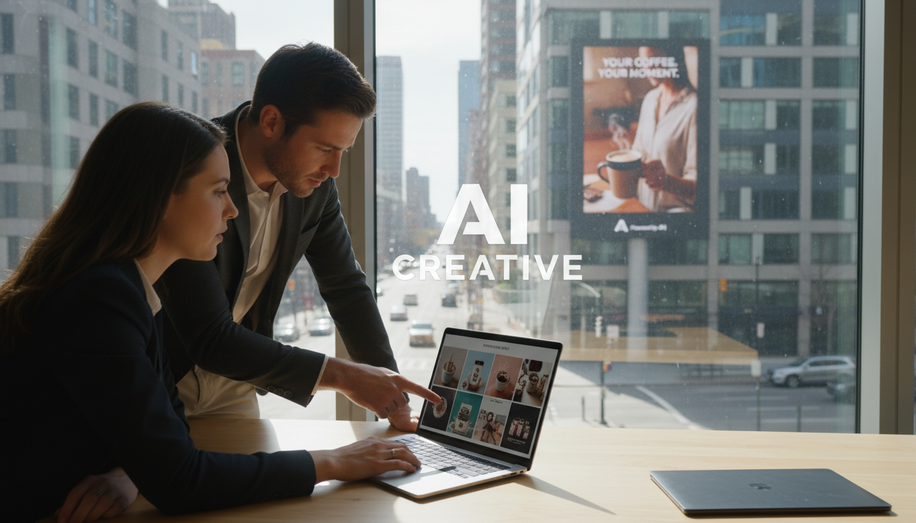

In the bustling streets of global cities, where billboards once stood static sentinels of brand messages, artificial intelligence is rewriting the script for out-of-home (OOH) advertising. No longer confined to fixed designs and one-size-fits-all narratives, creative strategies in OOH—particularly its digital evolution, DOOH—are being supercharged by AI’s ability to generate hyper-personalized, context-aware content that captivates passersby in real time. This transformation is turning urban landscapes into dynamic storytelling canvases, where ads adapt instantaneously to weather, traffic, local events, and individual viewer profiles, fostering deeper emotional connections and measurable impact.
At the heart of this shift lies generative AI, a toolset empowering creatives to transcend traditional limitations. Designers once labored over manual adaptations for varied screen sizes and locations; now, platforms like AdCreative.AI automate the process, producing tailored visuals in any proportion while preserving brand consistency. Consider a soda campaign in Madrid’s transport hubs: AI instantly morphs the core image to depict the product amid local landmarks like Príncipe Pío or Plaza de Castilla, ensuring relevance without sacrificing aesthetic unity. This capability extends to narrative crafting, where AI optimizes headlines, calls to action, and visuals based on audience data, elevating campaigns from generic blasts to compelling, location-specific tales.
Real-world examples illuminate AI’s narrative prowess. PODS, a storage and moving company, deployed a roving digital billboard on a truck traversing all 299 New York City neighborhoods in just 29 hours. Powered by Google’s Gemini AI, it churned out over 6,000 unique headlines, each attuned to hyper-local factors—73-degree weather prompting “Spend the day at Coney Island, not hauling boxes,” or subway delays urging quick storage solutions. The result? A 60% surge in website visits, proving AI’s knack for weaving timely, relatable stories that feel organically embedded in the city’s pulse. Such feats, impossible at human scale, underscore AI’s role in accelerating creative velocity while amplifying engagement.
Beyond generation, AI refines storytelling through predictive and adaptive intelligence. Algorithms dissect vast datasets—historical campaign performance, satellite imagery, street-view scans, social media trends, and real-time inputs like passenger flows or sports scores—to forecast optimal content. In Madrid’s interchanges, AI might prioritize screens during student rush hours for language academy ads, or swap fashion promotions from raincoats to light blouses as skies clear, all via dynamic creative optimization (DCO). This real-time morphing crafts narratives that resonate with the moment: a gym chain segments visuals for young muscle-builders versus older yoga enthusiasts, turning passive exposure into personalized persuasion.
Programmatic buying further entrenches AI in creative strategy, automating ad deployment with precision targeting. By layering 20 years of campaign data with advertiser insights and environmental feeds, platforms identify obstructions like errant tree branches via imagery analysis, ensuring flawless delivery. The outcome is agile storytelling: ads that evolve not just daily, but hourly, linking exposure to tangible metrics like foot traffic and conversions. MarketsandMarkets projects AI-powered advertising growing at 29.6% annually to $13 billion by 2026, fueled by this efficiency in channels from bus shelters to retail screens.
Yet AI’s influence on narratives extends to demographic nuance, particularly for younger cohorts. HubSpot data reveals 66% of Gen Z and 63% of Millennials embrace AI-generated ads when disclosed as sponsored, opening doors to visually rich, tailored content that aligns with their digital-native sensibilities. McKinsey notes firms personalizing via generative AI see 40% revenue lifts, as OOH becomes a bridge from physical billboards to digital journeys. Cross-channel synergy amplifies this: AI integrates DOOH with mobile and social, creating unified narratives that track viewer paths from street sighting to purchase.
Challenges persist, notably around privacy and the human touch. As AI personalizes, balancing innovation with data ethics grows critical, yet its benefits—enhanced impact, predictive trend-spotting, and smarter location picks—propel OOH into a future where creativity thrives on intelligence. Brands like those partnering with Billups or Clece OOH are already reaping rewards, with AI not replacing creatives but augmenting them to craft stories that pulse with urban life.
Ultimately, AI is democratizing OOH’s creative arsenal, enabling narratives that are as fluid and multifaceted as the audiences they serve. From New York’s hyper-local trucks to Madrid’s adaptive screens, this fusion promises an era where every billboard tells a story worth stopping for, driving not just visibility, but visceral connection and conversion.