
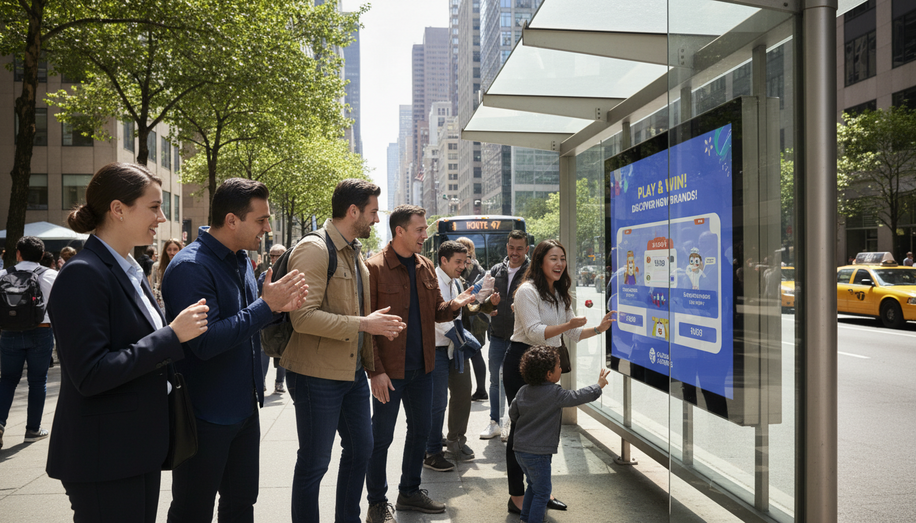

The out-of-home advertising industry is undergoing a fundamental transformation as brands recognize that passive billboards no longer capture modern audiences. Instead, marketers are turning to gamification—integrating games, puzzles, and interactive challenges into outdoor campaigns—to convert passersby from mere viewers into active participants.
Gamification works in outdoor advertising because it taps into fundamental human motivations. People crave interaction, surprise, and a sense of control. When executed effectively, gamified OOH campaigns stop pedestrians in their tracks not just to glance at a message, but to play, scan, and share. This shift from passive consumption to active engagement fundamentally changes how audiences relate to brands.
The mechanics of gamified OOH campaigns are diverse and creative. Brands are deploying step challenges that encourage pedestrians to follow paths of sidewalk decals and hit milestones for discounts. Trivia trails use scannable QR codes at multiple sidewalk markers to unlock brand messages and clues. Spin-the-wheel concepts turn sidewalk decals into instant-win opportunities where participants scan codes to receive prizes or discounts. Digital touchscreen displays in high-traffic areas like bus shelters and shopping centers offer interactive programs ranging from loan calculators to puzzle games.
Augmented reality has emerged as a powerful complement to traditional gamified experiences. QR codes trigger 3D mascots and influencers that interact with users on their smartphones. Clothing brands deploy AR mirrors with virtual try-on filters on sidewalks. Fitness brands launch AR workout tutorials from street-level locations. These layered experiences transform sidewalk marketing from a single static message into a multi-dimensional brand story.
Real-world campaigns demonstrate the tangible impact of this approach. Nike’s “Reactland” activation invited pedestrians to participate in AR-powered running games on city sidewalks, allowing players to race digital avatars while testing new shoes. The campaign generated substantial social engagement and measurable product trial lift. Netflix’s “Stranger Things” campaign placed QR-coded sidewalk markers across major U.S. cities, with each code launching AR character animations as part of a gamified scavenger hunt leading to physical prize locations. Fans responded enthusiastically with organic social sharing.
IKEA’s approach demonstrates how gamification can provide functional value alongside entertainment. The furniture retailer placed QR codes on sidewalk ads near transit stops, allowing users to launch AR visualization tools to see products in their own rooms. Beyond entertainment, RCBC’s financial literacy campaign used interactive digital OOH displays with loan calculators and puzzle games to educate viewers while engaging them. The Star Casino in Sydney gamified the Lunar New Year celebration by offering discounts and prizes for users completing tasks on interactive displays.
The benefits for brands are measurable and significant. Interactive sidewalk advertisements generate deeper engagement as users spend more time with content. Movement, touch, and play enhance memory retention and brand recall. QR scans, AR sessions, and social shares provide trackable metrics that traditional OOH cannot offer. Perhaps most valuably, these campaigns create community buzz—locals discuss unexpected sidewalk experiences, amplifying brand reach far beyond direct participants.
Successfully launching gamified OOH campaigns requires strategic consideration. Location matters enormously; brands should target high-foot-traffic zones like schools, cafes, gyms, and parks where target audiences naturally congregate. Promotion through local influencers, posters, and social media teasers encourages discovery. Measurement infrastructure using dynamic QR codes, custom AR filters, and tracking links enables brands to monitor traffic, engagement, and conversions.
The future of OOH advertising increasingly depends on brands’ ability to transform public spaces into interactive experiences. As audiences grow accustomed to gamified digital interactions, static advertisements lose effectiveness. Gamification in OOH doesn’t simply capture attention—it creates memorable brand moments that audiences actively seek out and voluntarily share. For forward-thinking brands, this represents not a trend but an essential evolution in outdoor advertising strategy.