
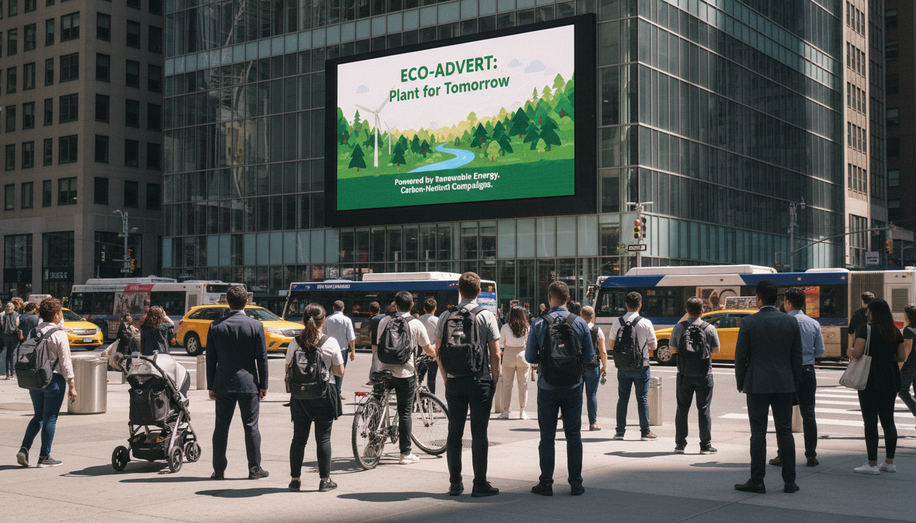

In the evolving world of advertising, programmatic digital out-of-home (DOOH) stands out as a beacon of sustainability, blending cutting-edge technology with eco-conscious practices to deliver powerful campaigns without compromising the planet. As brands face mounting pressure to align marketing strategies with environmental responsibility, programmatic DOOH offers a streamlined path forward, leveraging automation, data-driven targeting, and inherently efficient infrastructure to minimize carbon footprints while maximizing reach and impact.
Programmatic DOOH automates the buying, selling, and placement of ads on digital screens in high-traffic locations like billboards, bus shelters, and parking garages, using real-time data such as weather, traffic, or events for hyper-relevant messaging. This efficiency addresses key pain points in traditional programmatic advertising, including brand safety, ad fraud, and excessive energy use. Unlike online display or video ads, which rely on vast server networks and endless data transfers, DOOH operates on a broadcast model: a single signal powers multiple viewers simultaneously, slashing energy demands dramatically. VIOOH, a leading programmatic DOOH platform, reports that its ads are over 20 times more carbon-efficient than programmatic display and 30 times more efficient than programmatic video, thanks to streamlined supply chains and screens increasingly powered by renewable energy.
Energy efficiency forms the cornerstone of DOOH’s green credentials. Modern LED screens, a staple in programmatic DOOH networks, consume a fraction of the power required by older technologies or digital alternatives. Providers like A Lot Media optimize displays in venues such as parking garages, where screens run only during peak audience times, further curbing emissions and operational costs without sacrificing visibility. Clear Channel UK highlights how DOOH’s controlled environments—free from the ad fraud plaguing open web auctions—reduce wasteful impressions, while community investments like edible playgrounds amplify social and environmental benefits. The Ad Net Zero Global Media Sustainability Framework, updated in June 2025, now standardizes emissions calculations across channels, empowering advertisers to quantify DOOH’s superiority and make informed, low-impact choices.
Yet sustainability in programmatic DOOH extends beyond hardware to strategic campaign design. Marketers can enhance eco-friendliness by adopting practices borrowed from broader programmatic playbooks, such as frequency capping to limit ad exposures per viewer, preventing resource-draining over-saturation. Opting for direct deals or private marketplaces minimizes intermediaries, cutting the energy-intensive “hops” in ad delivery that inflate digital campaigns’ footprints. Creative repurposing is another low-hanging fruit: adapting existing assets for DOOH screens avoids fresh production, saving materials and time. Pair this with geotargeting to serve tailored messages only to relevant audiences in specific locations, and campaigns become both greener and more effective.
Partnering with sustainable adtech platforms amplifies these gains. Platforms like VIOOH and Clear Channel emphasize renewable-powered networks and fraud-free ecosystems, allowing brands to integrate DOOH seamlessly into omnichannel mixes. Screenverse and others are pioneering innovations, such as solar-integrated screens, to push boundaries further. For instance, static sponsorships alongside programmatic buys—funding highway cleanups or green initiatives—build authentic trust signals that digital channels can’t replicate, linking brands directly to stewardship.
Challenges persist, however. High energy draw from urban screens remains a concern, particularly in always-on cityscapes. Industry leaders counter this with smart scheduling and LED upgrades, but widespread adoption hinges on standardized metrics like those from Ad Net Zero. Consumer expectations are rising too; audiences now demand proof of responsibility, rewarding brands that transparently showcase their DOOH choices.
Looking ahead, programmatic DOOH’s trajectory points to even greater integration. As 2025 data from WARC underscores, buyers prioritizing sustainability will gain a competitive edge, with DOOH’s blend of scale, relevance, and low emissions positioning it as indispensable. Brands like those working with Gohoardings are already shifting budgets to real-time DOOH, triggered by live data for unmatched precision. By embedding these best practices—efficient tech, optimized buying, and green partnerships—marketers not only meet goals but lead the charge toward a responsible advertising future.
The proof is in the performance: programmatic DOOH delivers robust ROI with a conscience. Jean-Christophe Conti, CEO of VIOOH, sums it up: it’s a “brand-safe, fraud-free, broadcast media channel” that supports ecosystem-wide sustainability. For advertisers navigating 2026’s scrutiny, this medium isn’t just viable—it’s essential, proving that high-impact marketing and planetary care can coexist profitably.