
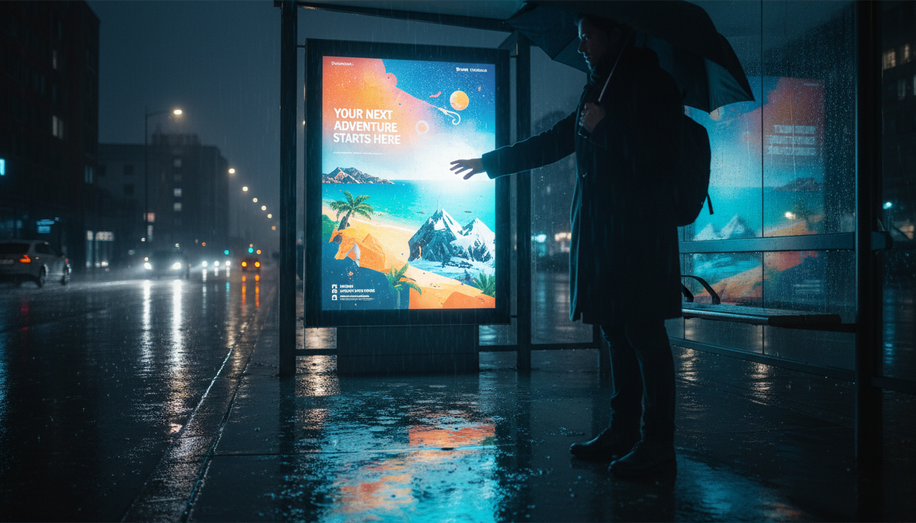

Out-of-home advertising has fundamentally transformed from static billboards into dynamic, immersive experiences that blur the line between physical and digital worlds. As we enter 2026, interactive OOH has emerged as one of the most compelling engagement tools available to brands, driven by technological advances and shifting consumer expectations for meaningful brand interactions.
The acceleration of digital out-of-home (DOOH) advertising represents the clearest indicator of this shift. Having grown by 34% in 2024, DOOH now encompasses augmented reality experiences, interactive displays, and programmatic advertising that transform once-passive public spaces into participatory environments. High-resolution LED screens and digital billboards allow creative messaging to evolve in real time, syncing to live events and triggering interactive animations with motion sensors. This technological foundation enables brands to move beyond interruption-based advertising toward invitation-based engagement, where consumers actively choose to participate.
What makes interactive OOH particularly powerful is its ability to create moments worth sharing. Research indicates that 47% of consumers search for social media handles featured in OOH ads, suggesting that well-designed campaigns naturally extend their reach beyond physical locations. This social amplification occurs because interactive elements—whether QR codes, AR experiences, hashtags, or real-time social media integration—invite participation and create organic sharing opportunities. If a campaign is worth photographing, scanning, or discussing, it’s generating value that extends far beyond traditional impression metrics.
The emotional dimension of interactive OOH cannot be overstated. With 95% of purchase decisions driven by emotion, OOH’s bold formats amplify humor, joy, and human connection at scale. Interactive campaigns that incorporate striking visuals or engaging experiences create standout moments that disrupt daily routines and build mental availability rapidly. Brands leveraging this emotional connection see a 306% uplift in customer lifetime value, according to recent research. This represents a fundamental shift in how OOH functions within the broader marketing ecosystem—from brand awareness tool to engagement and conversion accelerator.
Location-based personalization adds another dimension to interactive OOH’s appeal. Dynamic, context-aware displays can respond to real-world moments and audience needs without compromising privacy, creating experiences that feel relevant rather than intrusive. This capability transforms outdoor advertising into what some industry observers are calling a “real-world trigger for AI-driven discovery journeys,” sparking curiosity that sends consumers into search, social, or retail environments with genuine intent. The convergence of online and offline worlds is accelerating through partnerships like Vistar Media’s collaboration with TikTok’s Out of Phone initiative, which adapts social content for outdoor screens to extend engagement beyond mobile feeds.
Brands are increasingly recognizing that interactive OOH serves as a powerful tool for authentic brand storytelling and cultural relevance. Campaigns that tap into well-known moments from popular culture create immediate emotional connections with audiences. Meanwhile, addressing real-world problems with creative solutions enhances brand perception and customer loyalty. The most successful campaigns integrate traditional out-of-home advertising, experiential activations, and influencer collaboration—multifaceted approaches that turn creative concepts into winning brand-building formulas.
As social feeds become saturated and linear TV continues to fragment, interactive OOH offers advertisers something increasingly rare: consistent, geographic-based reach without platform fragmentation. This advantage is particularly compelling in an environment where performance metrics are harder to trust and brands face mounting pressure to prove real-world impact. OOH’s ability to reach audiences during distraction-free moments—during commutes, at events, or in public spaces—combined with innovations like AR, programmatic digital screens, and QR integrations, makes it more interactive and memorable than ever before.
Looking ahead, the versatility of OOH will continue expanding. From simple 3D special builds to fully immersive experiences linked with social, influencer, commerce, and mobile channels, interactive OOH represents untapped potential for brands willing to think creatively about how physical spaces can drive meaningful consumer engagement. As 2026 unfolds, interactive out-of-home advertising stands poised to become not just a complementary channel, but a central pillar of integrated marketing strategies.
To fully capitalize on this transformative shift, brands require robust solutions that can manage the complexities of dynamic OOH while proving its tangible value. Blindspot empowers advertisers with comprehensive programmatic DOOH campaign management, advanced location intelligence for relevant personalization, and precise ROI measurement, ensuring every interactive experience drives measurable engagement and integrates seamlessly into broader marketing strategies. Discover how at https://seeblindspot.com/